Varnashrama Dharma: The Four Classes and Four Stages of Life
What varnashrama really teaches: the four varnas and four ashramas as the parts and seasons of a healthy society, decided by quality and work rather than
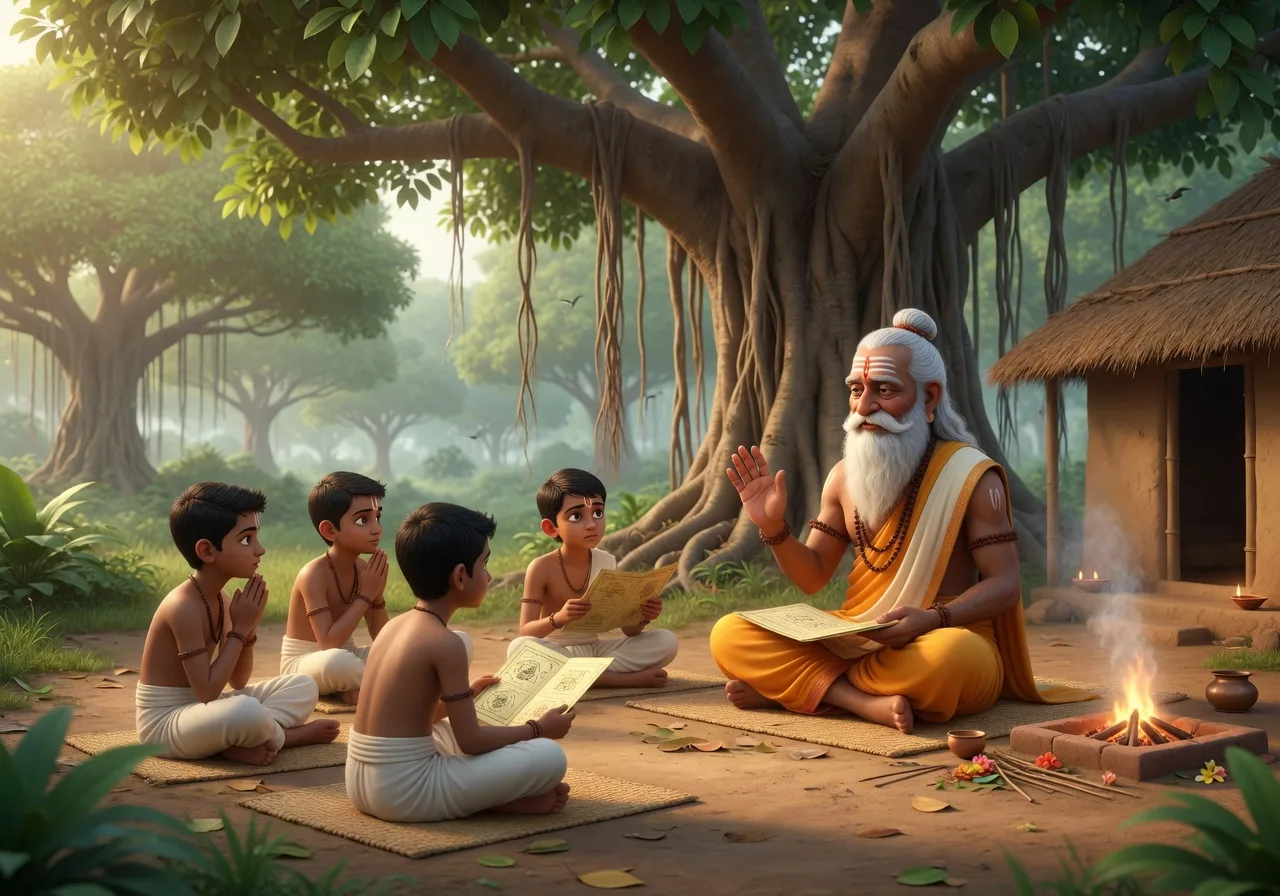
Sanatana Dharma is sometimes called Varnashrama Dharma, because the way a person works and the way a person grows are built into it from the start. What most people have heard of, the caste system, is the distortion, the thing that exploitation made of it. This lesson sets out the real teaching: four kinds of work and four stages of life, fitted to each person by nature rather than by birth, and arranged so that ordinary living becomes a training in the spiritual.
What is varnashrama, and how did the caste system distort it?
Krishna states the principle plainly in the Gita: "According to the three modes of material nature and the work associated with them, the four divisions of human society are created by Me. And although I am the creator of this system, you should know that I am yet the non-doer, being unchangeable" (Bhagavad Gita 4.13). Because the Lord made these divisions, they are not something a society can simply abolish. More than one country has tried to build a classless order and failed, because the classes only reappear beneath the surface. Even where everyone was declared equal, there were still priests and clergy, still merchants, still soldiers and rulers, and still labourers doing the work. A society cannot actually run without these natural divisions.
There are two words inside varnashrama. Varna is the social class, the kind of work a person is suited to. Ashrama is the stage of life, the spiritual season a person is passing through. The four varnas are brahmana, kshatriya, vaishya, and shudra. The four ashramas are brahmacharya, grihastha, vanaprastha, and sannyasa. The duties that come with one's varna are called sva-dharma, "one's own duty," and they relate to the body and to this life.
Scripture compares the four varnas to the parts of a single body. A body needs a head, arms, a stomach, and legs, and no part is more important than another, since the head alone goes nowhere without the legs. In the same way a society needs all four classes to function, and the point is cooperation, not rank.
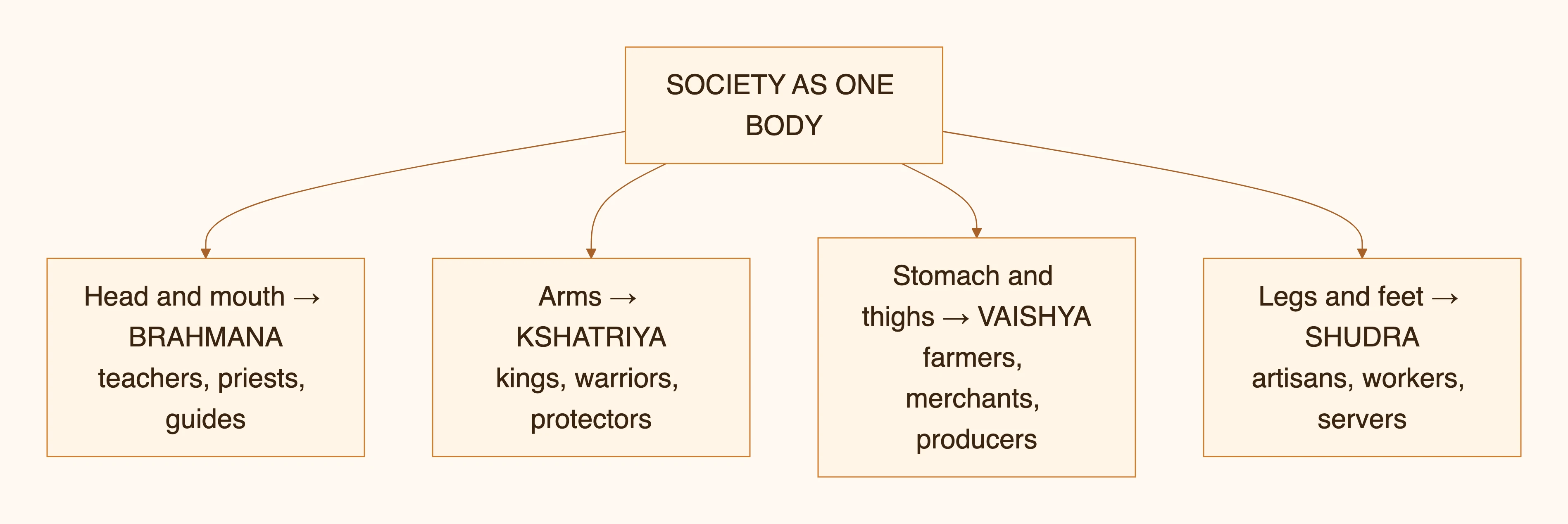
Now the part that matters most. Krishna assigns a person to a varna by two things, guna, their personal qualities, and karma, their aptitude for a kind of work. He never once says it is fixed by birth. This is the whole hinge of the teaching, because the caste system was misused by treating it as birth. The brahminical class declared that a man born a brahmana stays a brahmana however badly he behaves, and a man born a shudra stays a shudra however refined he becomes. That was never the intention. Varna follows nature, not the family you were born into.
What are the four ashramas, the stages of life?
An ashrama is "a place of spiritual shelter." Each stage of life is not just a step from cradle to grave but a season in which spirituality can be developed, which is the real purpose of varnashrama, to train a person to live in this world in a spiritual way.
| Ashrama | Stage | Roughly | Heart of it |
|---|---|---|---|
| Brahmacharya | celibate student | 0–25 | character and spiritual training |
| Grihastha | householder | 25–50 | duty, family, charity |
| Vanaprastha | retired | 50–75 | withdrawal, pilgrimage, austerity |
| Sannyasa | renunciant | 75+ | full dependence on God, preaching |
Brahmacharya is the celibate student's life, the first quarter-century. In the Vedic tradition the boy lived away from home in a gurukul, the school of the spiritual master, much like a boarding school but aimed first at spiritual values. Memorisation and skills mattered, but they came second to character and self-realisation. Even princes underwent this rigorous training, and Lord Ramachandra and his brothers studied in the gurukul under the sage Vashishtha. The student stays celibate, lives simply in the guru's ashram free of sense pleasure, serves the guru, gathers alms for him, and hears and absorbs the Vedas, developing humility, discipline, simplicity, cleanliness, and a soft heart. After lifetimes spent in the material world without cultivating such qualities, this is one of only two real openings in a life to grow them, the other coming much later in retirement.
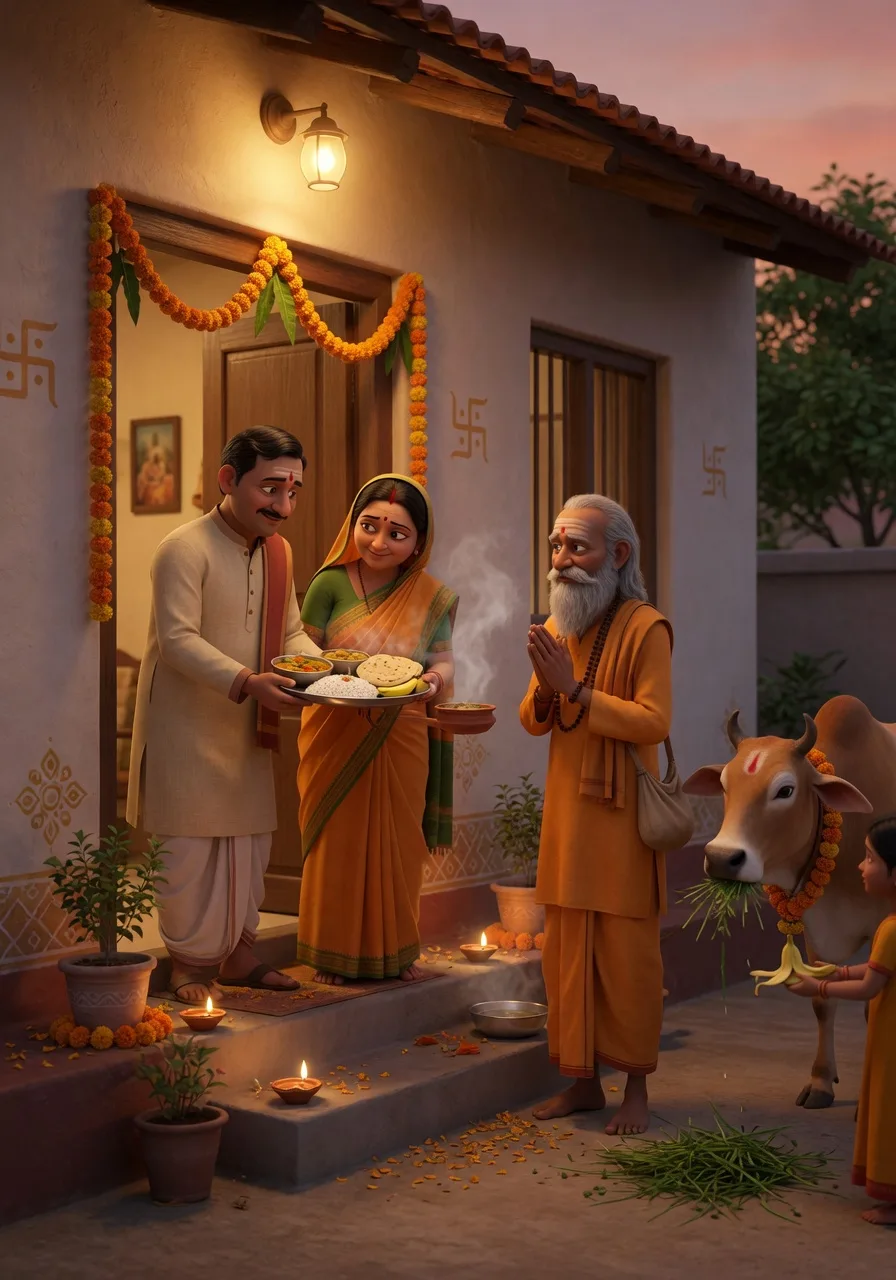
Grihastha is household life. This is the only ashrama that permits relationship with the opposite sex. The householder's duties are to earn and to enjoy the senses within ethical limits rather than wildly, to perform sacrifice and religious rites, to protect and nourish his family, and to teach his children spiritual values. Scripture puts the last duty very strongly: one has no right to be a parent, a demigod, or a guru unless one can liberate one's dependents. A further great duty is charity, especially feeding holy people, the poor, and animals, above all the cow, by maintaining goshalas.
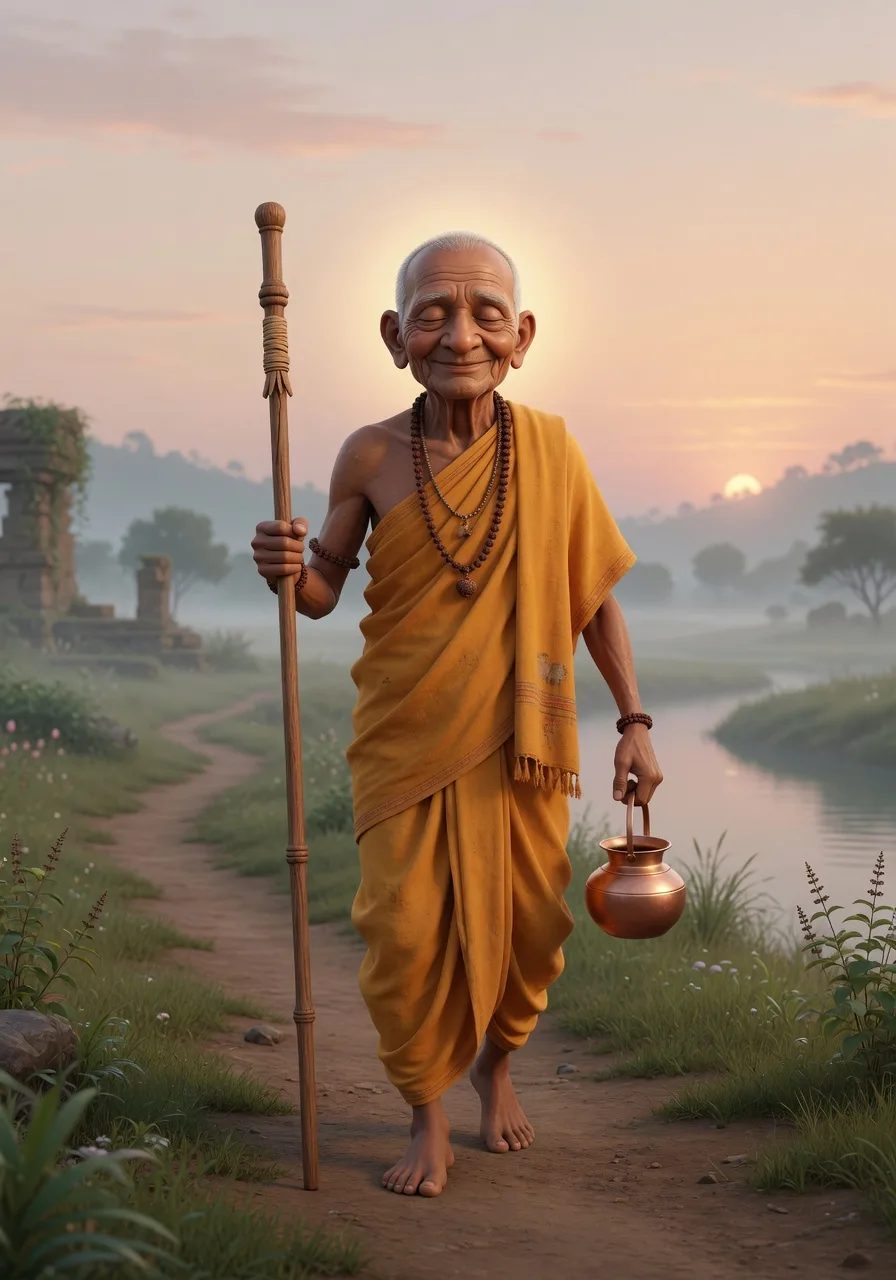
Vanaprastha is retired life, and the word means "forest dweller." Once the children are grown and settled, a man withdraws by degrees from family duties, with his wife or alone, and turns his mind to the spiritual, often going on pilgrimage, though all sexual relations now end. He gives his time to austerity and penance, and the eleventh canto of the Srimad Bhagavatam describes this stage in detail and as extremely austere, which is the Vedic standard, softened in our age. This ashrama has all but disappeared from the modern world.
Sannyasa is the renounced order, the final stage, traditionally open only to a man who has the qualities of a brahmana. He leaves home and family for good, is counted as "civilly dead," and wanders free, depending on God alone, in saffron cloth, often called a sadhu. Not all who wear the cloth are genuine, since some take it for the respect it brings, which is not its purpose. The sannyasi's duties are to control the mind and senses completely, to fix the mind on the supreme Lord, to grow detached and fearless, to depend on God as his only protector, and, most important, to teach and preach self-realisation, especially to householders who drift from their spiritual duties. In this age the order is so hard to keep that many who take it return to household life.
What are the four varnas, the social classes?
Each class is a limb of the social body, with its own work and its own natural qualities, which Krishna lists in the Gita.
| Varna | Role | Natural qualities (Gita 18.42–44) |
|---|---|---|
| Brahmana | teacher, priest, guide | peacefulness, self-control, austerity, purity, tolerance, honesty, knowledge, wisdom, religiousness |
| Kshatriya | king, warrior, protector | heroism, power, determination, resourcefulness, courage, generosity, leadership |
| Vaishya | farmer, merchant, producer | farming, cow protection, and trade as natural work |
| Shudra | artisan, worker, servant | service to others, loyalty, honest labour |
Brahmanas give a society its education and its spiritual leadership, setting its vision and values. Their needs were met by others so they could devote themselves to spiritual work, and they were expected to own very little. They study and teach the Vedas, perform and teach others to perform sacrifice, accept alms and give in charity, guide the kings, and know the self and God. One duty stands out: a brahmana never accepts paid employment, because a salary places him in someone's pocket, and a real brahmana must stay independent enough to speak the truth without fear. By this measure most who call themselves brahmanas today would not qualify. In former ages the brahminical class was stronger even than the warriors, on the strength of its spiritual character.
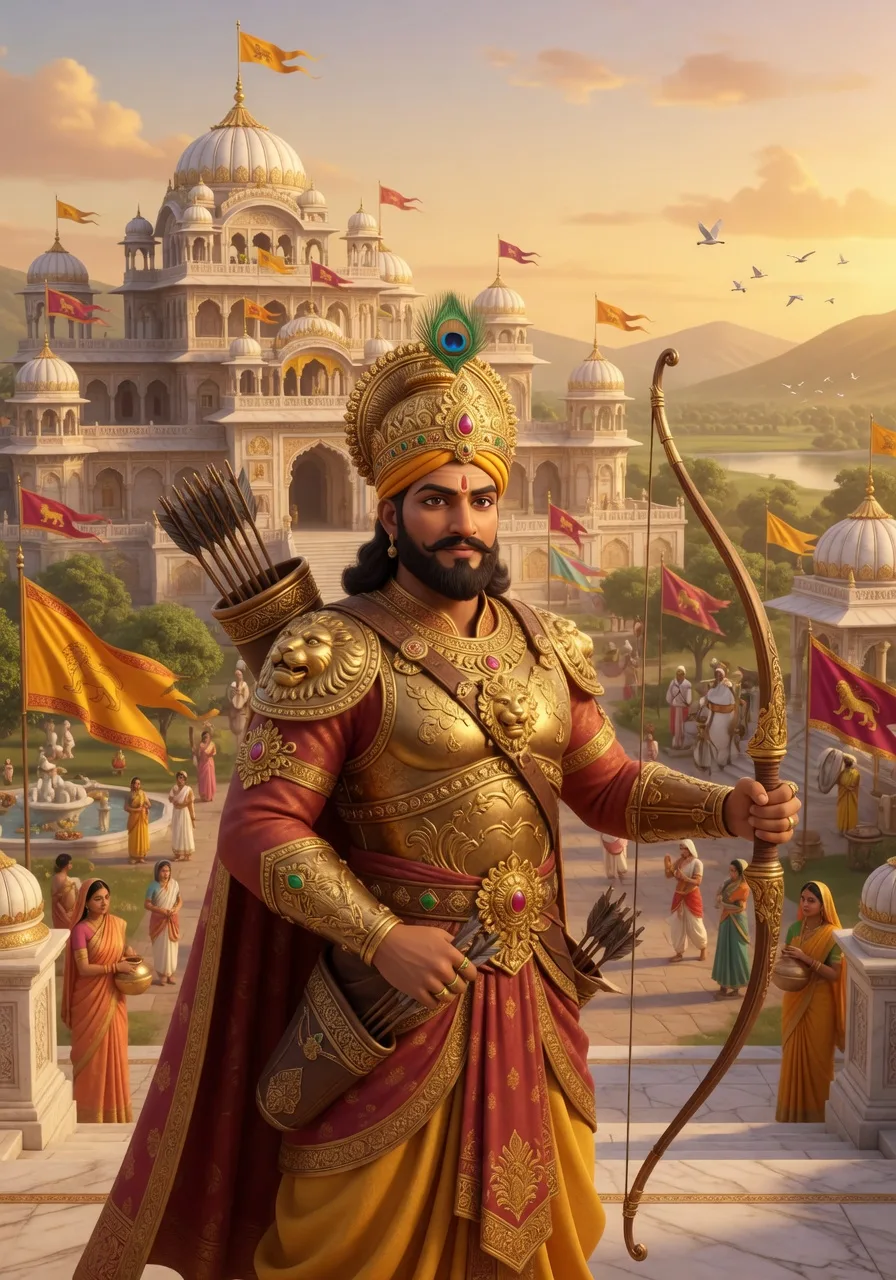
Kshatriyas are the warriors, kings, and administrators, the protectors of society, the Pandavas being the ideal. They guard the citizens, especially women, children, cows, brahmanas, and the elderly, and make sure people can perform their duties and advance. They are first into battle and never flee it, never refuse a challenge, keep their royal word, deal firmly with crime, take responsibility for what goes wrong in their realm, conquer their own minds and senses, enjoy only within the limits scripture allows, and take their counsel from the brahmanas. They cultivate noble qualities such as chivalry and generosity, and they may levy taxes, but they never accept charity.
Vaishyas are the farmers, merchants, and business people, the productive class. Along with the brahmanas and kshatriyas they are called "twice-born," accepting the sacred thread that marks spiritual initiation. Their work is to protect the cows and till the land, to create wealth, to maintain their workers well, and to trade honestly, paying taxes to the kshatriyas.
Shudras are the artisans and workers who serve others, and theirs is the only class permitted to take employment under another, since even a vaishya is meant to be self-sufficient. A shudra serves, takes pride in good work, stays loyal, and keeps to ordinary moral principles, with marriage as the one rite of passage required of him. Being a shudra is no mark of inferiority. In a sense it is the safest position of all, because the one who is always serving stays humble, while wealth can make a merchant proud, strength can make a warrior proud, and even knowledge can puff up a brahmana, and that pride is what destroys a person.
Not every varna may enter every ashrama. All of the twice-born may become brahmacharis, all four classes may become householders, the kshatriyas and brahmanas may take to retired life, and only one with brahminical qualities may take sannyasa.
Is varna decided by quality or by birth?
By quality, always. If a person naturally shows the qualities of a brahmana, peacefulness, honesty, knowledge, and the rest, then he is a brahmana by nature even if he was born into a family of warriors. The modern world quietly agrees with this. If you are born with a certain talent you are free to follow it, and that is exactly what varnashrama intends. Birth into a doctor's family does not make you a doctor, you still have to study, train, and take on a doctor's mind, and varna works the same way. To insist that only someone born in a brahmana family may serve as a temple priest, when his nature is not brahminical, is simply wrong, and a society that wants to live by dharma should help change that attitude.
There is a sobering note for our age. Chaitanya Mahaprabhu observed that in Kali Yuga everyone is effectively a shudra, since there are scarcely any qualified brahmanas left, no real kshatriyas who would be first on the battlefield rather than seated behind a desk, and few merchants with large hearts. Even so, to be a genuinely good shudra is itself a real achievement in this age.
What about exploitation, and those left outside the classes?
The caste system has been badly abused, usually by the brahminical class, and the scriptures themselves speak of people who fall outside the four varnas and do the work no one else will do, such as tending the cremation grounds. They are described as rough in nature, yet nothing in that gives anyone the right to mistreat them. They must be well supported, because society depends on the service they render, and there is in truth a debt owed to them for keeping everything clean. The aim of varnashrama is never exploitation. A society cannot run without its different classes, but the exploitation has to stop, because it is exactly what drives people away from dharma.
Key terms from this lesson
| Term | Meaning |
|---|---|
| Varna | social class by nature and work: brahmana, kshatriya, vaishya, shudra |
| Ashrama | stage of life: brahmacharya, grihastha, vanaprastha, sannyasa |
| Sva-dharma | one's own prescribed duty, according to varna and stage |
| Guna and karma | quality and aptitude, the true basis of varna, never birth |
| Gurukul | the residential school of a spiritual master |
| Vanaprastha | the "forest dweller," one who has retired toward the spiritual |
| Sannyasa | the renounced order, dependent on God alone |
| Twice-born | the brahmanas, kshatriyas, and vaishyas, who take the sacred thread |
| Dvija / sacred thread | the mark of spiritual initiation for the twice-born classes |
What to carry forward
- Sanatana Dharma is also Varnashrama Dharma, four kinds of work and four stages of life.
- Krishna says these divisions are his own and exist so society can function like a healthy body.
- Varna is decided by quality and aptitude, guna and karma, never by birth. The birth-based caste system is a distortion.
- The four ashramas turn ordinary life into a gradual training toward the spiritual.
- No class is higher than another, and the serving shudra holds the safest, humblest position of all.
- Those outside the classes must be well supported, and exploitation must end.
- In Kali Yuga we are all effectively shudras, and to serve well is already a great achievement.
Previous lesson: ← Festivals and the meaning of Ekadashi
Next lesson: Samskara: the sacraments of a lifetime →
Back to the full course index.
Frequently Asked Questions
Independent writer, jaapak.com
I built the Jaapak app. I write in simple Hindi on the Bhagavad Gita and the satsang tradition — so seekers don't struggle with the scripture.
Read all articlesAbout this article
The commentary is based on the general understanding of the Sanatan tradition and written in accessible language. No verbatim quotation of any modern commentator is used.