Values and Culture: How to Live as a Human Being
The values and culture of Sanatana Dharma: the four pillars of Dharma (mercy, truthfulness, cleanliness, austerity), why they make us human, a vegetarian
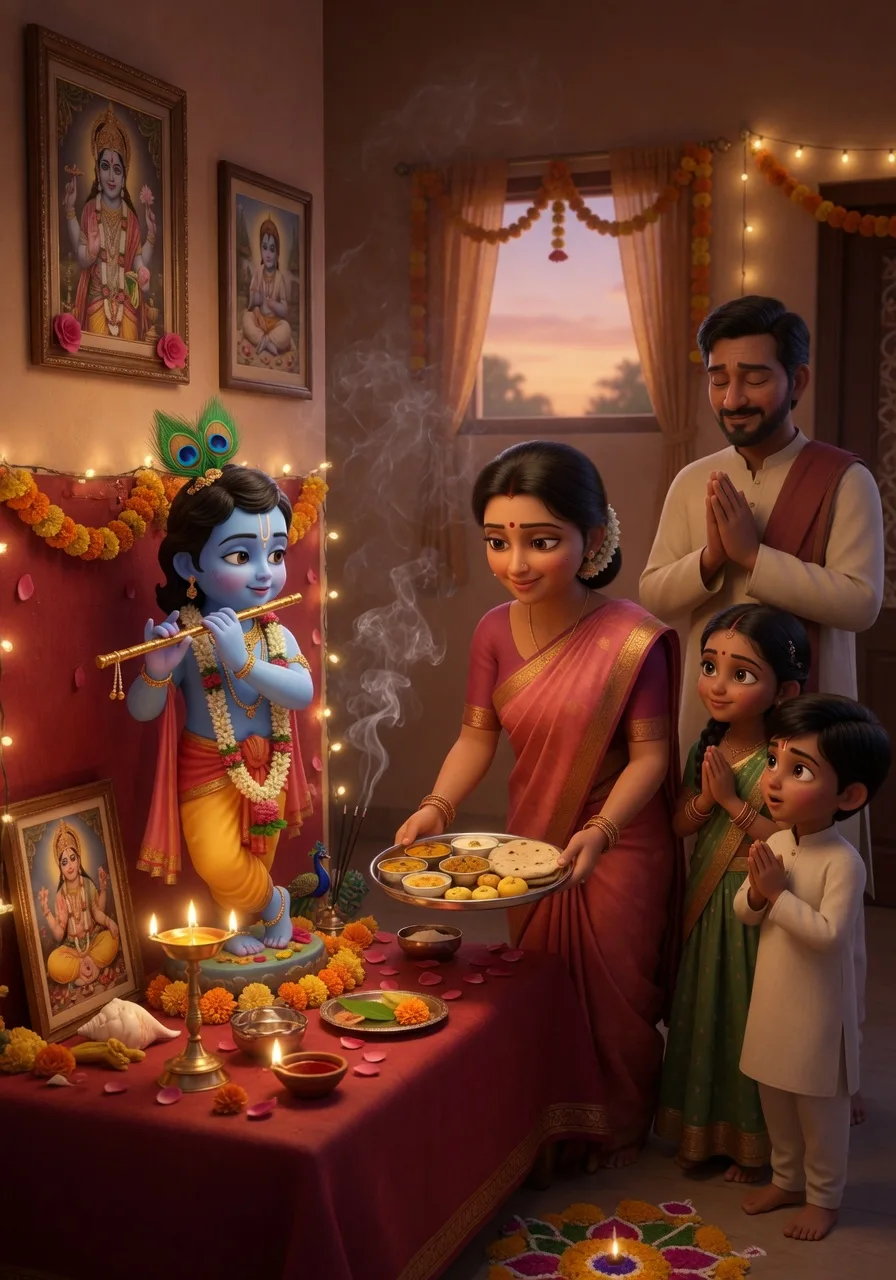
Of everything in this course, this lesson may be the most useful day to day. It would have been a fine thing to learn these values as a small child, since they take root best when planted early, but it is never too late. The values of Sanatana Dharma are what draw us closer to the Lord and let us live as actual human beings. They are the one thing that separates us from the animals. Without them, we end up doing exactly what the animals do, and nothing more.
Why values make us human
An animal eats, sleeps, mates, and defends itself. That is the whole of its life. A human being who does only those four things, with no values on top of them, is living an animal's life in a human body. The scriptures have a sharp phrase for this. They call such a person a dwipad pashu, where pashu means animal and pad means legs and dwi means two. A two-legged animal. The Srimad Bhagavatam says it plainly, that degraded men are no better than animals, and the only difference is that the animal walks on four legs and the degraded man on two.
The Hitopadesha makes the same point from the other side. Eating, sleeping, mating, and defending are shared by animals and humans alike. The one property that belongs to humans alone is the ability to ask about spiritual life and to live it. Strip that away and a human being stands on the level of an animal. There is even a hard truth here worth sitting with, that in this state we fall below the animals, and research bears out the strange comparison. When a species of animal goes extinct, the natural world loses something real from its balance, but if human beings vanished, the world would arguably be relieved. So our reason for being here is not to prop up the environment. It is higher than that, and it is spiritual. A human life with no spiritual activity in it has missed its own point.
Values, then, are moral codes and plain common sense built around Dharma, and they apply to every human being everywhere. Taking them seriously lifts the consciousness to a spiritual level. The idea is simple. Its power is not.
The four pillars of Dharma
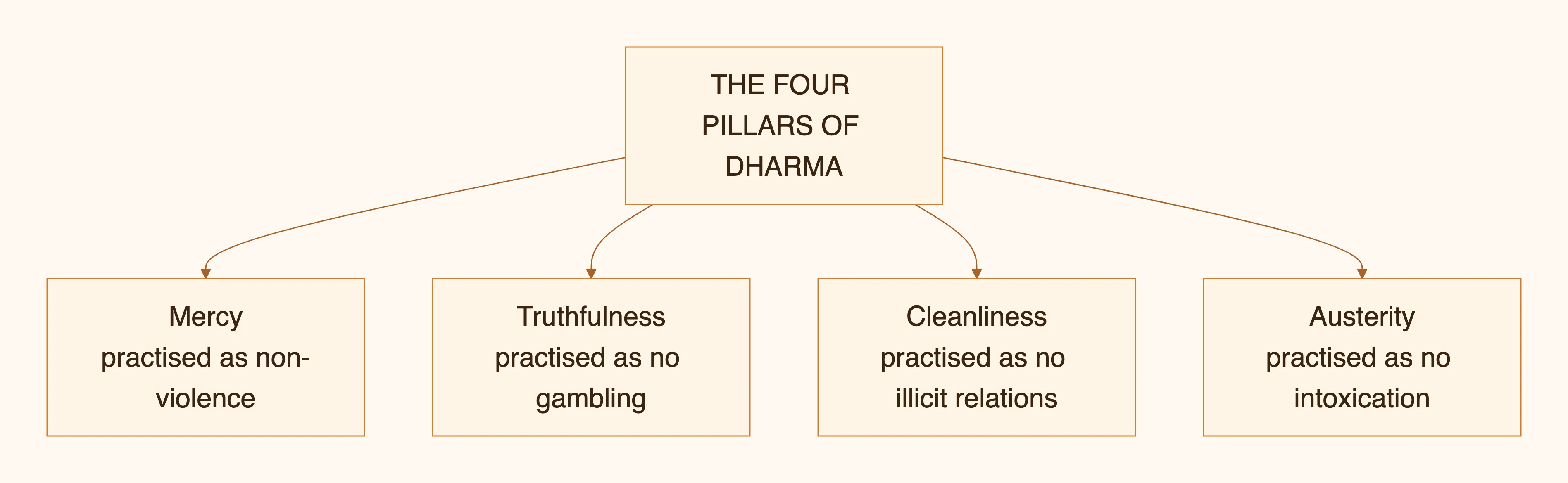
Dharma is said to stand on four legs, four pillars, and the scriptures name them. Each pillar is a virtue, and each carries a discipline with it.
Some people hear a list like this and feel a cage closing. Rules, restrictions, no being yourself, a kind of prison. The Gita answers that worry head on. Krishna says that one who can control the senses by practising the regulative principles of freedom obtains the complete mercy of the Lord and becomes free from all attachment and aversion (Bhagavad Gita 2.64). Notice the phrase, the regulative principles of freedom. Freedom from what? From Maya, from the wheel of birth and death that holds us. We imagine we are free already, free to do as we please, but we are caught in that wheel and we will die one day with no say in the matter and no idea when. These values are the practice that buys the only freedom worth having, which is the full mercy of the Lord.
Pillar one: mercy, practised as non-violence
There is an old line from the scriptures, ahimsa paramo dharma, non-violence is the highest religion. It works on three levels.
The first is non-violence in action. Our deeds should not bring grief to others. This holds in ordinary life, setting aside the special case of a just war like the one in the Mahabharata. The second is non-violence in speech, and it is easy to underrate. Words wound. The scriptures say the injury from an arrow can be healed, but the injury from a cruel word sometimes never heals at all, and it can ache for years. The third is non-violence in thought, because what we think becomes what we say and then what we do. Keep the thoughts peaceful and the peace flows outward into words and acts.
One natural outcome of this pillar is a vegetarian diet, and ideally a vegan one. To be vegetarian is to eat no meat, no fish, and no eggs, so that no creature is harmed merely to fill our belly or please our tongue. In the West some insist that a person must eat meat to stay healthy, but we lose nothing by leaving it. Where some nutrient is genuinely missing, a supplement covers it, which is far better than putting dead bodies into ourselves.
A fair question comes back at once. Plants are alive too, so is it not violence to eat them? The answer is that the Lord permits us this food. It is the diet we are built for. Our bodies match a plant-eater far more than a flesh-eater. A meat-eating animal has a short gut, because flesh rots quickly and must pass through fast. A plant-eater has a long gut, and so do we, which suits slow-digesting plant food. The whole design points one way.
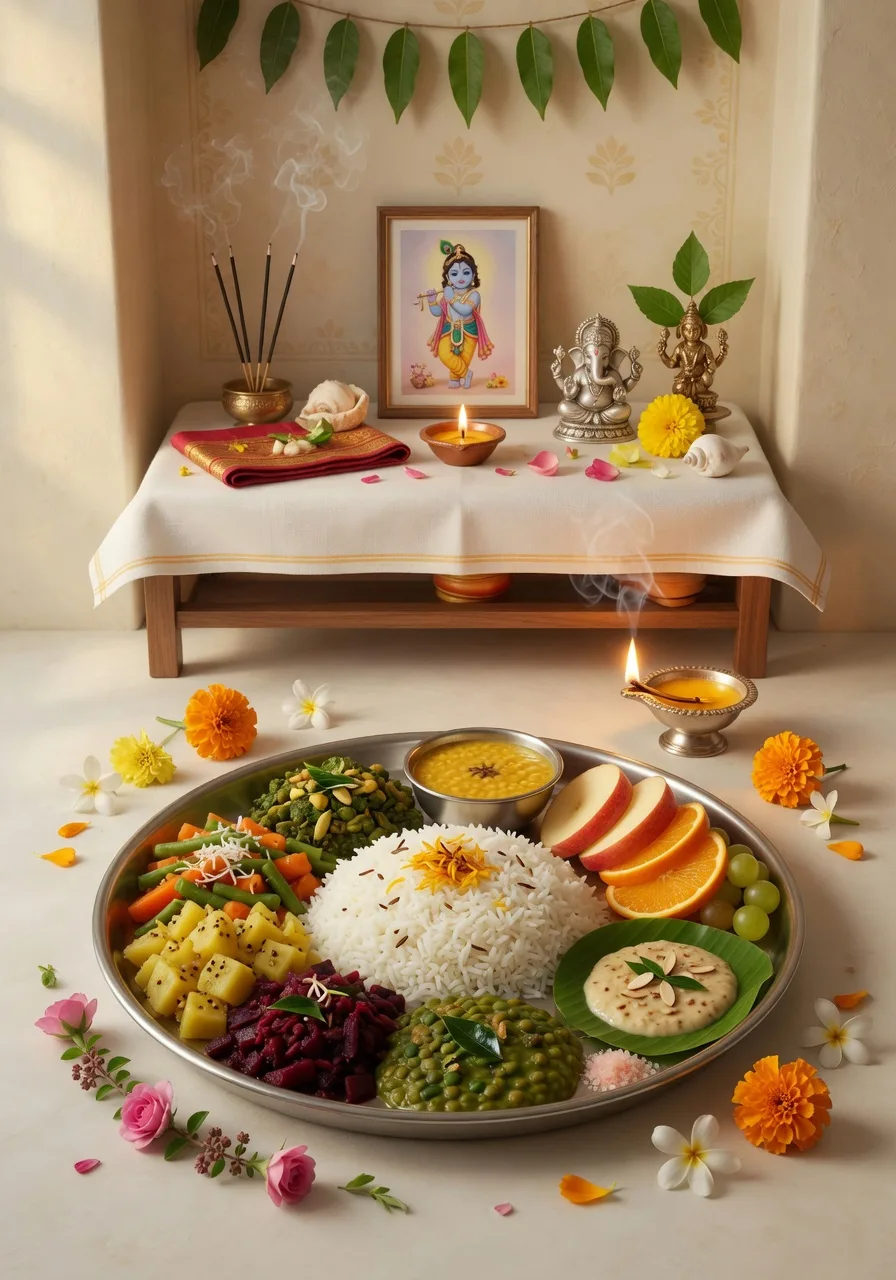
There is one more step that changes everything. The Lord teaches that food not first offered to him is, in effect, eaten sin, and this holds even for vegetables. So before we eat what we cook, we offer it. The procedure can be as short as three seconds, and it turns ordinary food into prasad, blessed food. At its simplest you bring the Lord to mind and say his name, "Shri Vishnu, Shri Vishnu, Shri Vishnu." Even something bought ready-made can be offered this way with a moment's thought before eating. The finest way is fuller. You cook from scratch yourself, with love, thinking of the Lord, set the food on a plate kept only for him, carry it to the altar, and pray, "I have made this with my love for you, please accept it, please eat." That is first class. When life makes even that impossible, a mental offering still works, and the food still becomes prasad.
Pillar two: truthfulness, practised as no gambling
Truthfulness, satya, is a value every culture honours, and the scriptures call it the last leg of Dharma still standing in this age of Kali. The Gita ties it to speech, recommending words that are truthful, pleasing, beneficial, and not agitating to others (Bhagavad Gita 17.15).
Why does gambling sit opposite truthfulness? Because gambling breeds lies, almost as a rule. The great example is Yudhishthira. As a warrior he could not refuse a challenge, and the challenge set for him was a game of dice. He gambled until he had lost his brothers, then himself, then even his wife. Gambling can swallow a whole life.
The deepest example is stranger. Krishna is the absolute truth itself, and yet once he told Yudhishthira to lie. On the battlefield the teacher Dronacharya could not be beaten while he held his weapons, and the only way to stop him was to make him believe his son Ashwatthama had been killed. Krishna told Yudhishthira to carry that news. Yudhishthira, who was Dharmaraja, the very king of righteousness, refused. So an elephant named Ashwatthama was killed, and a great shout went up that Ashwatthama was dead. Dronacharya, who trusted Yudhishthira above all others, came and asked him directly whether his son was dead. Yudhishthira answered, "Yes, Ashwatthama is dead," and added, under his breath, "the elephant Ashwatthama." In that careful way he kept his truthfulness intact. But there was a price. His chariot had always rolled a few inches above the ground, lifted by his perfect honesty, and the moment he bent the truth even that little, the wheels came down to the earth.
Pillar three: cleanliness, practised as purity
Cleanliness is next to godliness, as the saying goes, and it works on the body and the mind together.
For the body, the rule is a daily routine of cleanliness. A shower every morning, not at night, and in the older culture a shower after every passing of stool. Keeping the body clean helps the mind fall in line behind it. We bathe before we eat and before we worship, because purity should come first.
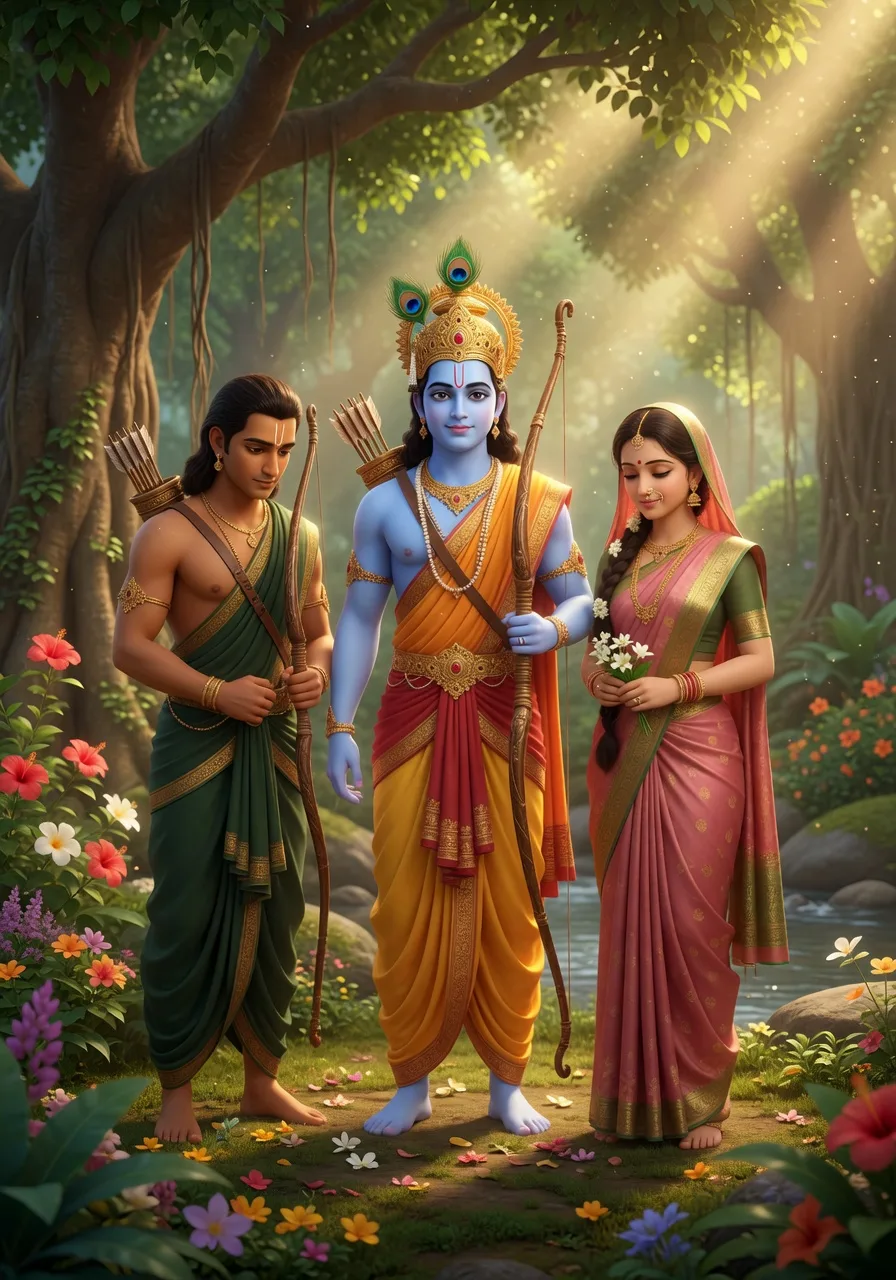
For the conduct, purity means no illicit relationships, no boyfriend or girlfriend, no connection with the opposite sex before marriage. In the modern West this is a hard teaching, and the difficulty is real, but it is the Vedic standard for how a civilised person lives. The Gita praises any duty done by scriptural rule, without hope of reward, with firm conviction, as action in the mode of goodness (Bhagavad Gita 17.11), and holding to purity is exactly that kind of quiet sacrifice. The model is Lakshmana. When Sita was taken and her jewels were later found, Rama held them up and asked his brother whether the earrings were hers. Lakshmana said he did not know, because he had never once looked at her face. But the ankle bells he knew at a glance, because his eyes had only ever rested on her feet. That is the purity the Ramayana teaches, and the whole epic is a lesson in culture and value, for Rama came as the ideal human being, the ideal son and husband and father and king.
Then there is purity of mind, which may be the harder battle. Some sixty thousand thoughts cross the mind in a single day. The Gita says the mind can be our best friend or our worst enemy, depending on whether we have brought it under control (Bhagavad Gita 6.6). A great many of those sixty thousand thoughts run negative, and the work is to catch a negative thought as it rises and turn it positive. This takes time, since a whole life of habit does not reverse in a day, but it can be done. Watch the mind. It will keep offering up its little complaints, this person is like that, this food is not nice, on and on, and each one is a chance to flip it.
Part of that practice is learning to see the good in others rather than the bad. There is a story of Dronacharya testing two of his students. He sent Duryodhana to search the whole kingdom for a single person better than himself, and Duryodhana came back to report that he could find no one, that he was the best of all. He sent Yudhishthira to find a single person worse than himself, and Yudhishthira came back to report that he could find no one worse, that he himself was the lowest. This was not gloom or self-hatred. It was humility. Yudhishthira was the greatest of men and still looked on everyone around him as better than himself. Honestly only two persons see us this generously. One is the Lord, who has so much to overlook in us and instead seizes on the one small thing we do for him and magnifies it. The other is a true guru, who answers a cup of water brought to him with a beaming "well done." We try to grow that same eye, for the good in everything and everyone.
And underneath it all sits one steadying fact. The Lord loves us more than we can begin to imagine, and he will never act against us. So when something painful comes, his hand is in it, and it is meant for our good even when it looks like the opposite. Hold that view and you never sink, never feel crushed or worthless, because you know you are being looked after. With that mood, nothing can really defeat you.
Pillar four: austerity, practised as no intoxication
The Gita sorts happiness into three kinds. There is the happiness that is sweet at the start and turns to poison at the end, like eating sweets, where the first gulab jamun is wonderful and by the fifth you are begging to stop. There is the happiness that is hard at the start and turns to nectar at the end, like meditation and the chanting of the Lord's names, which is a struggle at first and in time becomes the sweetest thing in life. And there is the happiness that is poison at the beginning and poison at the end, which is the way of the drunkard.
That third kind is what this pillar removes. No alcohol, no drugs. The teaching even reaches to caffeine, since coffee and tea are mildly addictive and a missed cup brings on a headache, and the aim is to be addicted to nothing at all, so that we can live contentedly anywhere. The same alertness applies to time. Hours pour away into television and phone games and the endless internet. If we ever want to waste time, the world offers a hundred and one ways, and the resolve is simply not to waste any of it.
More values to live by
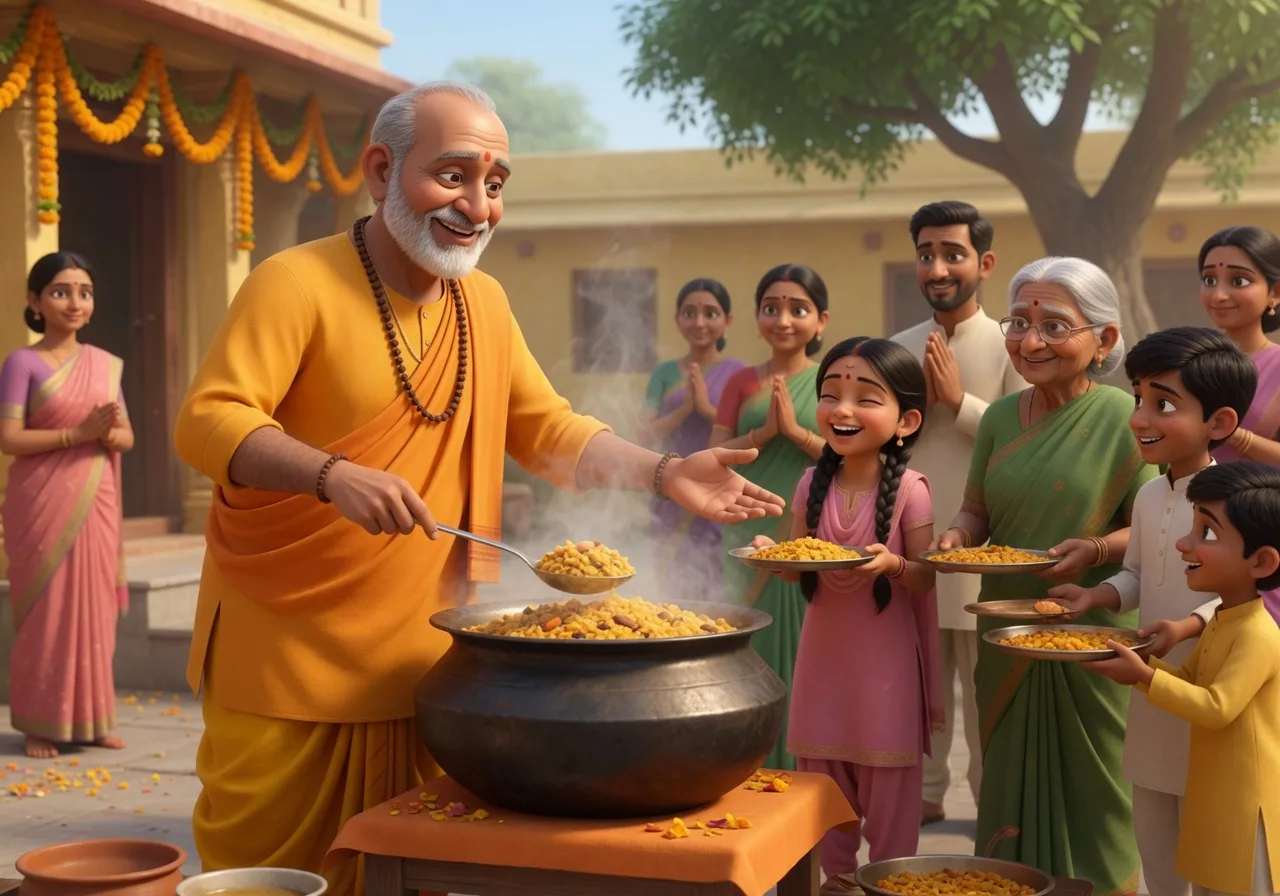
Beyond the four pillars stands a whole culture of smaller habits, and a few deserve naming.
The first is a giving attitude in place of a taking one. A person who is always taking is always unhappy, because the expectations never end. Give them something and they expect more next time, and the greed has no floor. A person who is always giving is steadily happy, because no one can stop them from giving. Love someone while wanting nothing back and you cannot be disappointed. This is why the great sages are never miserable. They want only to give, to share the Lord with everyone, and so their happiness has no leak in it.
The second is respect, set out in four classic phrases. Matri devo bhava, treat your mother as you would a deity, and she comes first. Pitri devo bhava, the same toward your father, who comes second. Acharya devo bhava, the same toward your teachers and your guru, everyone you learn from. And atithi devo bhava, the same toward the guest, even the uninvited one, which we can widen to mean everyone we meet. Caring for parents and grandparents belongs right here, near the heart of the culture, and the tradition counts seven kinds of mothers that a person is bound to honour, a list worth taking up on its own.
The rest can be said briefly. Be humble, and never boast of being clever or gifted, because the talent came from the Lord and belongs to him, and we are only minding it for a while. Be polite. Praise others sincerely. Work to control anger. Keep learning, always, since it is never too late and every lesson lifts the consciousness a little. Treat failure as a pillar of success rather than its opposite, a thing to learn from, so that when you fall you simply get up, brush off the dust, and carry on. And be grateful, because gratitude may be the quiet root of all the rest.
Key terms from this lesson
| Term | Meaning |
|---|---|
| Dwipad pashu | a "two-legged animal," a human who lives without values |
| Four pillars of Dharma | mercy, truthfulness, cleanliness, austerity |
| Ahimsa | non-violence, in action, speech, and thought |
| Prasad | food first offered to the Lord, turned from sin into blessing |
| Satya | truthfulness, the last leg of Dharma in the age of Kali |
| Shaucha | cleanliness and purity, of body and of mind |
| Tapas | austerity, here the giving up of all intoxication |
| Matri / Pitri / Acharya / Atithi devo bhava | treat mother, father, teacher, and guest as deities |
What to carry forward
- Values are what make a human life human, and without them we are no better than two-legged animals.
- Dharma stands on four pillars, mercy, truthfulness, cleanliness, and austerity, kept as non-violence, no gambling, no illicit relations, and no intoxication.
- These disciplines are not a prison but the regulative principles of freedom, the practice that wins the Lord's mercy (Bhagavad Gita 2.64).
- Non-violence reaches into action, speech, and thought, and naturally leads to a vegetarian diet and to offering all food as prasad.
- Truthfulness is the last leg of Dharma in Kali Yuga, and even a slight bend in it brought Yudhishthira's chariot down to earth.
- Purity covers the body, the conduct, and above all the mind, where we turn negative thoughts to positive and learn to see the good in everyone.
- Live by a giving heart, honour mother, father, teacher, and guest as deities, stay humble and grateful, and treat every failure as a step toward success.
Previous lesson: ← The abodes of the Lord
Next lesson: Markandeya and the baby on the banyan leaf →
Back to the full course index.
Frequently Asked Questions
Independent writer, jaapak.com
I built the Jaapak app. I write in simple Hindi on the Bhagavad Gita and the satsang tradition — so seekers don't struggle with the scripture.
Read all articlesAbout this article
The commentary is based on the general understanding of the Sanatan tradition and written in accessible language. No verbatim quotation of any modern commentator is used.