Karma and Reincarnation: The Three Bodies and What Decides Your Next Birth
How karma and reincarnation work in Sanatana Dharma: the gross, subtle and spiritual bodies, the three kinds of karma (karma, vikarma, akarma), prasad, the
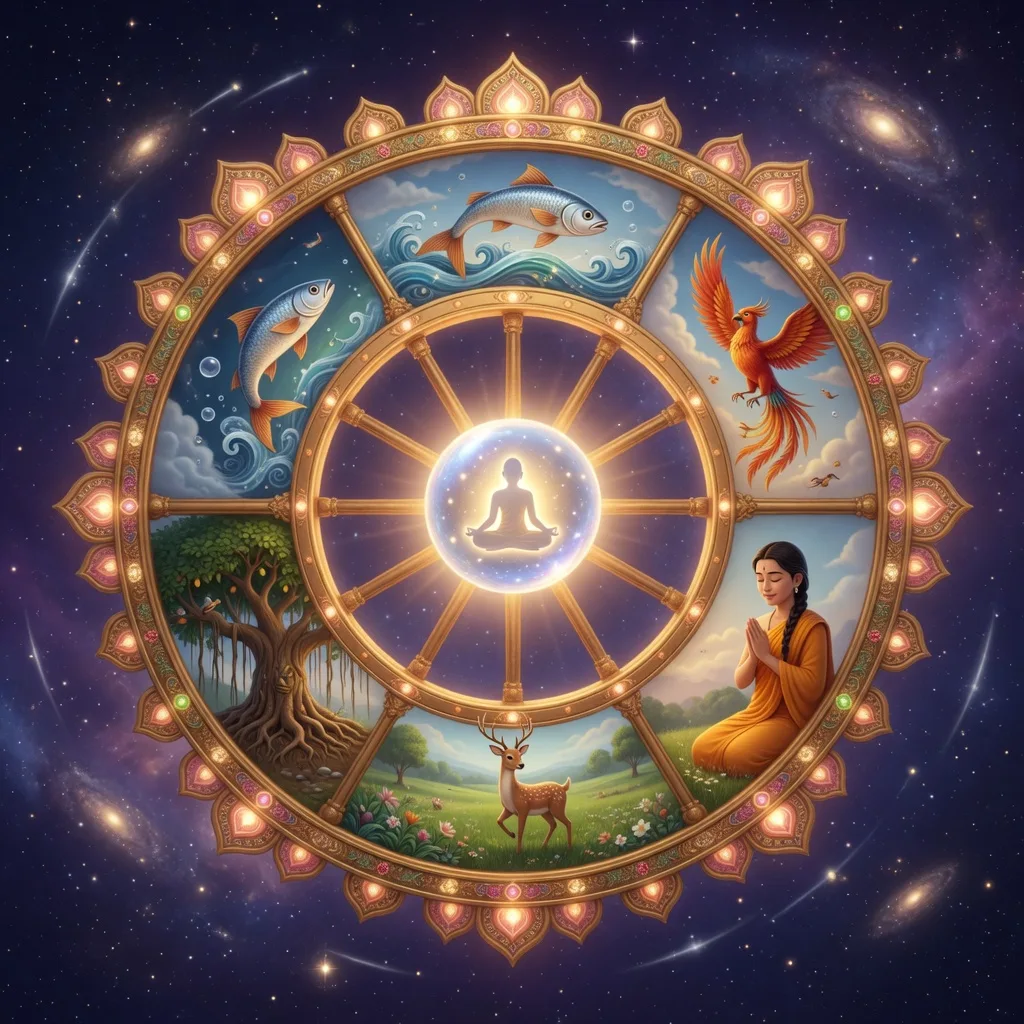
Last lesson we learned that you are the soul, not the body. This one follows the soul out the far door. What carries it from one life to the next? What decides whether the next body is a king's or a pig's? The answer is karma, the law of action and reaction, working across many lifetimes. Understand it, and the strange unfairness of the world starts to make sense.
How many bodies do we actually have?
Three. We tend to think of one, but the soul wears two material coverings over its true spiritual form.
- The gross body is the one you see and touch, built from the five gross elements: earth, water, fire, air, and ether. Every living being has one.
- The subtle body is invisible and made of three things: mind, intelligence, and false ego. It is still material, just finer.
- The spiritual body is the soul's real form, beyond both. In the spiritual world the soul keeps the form that matches its eternal relationship with the Lord, as a friend, a parent, a beloved, even a tree, a peacock, or Gomata. None of that is material there. When that spiritual form enters matter it shrinks to a tiny spark, a ten-thousandth of a hair's tip, as one Upanishad measures it.
Many people, having let go of "I am the gross body," then cling to "I am the mind." The scriptures cut deeper. You are beyond the gross body and the subtle body. You are the soul.
At death the gross body falls away. It was only earth, water, fire, air, and ether, and in a sense it was never alive. The subtle body carries the soul to its next body. The mind, intelligence, and ego come along, but they reset to fit the new body. What survives intact are the impressions stored in the mind, the samskaras. Those travel with you. This is why a place you have never visited can feel familiar, the moment we call déjà vu. The impression is from a body you wore before. These same impressions are why the life-ceremonies, also called samskaras, matter so much. Each one stamps the mind in a way that helps the soul in its future births.
What happens at the moment of death?
Whatever you are thinking of as you die, you become. Krishna states it flatly in the Gita (8.6): "Whatever state of being one remembers when he quits his body, O son of Kunti, that state he will attain without fail."
Death is an examination. Whatever you studied all year is what surfaces in the hall. Your whole life flashes before you, and the thought you have practised most rises to the top. A person who spent a life remembering the Lord, doing bhakti, helping others, finds exactly that on his lips at the end. When Mahatma Gandhi was shot, the name that left him was "Ram," because a lifetime of devotion had made it his most natural thought.
What is karma, and what are its three kinds?
Karma is simply action and reaction. Jump from a tenth-floor window and the action returns to you as broken bones. What makes it deeper than ordinary cause and effect is that karma crosses lifetimes. There are three kinds.
| Kind | What it is | The result |
|---|---|---|
| Karma | Your prescribed duties, the work that fits your situation: a householder caring for family, children, dependents | Pious, sinless |
| Vikarma | Forbidden acts, usually breaking the four regulatory principles | A bad reaction |
| Akarma | An act offered to the Lord, so it carries no reaction at all | Frees you; carries you spiritward |
The four regulatory principles that vikarma breaks are: no meat, fish or eggs; no intoxication; no gambling; no illicit sex. (And male and female bodies carry different prescribed duties, with neither higher than the other.)
The third kind is the secret. Add the "a" to karma and the reaction vanishes. Take eating, which none of us can avoid. A diet built on slaughtered animals is vikarma. A sattvic diet, fresh and natural, harming as little as possible and taking plants only as needed, is pious. But you can lift the very same act into akarma: offer the food to the Lord first, and it becomes prasad, sanctified food. Eating prasad does not bind you. It pulls you toward the spiritual world. As Krishna says in the Gita (3.13), "The devotees of the Lord are released from all sins because they eat food first offered in sacrifice. Others, who cook for their own enjoyment, eat only sin." Even a plain vegetarian eats a little sin, since plants are alive, unless the food is offered first.
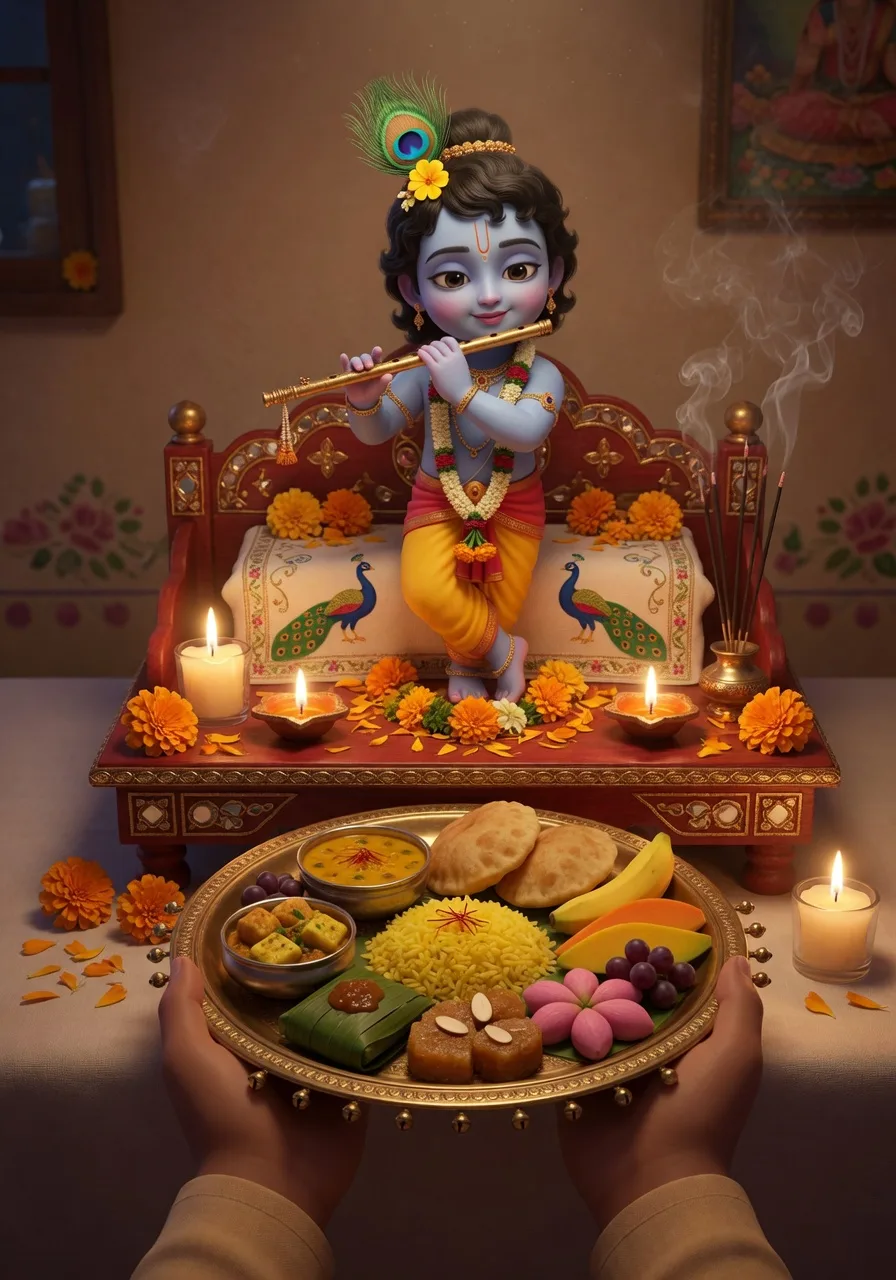
This works for everything, not just food. Even a packet of crisps bought outside can be offered in the mind, "My dear Lord, this is not the finest offering, but please accept it," and then eaten as prasad. Offer each act to the Lord and your whole life turns from karma into akarma, action that leaves no chain.
A warning from Krishna himself (Gita 4.17): "The intricacies of action are very hard to understand. One must know what action is, what forbidden action is, and what inaction is." Karma is genuinely difficult. We rarely see why a thing happens to us, which is why "I was always good, why did this happen?" is such a common cry.
How many kinds of body can the soul take?
The Vedas count 8.4 million species, and the breakdown is exact.
| Category | Number of species |
|---|---|
| Aquatics (life in water) | 900,000 |
| Plants and trees (non-moving) | 2,000,000 |
| Insects and reptiles | 1,100,000 |
| Birds | 1,000,000 |
| Beasts (four-legged) | 3,000,000 |
| Humans | 400,000 |
| Total | 8,400,000 |
Of the 400,000 human types, only a small fraction are "civilised"; the rest range widely, from cannibals to pygmies, all of them human, and each human species carries its own level of consciousness. We have likely passed through all 8.4 million many times over, across a very long stay in this world. Reaching a human birth, and within it the chance to offer bhakti, is like winning a lottery. The task now is to recognise the prize and build on it rather than lose it.
What decides your next body?
By the law of karma the soul moves from one kind of body to another, and three things shape which one.
- Your consciousness, your mood. You receive a body that fits it. Someone who loves to sleep may take a bear's body. Someone who eats anything, fresh or spoiled, with a pig's indifference, may take a pig's body to enjoy that fully. A lover of raw flesh may suit a tiger. One who lives to display a beautiful body may become a tree, standing on show for a thousand years.
- Your desires. Desiring is the one thing the living being truly does, and the Lord fulfils those desires. Material desires bring material results. The aim is to wear material desire down to zero by growing spiritual desire instead.
- Your karma, what you have actually done.
These three together set the next birth. The aim of human life is self-realisation, and a consciousness raised to the spiritual level leads to moksha, liberation, a subject large enough for its own lesson.
How do we know reincarnation is real?
Several lines of evidence point the same way.
Out-of-body experiences. People on the operating table whose soul leaves the body, watches the surgery, and later repeats what the doctors and nurses said. Dr. Ian Stevenson, a researcher in the United States, gathered many such cases. One was a teacher whose daughter, after an operation, described exactly what the staff had done.
The designer of the Titanic. A man named William Barnes began, at the age of four, insisting his name was Tommy, not William. He spoke of brothers and sisters his family did not have, drew ships like the Titanic, and suffered nightmares of drowning. A past-life regression in adulthood revealed he had been Tommy Andrews, the Titanic's designer, who died when it sank. He had proposed a stronger design that was cut for cost, and was blamed for the disaster. He spent his new life trying to clear Tommy Andrews's name.
The boy who knew his own village. Stevenson documented young Indian children recalling past lives. One three or four year old described his old village, his shop, his wife and children. Taken there, he identified the shop and a hidden cache of money no one else knew of, which was found. Seeing his former wife, he said, "This is my wife." He had been shot in the forehead in that life, and carried a birthmark on his forehead in this one.
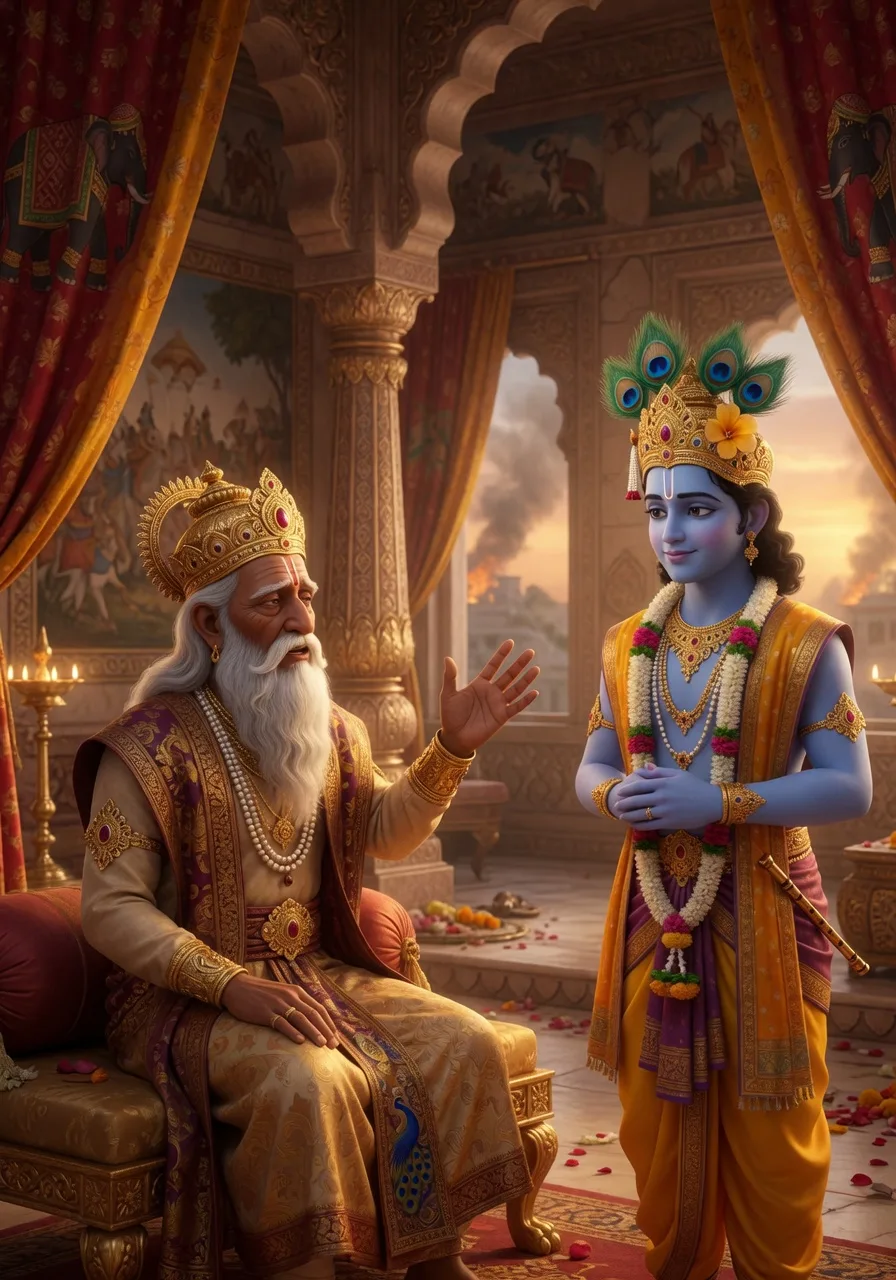
Dhritarashtra and Krishna. After the Mahabharata war, the blind king Dhritarashtra challenged Krishna: why did I have to watch all hundred of my sons die? Krishna told him that fifty lifetimes earlier, as a hunter, he had killed a hundred baby birds and enjoyed watching them die. "Then why," asked the king, "did I wait fifty lives to see my sons die?" Because, said Krishna, it took that long to earn enough good karma for two children in each of those fifty lives, until you had a hundred sons to lose. The pleasure he once took in the suffering of the small returned to him in full.
Should we want to remember our past lives?
No. William Barnes wasted a life defending a ship. You might have been married to your worst enemy, or your children might be debtors come to collect. It is a mercy that the Lord usually closes the door on these memories, because if it stayed open we would burn with old anger and spend this life chasing revenge.
Why does the company you keep matter?
Consciousness sets your destination, and nothing shapes consciousness faster than company. Bad company pulls the mind the wrong way before you notice. Good company pulls it back. Read the scriptures, sit in satsang with devotees, and the work of raising your consciousness, so heavy when you try it alone, starts to come easily. That is how a soul becomes fully God-conscious and finds the road home.
Key terms from this lesson
| Term | Meaning |
|---|---|
| Gross body | The visible body of five elements: earth, water, fire, air, ether |
| Subtle body | The invisible material body of mind, intelligence, and false ego |
| Samskara | A mental impression carried from life to life (also a life-ceremony) |
| Karma | Prescribed, sinless duty; also action-and-reaction in general |
| Vikarma | Forbidden, sinful action that brings a bad reaction |
| Akarma | Action offered to the Lord that carries no binding reaction |
| Prasad | Food (or any act) first offered to the Lord, turning karma into akarma |
| Four regulatory principles | No meat/fish/eggs, no intoxication, no gambling, no illicit sex |
| Yamaduta | A messenger of death, seen by some at the final hour |
| Five subjects of the Gita | Ishvara, jiva, prakriti, kala, karma (only karma can change) |
What to carry forward
- You have three bodies. The gross dies, the subtle carries the soul onward, the spiritual is your true form.
- Impressions (samskaras) cross lifetimes; that is déjà vu.
- Whatever you remember at death, you become, so practise remembering the Lord.
- Karma, vikarma, akarma: offer your acts to the Lord and they stop binding you.
- Consciousness, desire, and karma together decide your next of 8.4 million possible bodies.
- Past-life memory is a burden, mercifully closed to us.
- Your karma is fixed, but your reaction is free, and that freedom shapes the future.
Previous lesson: ← Who are we? The atma
Next lesson: The three modes of material nature →
Back to the full course index.
Frequently Asked Questions
Independent writer, jaapak.com
I built the Jaapak app. I write in simple Hindi on the Bhagavad Gita and the satsang tradition — so seekers don't struggle with the scripture.
Read all articlesAbout this article
The commentary is based on the general understanding of the Sanatan tradition and written in accessible language. No verbatim quotation of any modern commentator is used.