The Power of Naam Jap: Beyond Ritual to True Sadhana
Why ritual worship alone is not enough — Shri Premanand Ji Maharaj explains naam jap as the root of all sadhana and the true path to God-realization.
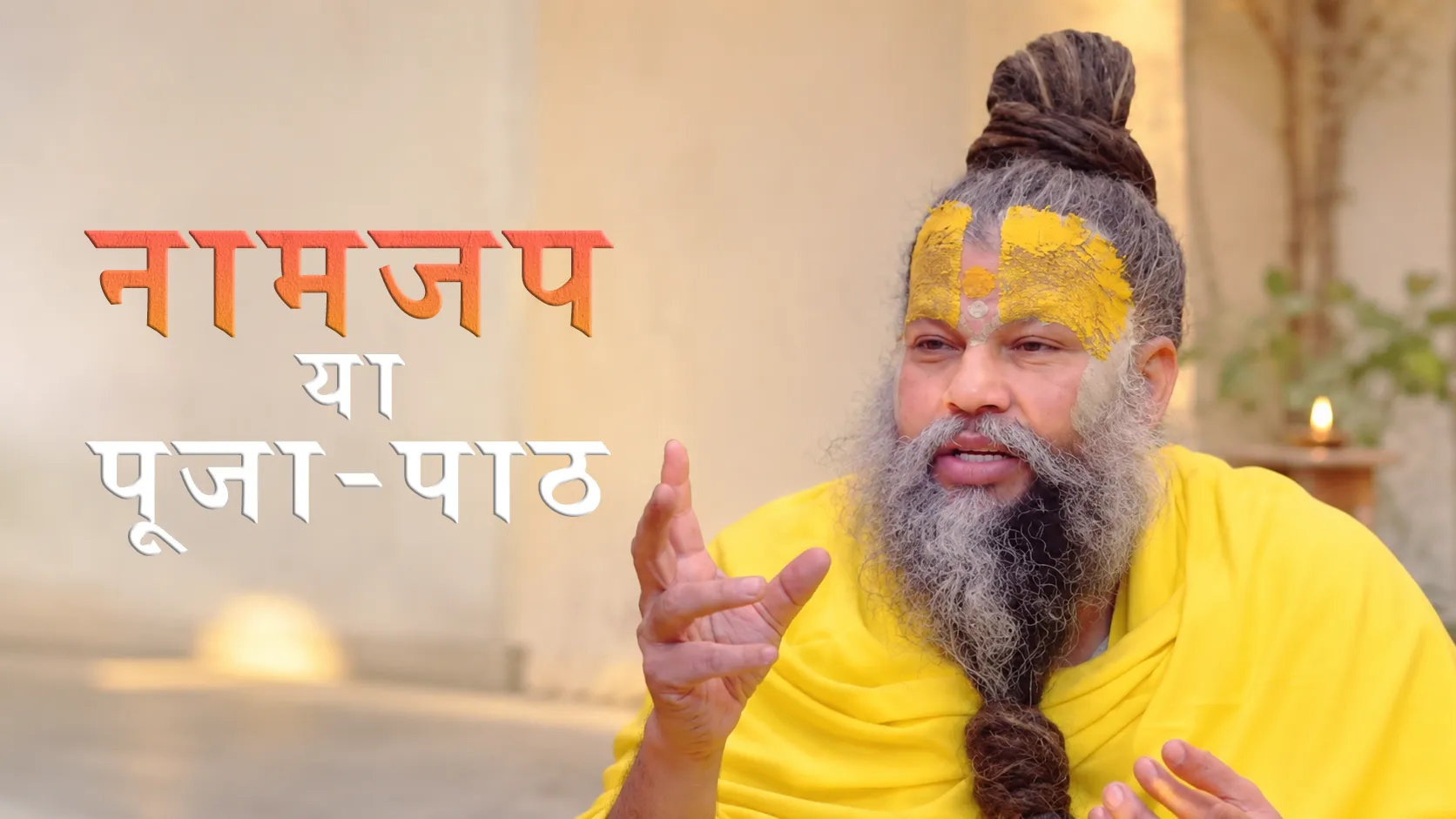
Daily worship, morning prayers, lighting incense, offering food to the deity. And still the restlessness does not leave. Many sincere devotees carry exactly this experience: the outer forms are all in place, but the inner state is exactly where it was.
The question rises naturally: does ritual worship alone lead to God? Or is something else needed? Shri Premanand Ji Maharaj answered this with such clarity that it settles in the heart immediately. To understand the power of naam jap (chanting the divine name), one must first recognize that it is not an add-on practice. It is the root of all sadhana.
What Is the Significance of Naam Jap in Sadhana?
We assume: I turned the rosary, I did my puja, so I have done my spiritual practice. (I thought the same, not long ago.) But Maharaj ji points to something deeper.
Ritual worship is activity of the body. Folding hands, lighting a lamp, making an offering — these are the work of the external senses. When the senses are occupied, we conclude that sadhana is happening. But what is happening inside?
"पूजा पाठ बाहरी शरीर की क्रिया है और नाम जब अंदर हृदय की गुफा के अंधकार को नष्ट करने वाला तेज है।"
"Worship and ritual are actions of the outer body. Naam jap is the divine light that destroys the darkness within the cave of the heart."
0:27
This divine radiance does not come from outside. It awakens from within, through chanting the divine name. The darkness in the cave of the heart, attachment, aversion, all inner distortions, only this inner light can destroy them.
This is the significance of naam jap. Maharaj ji teaches that the mind is immensely powerful, restless, and stubborn. Until the inner light of the name is kindled, the mind will keep running on its own terms. Without naam jap, real mastery over the mind is impossible. That is his core teaching.
Now that we understand what naam jap is, let us look at how it differs from ritual worship at the root.
The Real Difference Between Naam Jap and Ritual Worship
Ritual worship is not wrong. It is complementary. But it has a limit.
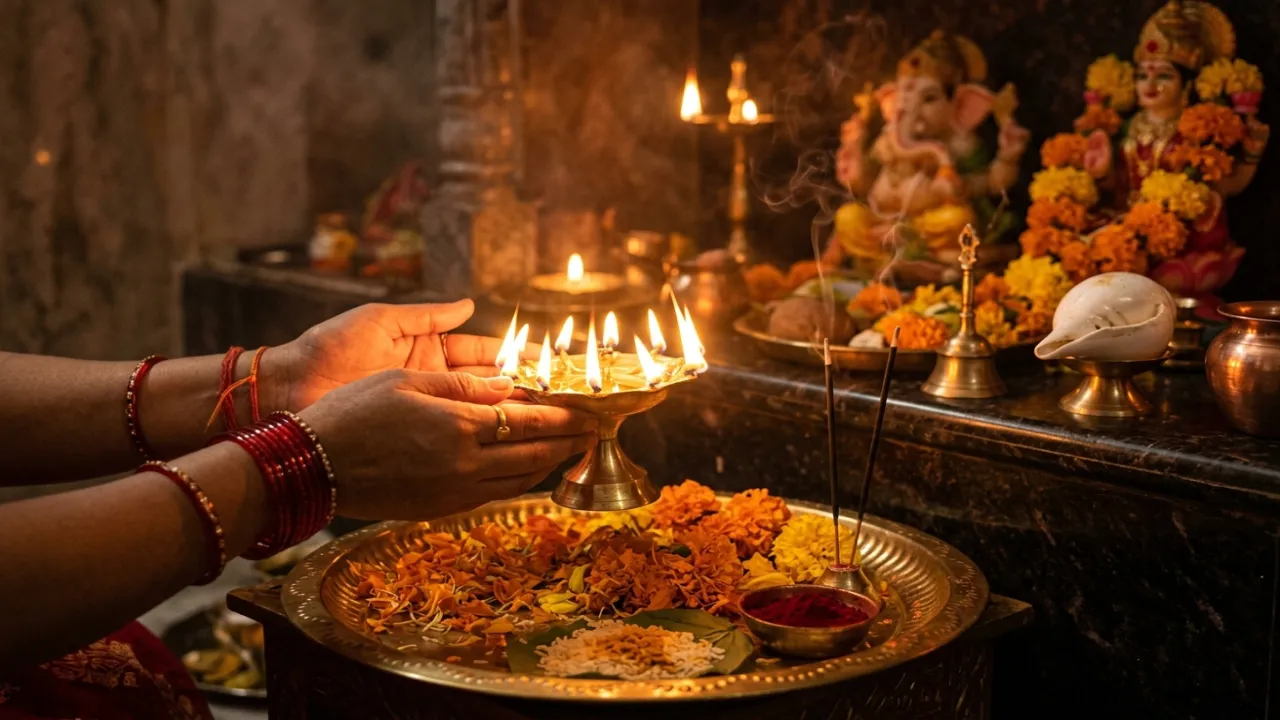
When we perform aarti, the senses are occupied: hands, eyes, ears. But in that very moment, attachment and aversion can continue undisturbed inside. The mind is worrying about tomorrow's meeting, replaying yesterday's argument. Externally, worship is happening. Internally, the world still runs.
Bhagwan Kapil Dev Ji said this plainly to Mother Devahuti: one who worships with fine offerings, yet keeps attachment and aversion within, performs worship like a fire-offering made in ash. Ash cannot kindle a flame.
That is why this teaching of Maharaj ji deserves careful attention:
"यदि नाम जप नहीं चल रहा है, तो बाहरी कुछ जो सेवा पूजा किए, उतने से मन पर शासन नहीं हो सकता।"
"If naam jap is not happening, then whatever outer service and worship you perform cannot bring mastery over the mind."
0:49
Both practices are complementary. But ritual worship alone, without naam jap, cannot transform the mind. That is the fundamental difference.
When naam jap is running inside, the worship fills with feeling. Then that same aarti, that same lamp, that same offering becomes supremely auspicious. Without the name? The action continues outside while the world runs inside.
So ritual worship alone is not sufficient. But can naam jap by itself lead to God?
Can Naam Jap Alone Bring God-Realization?
Maharaj ji offers an illustration that speaks in the language of mathematics but touches the heart directly.
The divine name equals the digit 1. All other spiritual practices equal zeros.
"नाम एक है और सब साधन शून्य है। एक लगा के शून्य रखो तो 10 गुना एक जीरो का पावर बढ़ता चला जाएगा और एक हटा के शून्य रखो तो शून्य शून्य ही रहेगा।"
"The name is one; all other practices are zeros. Place the one before the zeros and the power multiplies tenfold with each zero added. Remove the one and zeros remain zeros."
7:30
Once this clicks into place, the direction of sadhana changes completely. Perform worship, attend satsang, do seva. These are all zeros, but precious zeros. Join them to the name and the power multiplies: ten times, a hundred times, a thousand times. Remove the name and everything remains zero.
The Bhagavad Gita makes the same point: "ananya cetāḥ satataṃ yo māṃ smarati nityaśaḥ" — meaning, one who remembers Me constantly with undivided heart, for that person I become easy to reach. Naam jap is that constant remembrance. No special arrangement needed. No prescribed time.
Scripture has established it. Now let us see how this principle lived in the saints themselves.
Saints Who Proved Naam Jap Through Their Lives
Sant Ravidas Ji worked as a cobbler. He stitched and repaired shoes. In the world's eyes, ordinary labor. But inside, naam jap flowed without interruption. Maharaj ji says the work he performed became great worship. Great yogis were left astonished.

Caste was not a barrier. Occupation was not a barrier. Naam jap sanctified every act.
Goswami Tulsidas Ji gave the same warning:
"राम राम राम, जीही जोलो तू न जपि है तोलो, तू कह जाए तिहू ताप तप है।"
"Ram, Ram, Ram — for as long as you do not chant, you will be scorched by all three afflictions of existence."
3:11
The three afflictions, those arising from cosmic forces, from other beings, and from within oneself, will keep burning until the name of Ram is chanted. Tulsidas Ji put it simply: you may sit on the banks of the Ganga with water all around and still die of thirst without the name. You may rest beneath a wish-fulfilling tree and still carry your illness.
And Bhagwan Kapil Dev Ji's teaching to Mother Devahuti is unambiguous: however fine the offerings in outer worship, if attachment and aversion remain within, it is like a fire-offering made in ash. Inner purification is the essence of real worship.
Look at all three together: the life of Ravidas Ji, the warning of Tulsidas Ji, and the teaching of Kapil Dev Ji. One truth becomes unmistakable. Naam jap is the root of sadhana, not the branch.
But in daily life, what does a person do when the mind simply will not settle?
What to Do When Mind Won't Settle in Worship?
This question is completely natural. And Maharaj ji's answer is equally simple.
When the mind will not settle, that is a signal. A signal that more naam jap is needed. That is the remedy. That is the solution.
No special seat is required. No temple. With the breath, while walking, while working, the name can move. The Gita says exactly this:
"मामनु स्मर, युद्ध च।"
"Remember Me, and perform your duty."
Arjuna was told this on the battlefield. The farmer hears it in the field. The trader hears it in the market. The householder hears it at home. No exceptions.
Maharaj ji says: while grinding sandalwood, contemplate the divine, chant the name. The outer action happens; let the name move inside too. When both run together, joy begins to be felt. The more naam jap one does, the more inner spiritual energy grows. A positive cycle builds on itself.
Every question finds its answer at the same point: naam jap is the true and simplest path to God.
Naam Jap Is the True Path to God-Realization
Maharaj ji's conclusion is direct: make naam jap the center of your sadhana. Everything else gradually falls into place. More naam jap, more spiritual energy. More energy, fewer inner distortions. Fewer distortions, more true feeling. And feeling is what moves God.
"पायो परम विश्राम, राम समान प्रभु नाही।"
"I have found the ultimate rest. There is no Lord equal to Ram."
6:39
The Gita, the saints, the entire tradition: all agree. In the remembrance of the divine name lies the deepest rest. No other path is equal.
One small resolve, starting today: the name with every breath, remembrance with every act. That is the deepest essence of worship.
Radhe-Radhe.
Frequently Asked Questions

Independent writer, jaapak.com
I built the Jaapak app. I write in simple Hindi on the Bhagavad Gita and the satsang tradition — so seekers don't struggle with the scripture.
Read all articlesAbout this article
The commentary is based on the general understanding of the Sanatan tradition and written in accessible language. No verbatim quotation of any modern commentator is used.