Meera Bai's Lesson: Why the World Is Temporary | Naam Jap
Premanand Maharaj explains Meera Bai's story to reveal why worldly happiness always hides fear — and how chanting the divine name leads to real peace.
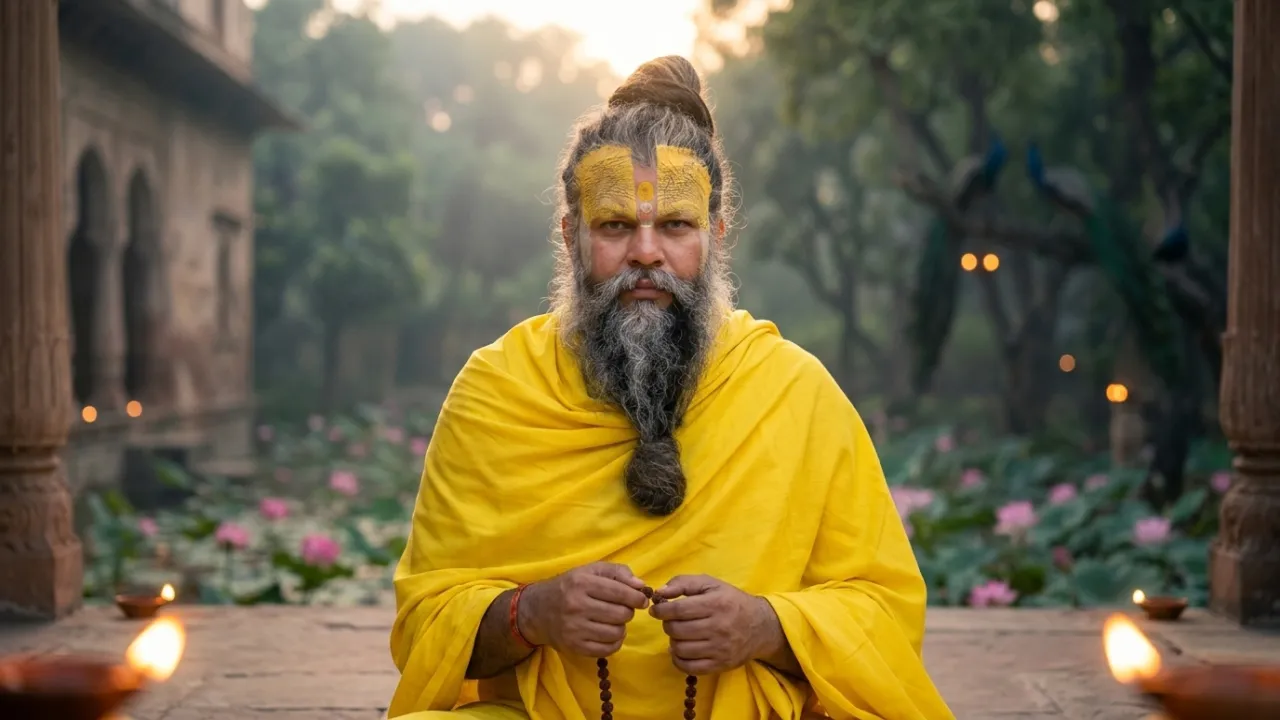
You love your parents deeply. Life feels good. And yet, somewhere beneath the surface, there's a quiet dread: What happens to me when they're gone?
A man named Shyam Shah from Jodhpur brought exactly this question to Shri Premanand Ji Maharaj — and the answer he received didn't just address his fear. It redefined what happiness itself means.
Meera Bai's Story and Premanand Maharaj's Teaching — Why Detachment from the World Matters
Shri Premanand Ji Maharaj returns to the story of Meera Bai again and again in his satsangs (spiritual gatherings) — not because she is a historical figure to be admired from a distance, but because her question is our question.
Meera Bai was a 16th-century princess-poet and saint who gave up a royal life to devote herself entirely to Lord Krishna (known as Giridhar Gopal — "the lifter of the mountain," one of Krishna's names). She had a palace, wealth, status — everything the world could offer. And yet one day she saw through it all: none of this lasts.
Every love we know in this world is tied to a body. The love of parents, the love of a spouse, the love of a friend — when the body goes, that love as we've known it goes with it.
Maharaj ji puts it plainly: "Beta, aaj hai, kal nahin rahega. Na rupaya rahega, na sharir rahega, na sthiti rahegi."
"Child, today it is here — tomorrow it will be gone. Neither money will remain, nor the body, nor the situation."
Meera's anguish began here. Everyone she loved slipped away. So she asked: is there anyone I can love who will never leave? That longing drove her toward the Divine.
We ask the same question — but usually avoid looking for the answer. Maharaj ji's satsang brings that "I'll deal with it later" moment into the present.
Meera's renunciation was not escapism. The truth that everything changes is not a philosophical abstraction — it's the lived reality of every household. Meera faced that reality squarely and spent her entire life living the answer.
Worldly Relationships and Maya — The Billionaire Parable
Maharaj ji tells a striking story.
A billionaire had it all — a beautiful wife, luxury, power. He hired a strong, devoted servant. Over time, the servant and the wife grew close. And eventually, together, they murdered the husband. The servant went to prison. The wife went to prison. The wealth sat untouched.
Maharaj ji asks: Was that happiness? Was that love?
The people we hold dearest — spouse, children, close friends — when maya (the Sanskrit term for worldly illusion and attachment) corrupts their judgment, those very protectors can become destroyers.
"य हम जिसे अंग रक्षक मानते हैं, वह अगर काल से प्रेरित हो जाए तो वही हमारे अंग भक्षक बन जाएंगे।"
"Those we consider our protectors — if driven by the force of time and delusion — can become the ones who consume us."
4:50
This brings Maharaj ji to the ancient story of Ajamil — a man who had sunk to the depths of moral ruin: violence, cruelty, every kind of wrongdoing. But one day a group of saints passed his door. Simply seeing them, tears came to his eyes. Repentance stirred. The saints told him: "A son will be born to you — name him Narayan" (a name of God).
Decades passed. At the moment of death, in panic, Ajamil cried out — "Narayan!" — calling his son's name, yet it was the name of the Lord. The divine messengers came. The chains of death were cut. Liberation was granted.
But here is what is rarely said: that cry didn't come from nowhere. A single moment of genuine encounter with the saints had planted a seed — buried under years of sin — and it broke open in his final breath. No matter how thick the layers of wrong living, one true moment of spiritual contact can cut through all of it.
"प्राया जो जीवन भर हम करते हैं, अंतिम वही हमारा निर्णय बन जाता है।"
"Whatever we practice throughout our lives — that becomes our final verdict at the moment of death."
12:11
Whatever fills the mind at death shapes the next journey. Worldly attachment amplifies the fear of dying. A heart oriented toward the Divine opens the door to liberation.
The True Definition of Happiness — Freedom from Anxiety, Fear, and Grief
Shyam Shah had said, "My life is very happy." Maharaj ji replied with a question that cuts to the bone:
How can happiness and worry coexist?
If life is genuinely happy, where does the anxiety come from? The worry about parents leaving, about money, about health — if all of that is present, this is not happiness. It is the illusion of happiness.
"सुख में चिंता नहीं होती, निश्चिंत होती है। सुख में भय नहीं होता, निर्भय होता है। सुख में शोक नहीं होता, निशोक होता है।"
"True happiness has no anxiety — it is free of worry. True happiness has no fear — it is fearless. True happiness has no grief — it is free of sorrow."
3:16
Three marks of real happiness: free of worry, free of fear, free of grief. And the source of that happiness?
"जो पर से प्राप्त हो उसे दुख कहते हैं। जो स्वा से प्राप्त हो उसे सुख कहते हैं। स्वा है आत्मा, स्वा है भगवान।"
"What is received from the external is called suffering. What arises from within — from the self — is called happiness. The self is the soul. The self is God."
3:32
Whatever the world gives is conditional — it can be taken back. What arises from the soul, from the Divine, is indestructible.
Most of us love our parents as bodies. That is why we fear losing them. But Maharaj ji offers a shift in vision: what if you saw the Divine seated in their hearts?
"When your contemplation becomes — 'My mother and father have God within them' — you will see that they will give you wisdom, give you strength. Even when their bodies are no longer here, you will not feel orphaned."
The great 8th-century philosopher Adi Shankaracharya took formal renunciation only after seeking his mother's blessing. The saint Chaitanya Mahaprabhu told his mother: "Even if I made sandals from the skin of this body and put them on your feet, I could not repay you." These great souls saw God in their mothers — and that is why their love held no anxiety, no fear.
The difference, I think, is the deepest one: loving someone as a body versus loving them as a vessel of the Divine.
Chanting the Divine Name — The One Practice That Dissolves Attachment and Fear
Maharaj ji says something that lands like a quiet shock:
"नाम जप नहीं करोगे तो अपने संबंधों में आप सही ढंग से निर्वाह नहीं कर पाओगे।"
"If you do not practice naam jap (chanting the divine name), you will not be able to fulfill your relationships properly."
7:36
This is significant. Naam jap — the practice of repeating a divine name or mantra — is not only for the afterlife. It is what makes you a better parent, a better child, a better friend, right here, right now.
And consider: a person who is genuinely conscious of the Divine — "God is watching, God is present everywhere" — can they commit the kind of betrayal described in the billionaire parable? The very awareness of the Divine acts as protection against the worst impulses.
Then Maharaj ji says the thing that steadies the heart:
"वह अव्यक्त रहते हैं, दिखाई नहीं देते, पर सच्चे दोस्त वही है जो हर जगह अंदर और बाहर मेरी बात जानते हैं व मेरी रक्षा करेंगे।"
"He remains unmanifest, unseen — yet the truest friend is the one who knows everything about you, inside and out, everywhere, and will protect you."
10:50
This was Meera Bai's path. The world fell away — but the Divine did not. Relationships ended, the palace was left behind — and her bond with Giridhar Gopal remained unbreakable.
Naam jap strengthens exactly that bond. More chanting, clearer mind. Clearer mind, less attachment. Less attachment, less fear. Where there is no devotion, no amount of wealth buys peace.
Related Teachings
- Apnapan: 5 Sutras to Make God Truly Yours | Premanand Maharaj
- How to Chant Radha's Name — The Simplest Path to Overcoming Maya
- How to Start Naam Jap: 25 Questions Every Beginner Has
From a World That Ends to a Refuge That Doesn't
Everything in this world is temporary. Money, the body, relationships — all of it. Maharaj ji notes: "Leave sweets out — they will spoil. Leave a car parked — it will decay." Everything is moving toward dissolution, and we keep looking away.
Meera Bai saw this truth clearly. And she chose to anchor herself to the One who never leaves.
God is the truest friend.
"वह अव्यक्त रहते हैं, दिखाई नहीं देते, पर सच्चे दोस्त वही है जो हर जगह अंदर और बाहर मेरी बात जानते हैं व मेरी रक्षा करेंगे।"
"He remains unmanifest, unseen — yet the truest friend is the one who knows everything about you, inside and out, everywhere, and will protect you."
10:50
Chant the divine name every day. Meera's path is not difficult — it begins with a single decision. Not to abandon the world, but to add a divine dimension to it. Starting today. Starting now.
This article is compiled from the satsangs of Shri Premanand Ji Maharaj. The original video is available at the link above. All images in this article are digitally created.
Frequently Asked Questions

Independent writer, jaapak.com
I built the Jaapak app. I write in simple Hindi on the Bhagavad Gita and the satsang tradition — so seekers don't struggle with the scripture.
Read all articlesAbout this article
The commentary is based on the general understanding of the Sanatan tradition and written in accessible language. No verbatim quotation of any modern commentator is used.