How to Start Naam Jap: 25 Questions Every Beginner Has
Two years of trial and error answered. 25 essential questions every new naam jap practitioner asks, from mantra choice to mind wandering.

Two years ago I picked up a mala for the first time. Trust me, the questions sitting in your mind right now were sitting in mine too.
"Do I really need a mala, or can I chant without one?" "Which mantra do I take — Om Namah Shivaya, or a Radha name, or a Ram name?" "Is it wrong to use a counter?" "How many malas a day — 1, 5, 11?" "Why does my mind run the moment I sit down?" "What if someone at home sees me?"
For a whole month I kept asking these same questions. I scoured YouTube, listened to satsangs (spiritual discourses), asked elders. And slowly, what I learned, what I tested on myself, what actually worked, I am writing here. In one place. So that the new practitioner standing where I once stood does not have to wander like I did.
Let us begin from the start.
Before You Begin: Naam Jap vs Mantra Jap
This was my first confusion too. "What am I doing — naam jap or mantra jap? Are they the same or different?"
It took me some time to understand. Now I will tell you straight.
Mantra jap. This is the classical method. A mantra is a fixed sequence of syllables that contains seed letters (bija aksharas like ॐ, ऐं, ह्रीं, क्लीं). Gayatri Mantra, Mahamrityunjaya, Navarna, Shri Sukta: these are all mantras.
The rules of mantra jap are strict:
- A mantra received through guru-diksha (initiation) is far more effective
- Pure pronunciation is essential, knowing the meaning is better still
- Specific rules for posture, direction, time
- No chanting in an impure state (without bath, during menstruation, etc.)
- Wrong pronunciation or wrong method can produce reverse effects
Naam jap is different. It is the bhakti (devotional) method. You simply take a name of God: Radhe, Ram, Krishna, Shiv, Hari, Hanuman. No seed letters, no special procedure.
Naam jap has no rigid rules:
- Anywhere, in any condition
- No penalty for slips in pronunciation
- Initiation is not mandatory
- Run it on the breath, run it in the mind, run it aloud. All valid.
Which is better?
Shri Premanand Ji Maharaj, the revered saint of Vrindavan whose satsangs draw thousands daily to the holy land of Radha-Krishna, repeatedly clarifies:
"कलियुग में नाम ही एकमात्र साधन है।"
"In the Kali Yuga, the name alone is the means."
"नानक नाम जहाज है, चढ़े सो उतरे पार।"
"Nanak says: the Name is the ship; whoever boards it crosses over."
Why is the name given precedence? There is a reason, and it is very clear.
Today we have neither the capacity for pure Sanskrit pronunciation, nor the time to reach a true guru, nor the chance to learn yajna and tantra procedures. But the name can run every moment. On every breath. While eating, sleeping, walking. Stomach upset, on your period, no bath that day, the name still runs in the mind. This is the power of the name. Available unconditionally.
A line from Maharaj ji that touched me:
"हमारे जीवन में बस एक ही बात रह गई — नाम, नाम, नाम, नाम। हर प्रश्न का उत्तर आपको नाम में मिलेगा।"
"In our life only one thing remains: name, name, name, name. The answer to every question, you will find in the name."
And what about Om Namah Shivaya? Here I pause for an important point.
In the beginning, I also thought Om Namah Shivaya was simply a name of Shiva, just chant it. But Maharaj ji has given a very clear instruction on this, and a friend once asked me the same question.
Maharaj ji's answer is:
"पंचाक्षरी मंत्र है — किसी गुरु से मंत्र लो और फिर उच्चारण मत करो।"
"It is the panchakshari (five-syllable) mantra. Take the mantra from a guru, and then do not pronounce it aloud."
That is, Om Namah Shivaya should not be chanted without guru-diksha, and even after diksha, not aloud, only mentally. It is the panchakshari mantra, not a name. The category is different.
So what to chant until a guru comes? Maharaj ji's own guidance:
"साम सदा शिव जपो, और किसी शिव उपासक को गुरु रूप में वरण करो। फिर उनसे पंचाक्षरी मंत्र लो, फिर जपो। हाँ, सिद्धांत से चलो, मनमानी मत करो।"
"Chant 'Saam Sadashiv', and accept a Shiva devotee as your guru. Then take the panchakshari mantra from him, then chant. Yes, walk by principle, do not do as you please."
Saam Sadashiv too should be chanted only mentally, not aloud. Maharaj ji has said this as well.
This is a big point. If your mind wants to jump straight to Om Namah Shivaya, pause. That has been called doing-as-you-please.
My direct advice for the new practitioner: start with naam jap — Radhe Radhe, Shri Ram, Hare Krishna. These are names, not mantras, and they are open without diksha. If you are a Shiva devotee, run Saam Sadashiv in the mind, and alongside, search for a Shiva-worshipping guru. When the guru arrives, take the panchakshari through diksha.
First 3 to 6 months: only the name. Radhe Radhe. Ram Ram. Hare Krishna. Saam Sadashiv in the mind. Hold one, train the mind. When the taste begins to flow and the guru arrives, then take diksha and step into mantra jap — Gayatri, Mahamrityunjaya, Panchakshari, Navarna — through the proper method.
Now, with this understanding, let us turn to the 25 questions troubling you.
The First Three Questions Beginners Ask
1. Which mantra should I take first?
This is where most people get stuck. They pick up a new book, see some Navarna mantra, "ॐ ऐं ह्रीं क्लीं चामुण्डायै विच्चे", and think a difficult mantra will give faster results. The next day brings fever, weakness, an unsettled mind.
I made this mistake myself.
The point I made above (mantra jap requires guru-diksha, naam jap is open) applies right here.
Without a guru you should not begin mantras like Om Namah Shivaya, Gayatri, Mahamrityunjaya, Navarna. Maharaj ji has called this "doing as you please." But a name can be taken by anyone, anywhere, in any condition.
So what do you say on day one? My personal advice (according to your ishta or chosen deity):
- Krishna or Radha devotee? Radhe Radhe, Hare Krishna, Jai Shri Radhe
- Ram devotee? Shri Ram Jai Ram Jai Jai Ram
- Shiva devotee? Saam Sadashiv (in the mind, not aloud) — this is Maharaj ji's direct instruction until a guru is found
- Hanuman devotee? Jai Shri Ram, Jai Hanuman
- Devi devotee? Jai Mata Di, Jai Maa
- Ishta not decided? Begin with Hare Krishna or Radhe Radhe. These are the most open of the names.
For the first 40 days, just one name, the same name, at one fixed time daily. Bija mantras, Panchakshari, Navarna, Mahamrityunjaya: after guru-diksha. Foundation first, mantra after.
By Deity: Which Name Is for You (Until the Guru Arrives)
This list contains only naam jap options: open without diksha, fit to be chanted in any condition. I am not giving a parallel mantra column because every basic mantra requires guru-diksha and each has its own method. When the guru comes, he will tell you.
| Ishta Deva | Naam Jap (without diksha, in the mind or softly) |
|---|---|
| Shiva | Saam Sadashiv (in the mind), Har Har Mahadev |
| Hanuman | Jai Shri Ram, Jai Hanuman |
| Ram | Shri Ram Jai Ram Jai Jai Ram |
| Krishna | Hare Krishna Hare Krishna, Radhe Radhe |
| Radha Rani | Radhe Radhe, Jai Shri Radhe |
| Vishnu | Jai Narayan, Jai Shri Hari |
| Durga / Devi | Jai Mata Di, Jai Maa |
| Ganesh | Jai Ganesh, Ganpati Bappa |
| Ishta not decided | Radhe Radhe or Hare Krishna: the most open names |
A few useful points:
- New practitioner? Start from the naam jap column above. Mantras like Panchakshari (Om Namah Shivaya), Dvadashakshara (Om Namo Bhagavate Vasudevaya), Gayatri, Navarna, Mahamrityunjaya: all of these only after guru-diksha. Maharaj ji has said clearly: chanting a mantra without a guru is "doing as you please."
- Shiva devotee with no guru? Maharaj ji's straight instruction: keep chanting Saam Sadashiv in the mind, not aloud. Alongside, accept a Shiva-worshipping guru, then take Panchakshari from him.
- Radha-Krishna devotee? Maharaj ji says again and again that "Radhe Radhe" is the answer to every question. Run it through the day.
- Hanuman devotee? Jai Shri Ram plus a weekly Hanuman Chalisa (Tuesday and Saturday).
Keep one thing clear: one ishta, one name, one mantra. Everything scatters when people switch deities every day. Shiva today, Vishnu tomorrow, Devi the day after — energy fragments. Stick to what you chose for the first 3 to 6 months. Remembrance of other deities will come naturally later.
2. Should I use a mala or chant without one?
This question troubled me for months. In every video, someone said "chanting without a mala is incomplete," and someone else said "mental chanting is supreme."
The truth lies in the middle.
In the beginning, definitely keep a mala. Why? Because the new mind needs the support of a number. As the beads pass through the fingers, the hand, the eye, and the mind get linked together. You are sitting, there is one task, and you will not get up until the mala is complete. This discipline comes from the mala.
But here is what Maharaj ji explains:
"जप कभी बोलकर नहीं होता। मन में चलता है हमेशा। होंठ भी नहीं हिलने चाहिए।"
"Chanting is never done aloud. It always runs in the mind. Even the lips should not move."
That is a later stage. First the mala in the hand, lips still, name in the mind. All three together.
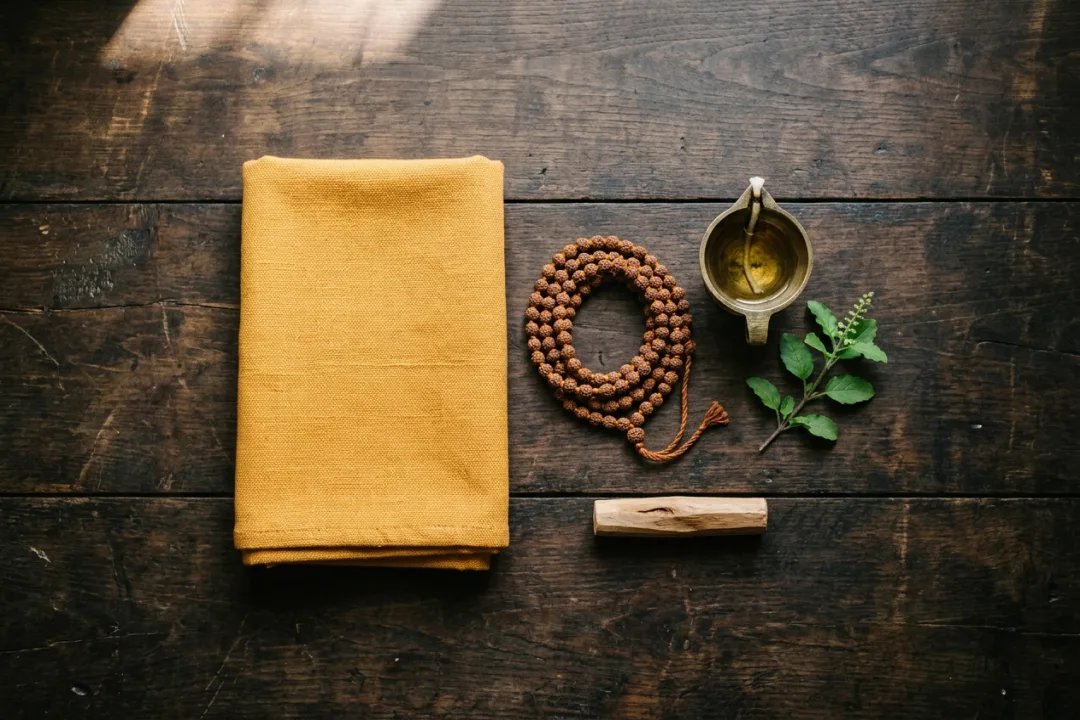
When the name starts to run on its own with every breath, the need for the mala begins to fade. In Maharaj ji's words:
"जब प्रत्येक श्वास में निरंतर नाम अभ्यास होने लगे, तब वो अव्यावहारिक दशा हो जाती है — जैसे पलक झपकना, जैसे दिल का धड़कना।"
"When the practice of the name runs continuously on every breath, that state becomes effortless, like the blinking of an eye, like the beating of the heart."
It takes years to reach that state. Until then, the mala is your companion.
3. Should I use a counter or not?
These days everyone is chanting on a counter: a small device on the thumb, click, click, click. Going to office, on the metro, walking down the street. The numbers keep climbing.
My honest opinion on this.
The counter has one benefit. It reminds you to chant. For working professionals, students, householders who do not get a free hour to lay out an asan, a counter is a support. If you say Radhe Radhe even five times a day looking at the counter, something has happened.
But the counter has a bigger drawback. Pride. "I did one lakh today." "Made it to two lakh this week." The moment numbers show up, counting enters the mind. The moment counting enters, bhava (devotional feeling) collapses. And the very heart of chanting is bhava.
Look at the great saints. Maharaj ji himself, Rajendra Das Ji Maharaj — have you ever seen a counter in their hands? No. Because the name runs on its own in their minds. There is no need to count.
Here is what I did: for the first six months, only the mala. I did not even touch a counter. Why? I had to build the habit of sitting first, not counting. I learned to settle on the asan, then a year later started carrying a counter occasionally on travel. But even today, the morning chanting is without a counter, without numbers, just with the mala.
Straight talk: the counter is not bad, but do not start with it. Sit on the asan first. Learn the mala first. The counter later, once asan-based chanting has settled.
Asan, Mala, and How to Sit
4. Where do I sit? Will the sofa do? Will the bed do?
No. And this was my biggest mistake.
For the first two months I sat on my bed and chanted. It was winter, the floor was cold, the bed felt comfortable. But my mind would not settle. My legs would stretch out, sleep would creep in, the chanting would break halfway through.
When I started laying out an asan (a thick cotton cloth, kept only for chanting), everything changed.
Why? There is energy in the body. Chanting raises that energy. If you sit directly on the floor, on a sofa, on the bed, that energy gets absorbed downward. Laying out an asan locks that energy in: on you, in your body, in your sadhana (spiritual practice).
5. The colour of the asan: does it really matter?
Yes. I did not believe it at first either.
Right colours: red, yellow, white. These are bright, sattvic colours. They draw energy and bring positivity.
Wrong colours: black, blue, dark brown. These are tamasic colours. They are used in tantric practices. The new practitioner should stay away from them.
There was an old blue blanket at home, and I had been using it as my asan. A sadhu told me, "Change it. Take red or yellow." I changed it, and the mind began to settle right away.
6. Which mala to take, for which deity?
Memorise this chart. It will be very useful.
| Deity | Suitable Mala |
|---|---|
| Shiva, Hanuman, Devi Maa | Rudraksha (5-mukhi) |
| Vishnu, Ram, Krishna | Tulsi (but onion, garlic, meat must be given up) |
| Vishnu, Krishna (alternative) | White sandalwood or Kamalgatta (lotus seed) |
| Durga Maa, Kali | Red sandalwood or rudraksha |
| General / beginner | Sphatik (crystal, works for everyone) |
For the beginner, a 108-bead sphatik mala is the safest choice: it works for every ishta. It is available online for 300 to 500 rupees. You do not need a very expensive, very ornate mala at the start. If you are a Krishna, Ram, or Vishnu devotee, tulsi is also good, just remember the onion-garlic-meat condition.
One mistake I have seen: people chant Vishnu or Krishna mantras on a rudraksha mala. This is not appropriate. Rudraksha belongs to Shiva, tulsi or sandalwood to Vishnu. The mala and the deity should match, otherwise the full fruit is said not to come.
7. How many malas a day?
Beginning: 1 mala (108 names). That is enough.
Listen, I see many new practitioners who sit down to do 11 malas on the very first day. Next day comes leg pain, back pain, and from the third day everything stops. This is a major mistake.
The first mala, easy and unhurried. 10 to 15 minutes. This is your entire sadhana for now. When you have done it for 11 days without a break, then add a second mala. Then slowly to 5, to 11. Even 11 malas in a month is a lot.
Maharaj ji once said:
"जो व्यक्ति भगवान के लिए 20 मिनट बैठा है, भगवान उस पर ज़्यादा कृपा करेंगे। जो 2 मिनट बैठा है, उसे कम।"
"On the one who has sat for God for 20 minutes, God will shower more grace. On the one who sat for 2 minutes, less."
The point is clear: time matters, not just the count.
8. Mental chanting or aloud?
There are three categories of chanting:
- Vachika: spoken aloud (as in kirtan)
- Upanshu: lips moving softly, almost no sound
- Manasika: only in the mind, lips still
By fruit: mental chanting yields a thousand times, upanshu a hundred times, vachika one time.
But for the new practitioner? Mental chanting is hard to do directly. The mind will run. So I will say: start with upanshu. Lips moving slowly, sound almost absent. As practice firms up, the lips will close. Mental chanting will arrive on its own.
Timing: When Should You Sit?
9. Is brahmamuhurta essential?
Ideally, yes. In brahmamuhurta (one and a half hours before sunrise, roughly 4:00 to 5:30 AM) the mind is at its quietest, the atmosphere is sattvic, and the fruit of sadhana multiplies.
The practical truth is different. If you cannot wake at 4 AM every day, choose your quietest morning hour. I wake at 5:15 (even in the January cold, this is one rule that has never broken), and chant from 5:30 to 6:00. Work does not stop, and sadhana also gets done.
I now feel that brahmamuhurta is genuinely something different. The silence at that hour does not arrive at any other time. But maybe I am wrong. The one who chants from the heart at night, God watches over him too.
Three rules that are essential: same time daily. Same place. Same asan. Together these three steady the energy of sadhana.
Where to Practice: PG, Office, Travel
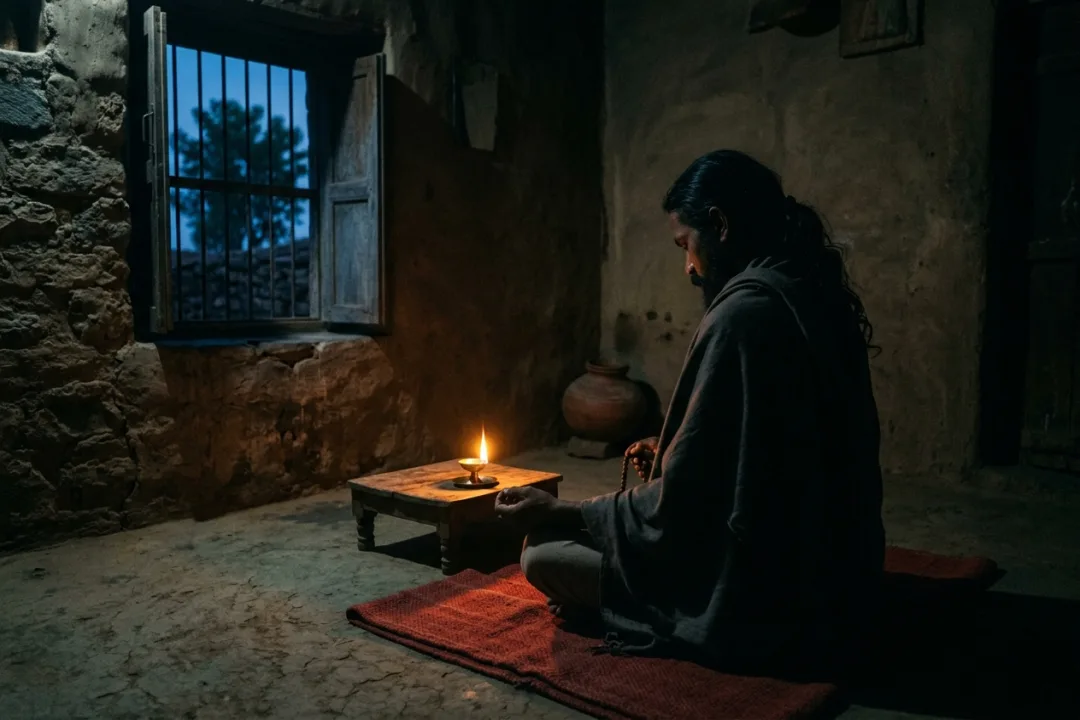
10. I live in a PG / hostel: what do I do?
I have received this question many times. There is one misconception that needs to be cleared.
You think: "I cannot find solitude, how can I chant?" But chanting does not need solitude. Chanting needs true bhava.
For those living in PGs:
- Pick a corner of your bed, and chant only in that same corner, every day.
- Roll a small asan and keep it ready. Take it out, lay it down, chant, roll it up.
- If roommates are sleeping, mental chanting. No one will know.
- On the metro, on the bus, while walking, keep the name running in the mind.
Maharaj ji says:
"कार्य के बीच हर पाँच मिनट में एक बार 'राधा' बोल दो।"
"In the middle of your work, every five minutes, say 'Radha' once."
This is for both householders and hostel-dwellers.
11. Can chanting happen in the middle of office work?
Yes, and this is the real sadhana.
Thirty minutes of formal chanting in the morning. The other 15 hours, mental chanting, while working, while eating, while sitting on the bus. This habit forms in 3 months. Once it is formed, the name runs on its own.
The formula I adopted: at the start of every task, Hari Sharanam. At the end of every task, Krishnarpanamastu. A second-long practice. The whole day stays connected to God.
12. Should I carry a mala while travelling?
Take this as settled: chanting with a mala in a public place is not appropriate. People who twirl a mala in their hand on the metro, bus, or train often slip into display.
Keep the mala in a mala-bag. If you wish, put your hand inside the bag and chant. Or best of all, no mala, only mental chanting. Travel hours are very fruitful if mental chanting is in place.
Mind Troubles Every Beginner Faces
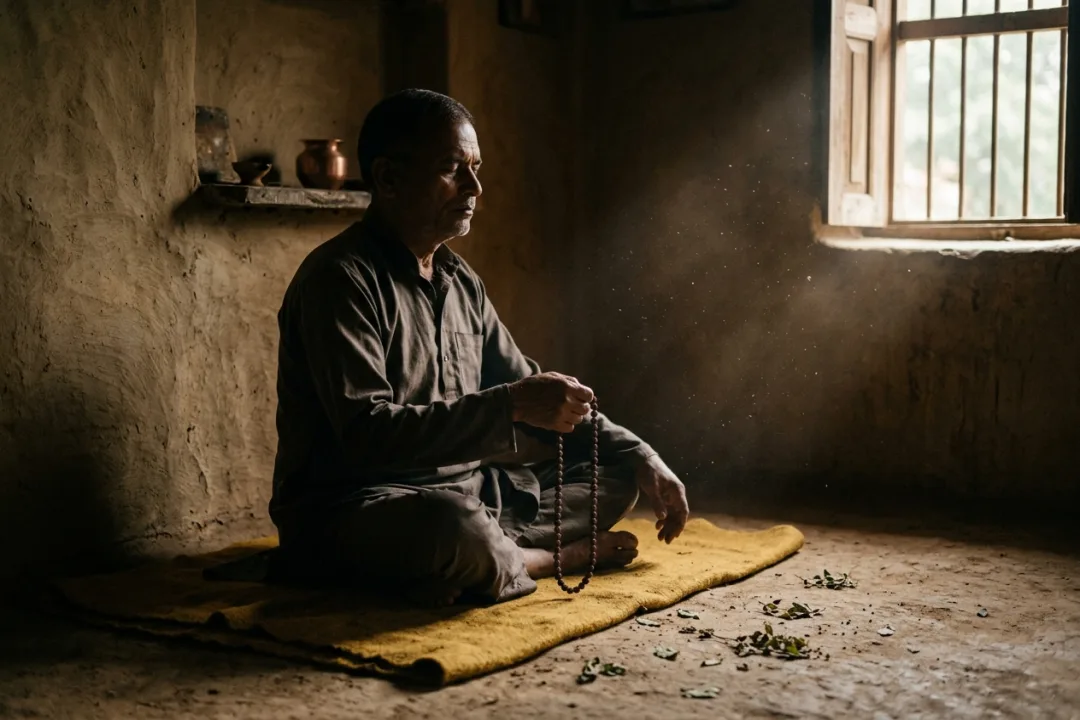
13. The mind will not settle: what do I do?
This is the biggest question.
You sit, pick up the mala, and the mind goes off to the market, to a friend, to some old conversation. This is the real struggle.
There are three remedies.
First: do not give consent. Maharaj ji says something deep:
"आपकी स्वीकृति के बिना मन कुछ नहीं कर सकता।"
"Without your consent, the mind can do nothing."
The mind will bring thoughts, you cannot stop it. But the "yes, I will go along with this thought" — that consent is yours. Let the thought come, let it stay, you keep moving the mala forward. The thought will float away on its own.
Second: trataka. Two minutes before chanting, hold a steady gaze on a small image of your ishta or on a flame. Let the eyes blink when they want, then open them, then look again. In two minutes the mind becomes one-pointed.
Third: generate longing. Maharaj ji has said again and again:
"राधा जी के बिना व्याकुल हो जाओ।"
"Become restless without Radha ji."
How? Spend two minutes a day thinking: my life is so short, I do not know when it will go out, and if in this brief span I have not connected with God, what use is any of this? This vairagya (dispassion) brings depth into chanting.
14. I get sleepy: how do I stop it?
Sleep is a simple signal. Two things.
Physical cause: in Maharaj ji's words,
"ये सारे लक्षण ब्रह्मचर्य हीनता के हैं।"
"All these symptoms come from a lack of brahmacharya."
If sleep is heavy, attend to brahmacharya first. Take an 11-day vow.
Practical fix: 20 squats before chanting, or 10 to 15 minutes of brisk walking. Wake the body up, then sit. Not on an empty stomach, not after eating. Drink a little water and sit.
One small thing that helps a lot: wash your face, take a bath, then sit. Chanting in dirty clothes naturally invites lethargy.
15. Why do I feel anxious during chanting?
This question came to me. The answer is interesting.
When you start to chant, the negativity in your body, in your home, in your surroundings begins to stir. That negativity does not want you to chant. Your chanting weakens it.
So in the beginning:
- Strange quarrels start at home
- Sudden obstacles in work
- Stomach trouble, sometimes a headache
- Strange anxiety during chanting
These are all good signs. Negativity is leaving. Do not stop. Do a small havan at home, light some camphor. Keep chanting. In 10 to 15 days, peace will return.
16. People at home make fun of me: what do I do?
Do not put it on display.
Chanting is a private thing. Your asan in a corner of your room, your mala in the mala-bag. There is no need for anyone to know about your sadhana.
When the effect starts to show in your behaviour, in your peace, in your magnetism, people will ask on their own. Then tell them. Do not waste time arguing.
Tantra, Charms, Black Magic vs Naam Jap
This question reaches every seeker sooner or later. The market is full of things being sold: mantras, yantras, talismans, vashikaran charms, ash and threads to remove "the evil eye," "100% guaranteed" tantric treatments. And when life pulls you through some sorrow, the mind grows weak, and these shops start to appear on their own.
I almost fell into it once. A relative said "someone has done something to you," gave me a number, and that "guru ji" asked for 11,000 rupees, sent ash and a thread. For four months, nothing happened. The money was gone, the mind more tired. Then it became clear.
Maharaj ji has spoken very plainly on this whole business:
"छू से जंतु, मंत्र से पानी और राख देने से — ऐसे से नहीं होता। इसका निदान डॉक्टरों के पास जाना चाहिए। और यह सब नौटंकी नाटक में कोई ना फँसे, नहीं हाथ कुछ नहीं लगेगा।"
"Insects with a touch, water with a mantra, giving ash — it does not work this way. The remedy is to go to a doctor. And no one should get caught in this drama and theatre, nothing will come of it."
He has also given the reason:
"हम बातों को मानते हैं जो शास्त्र प्रमाणित है।"
"We accept what the scriptures confirm."
Now compare this with naam jap.
Mantras are not sold in the market. Maharaj ji's other line:
"ऐसे मंत्र कोई बाज़ार है क्या कि ख़रीद ले? भगवान के नाम तो ठीक है — और मंत्र गुरु से लिए जाते हैं।"
"Are mantras some kind of market that you go and buy? God's names, fine; but mantras are taken from a guru."
That is, real mantras come through guru-diksha, and the names of God are already open to all. For the name there is no fee, no shop, no broker.
There are no conditions on the name. "There is no procedure or prohibition of any kind. Pure or impure, in any condition…" — Maharaj ji's direct instruction. Tantra has strict procedures, and a mistake can produce reverse effects. Nothing of the sort with the name. No bath, on your period, ill: the name keeps running.
The name is a sentinel. Maharaj ji says:
"नाम पहरेदार बहुत ज़ोर का है — दिन-निशि, अंदर तो आ नहीं सकता।"
"The name is a very powerful watchman — day and night, nothing can come in."
When the name runs within you, no negative force from outside can enter. What need is there for ash and threads?
The name destroys sins and tendencies.
"नाम जपते ही वासनाएँ नष्ट होने लगती हैं, पाप नष्ट होने लगते हैं, पाप की प्रवृत्ति नष्ट होने लगती है।"
"The moment one chants the name, desires begin to be destroyed, sins begin to be destroyed, the tendency toward sin begins to be destroyed."
Tantric treatments try to act from the outside; the name brings change from within. One is permanent, the other temporary.
My direct word: if any "guru ji" is asking you for money for some "treatment," understand that it is theatre. Pick up a rudraksha or sphatik mala, lay out an asan, and say Radhe Radhe daily for 11 days. What the "tantric" claims to remove, the name will remove on its own. Without a fee, without a broker, without fear.
Experiences and Signs: The Real Marks
17. How will I know my chanting is working?
The new practitioner carries this worry. I had it too.
A few signs I have seen in my own experience, which several senior sadhakas have confirmed:
Physical signs:
- While chanting, the body starts to sway gently back and forth. This is current passing through.
- Without crying, water comes to the eyes, yawns come. This is purification.
- Sometimes the hair stands on end, sometimes a cold wave runs along the spine.
Practical signs:
- Anger reduces. Small things no longer set you off.
- Sleep grows deep, less of it goes further.
- The old craving for food fades.
Spiritual signs:
- Going to a temple, a different kind of energy is felt, goosebumps.
- Some old relationships fall away on their own, new sattvic people arrive.
- Dreams change. Sometimes a glimpse of the ishta, sometimes a temple, sometimes a saint.
18. If God appears in a dream, what do I do?
The first time I had such a dream, I ran to tell everyone. This is the biggest mistake.
Maharaj ji says clearly:
"भगवान के अनुभव छुपाने से बढ़ते हैं। गाने से रुक जाते हैं।"
"Experiences of God grow when hidden. They stop when sung about."
Why? Because when you narrate an experience, a fine ego rides along behind it: "see, this happened to me." That ego is what diminishes the sadhana.
My rule now: any experience, I write in a diary. Close it and keep it. I tell no one, only offer it at Maharaj ji's feet. The experiences grow deeper.
19. When does jap become siddha (perfected)?
By count, it is said that a mantra becomes siddha at one crore (10 million) repetitions; even the line of destiny can change. If you do 100 malas a day, that is one crore in a year.
And one thing people often ask: what about kundalini awakening, piercing of chakras, divine vision, siddhis (yogic powers) — what extra do I need to do for these? Maharaj ji's answer is very direct:
"कुंडलिनी जागृत कर देगा। ये चक्रों का भेदन कर देगा। ये सब कर देगा। नाम जप में लगो।"
"It will awaken the kundalini. It will pierce the chakras. It will do all of this. Engage in naam jap."
And the sutra of the scriptures behind this: "Kalyug kewal naam adhara" (in the Kali Yuga, the name alone is the support). Whatever ashtanga yoga, harsh tapasya, or tantric practice claims to deliver, the name does it all on its own, in its own time, in its own way. On divine vision he has given an open guarantee:
"नाम जप करो — अगर संसार भगवान का स्वरूप ना नज़र आने लगे तो मुझे कहना।"
"Chant the name. If the world does not start appearing as the form of God, then tell me."
Seeing God everywhere in the world: this is the true divine vision. It is the natural fruit of naam jap, not something to be asked for separately.
By bhava, though, the mantra becomes siddha only when the mind no longer wants to ask anything from God. Meeting Him is enough.
This is where the difference between mantra siddha and sadhaka siddha lies. Mantra siddha is the one whose request for power is granted. Sadhaka siddha is the one who does not ask for power at all, only for love.
Our goal is not the first. It is the second.
Lifestyle: What to Change Alongside Chanting
20. How important is brahmacharya?
Very important. But do not panic.
If you are a householder, married, total brahmacharya is not required. But you can take an 11-day vow. During this period, sadhana grows intense.
If you are unmarried, a student, basic brahmacharya is essential. Of the eyes, of thoughts, distance from porn and screen-driven lust. This is the foundation of sadhana.
21. What should I change in my food?
Not much. To begin with:
- Reduce tamasic food: meat, alcohol, onion, garlic (if you chant on a tulsi mala, give them up entirely)
- Light dinner, before sunset if possible
- Nothing heavy before chanting; empty stomach or a little fruit
- Do not cook in anger, in sorrow. Food carries the energy of the cook
Slowly the body itself will tell you what it wants. As the body purifies, the pull of tamasic things will fade on its own.
22. Can chanting happen without a guru?
This is perhaps everyone's most sensitive question. Maharaj ji's clear word here comes in two parts.
Naam jap — yes, it can happen without a guru. Radhe Radhe, Hare Krishna, Shri Ram, Saam Sadashiv (in the mind): these names are open to all. You can chant them in any condition, anywhere.
Mantra jap — no. Maharaj ji has said clearly:
"पंचाक्षरी मंत्र है, किसी गुरु से मंत्र लो और फिर उच्चारण मत करो। सिद्धांत से चलो, मनमानी मत करो।"
"It is the panchakshari mantra. Take it from a guru, and then do not pronounce it aloud. Walk by principle, do not do as you please."
Om Namah Shivaya, Gayatri, Navarna, Mahamrityunjaya: none of these without guru-diksha.
So what to do until the guru arrives? Maharaj ji's path:
"साम सदा शिव जपो, और किसी शिव उपासक को गुरु रूप में वरण करो। फिर उनसे पंचाक्षरी मंत्र लो।"
"Chant 'Saam Sadashiv', and accept a Shiva worshipper as your guru. Then take the panchakshari mantra from him."
Practical translation: keep chanting the name daily. Alongside, keep listening to the satsangs of saints. Maharaj ji's satsangs are so widely available that as you listen, if your mind turns toward him, that mental connection itself is a support. And pray to God that a true guru come. Maharaj ji says, "वही गुरु है, किसी किसी रूप में मिलकर वही दे देंगे।" / "He alone is the guru; in some form or another, He himself will give it."
My personal note: a friend of mine started chanting Om Namah Shivaya directly, without any diksha, and he had no trouble. It is God's grace. But this is the exception, not the rule. Maharaj ji's instruction is the principle, experience is the exception. I would advise the new practitioner to walk by the principle.
23. How do I choose my ishta deva?
A simple method I found.
Close your eyes. Think: "if today were the last moment of my body, which God would I want to go to? Whose name would the mind reach for first?"
That is your ishta.
If a clear answer does not come, no stress. Begin with Radhe Radhe or Hare Krishna: these are the most open of the names. Slowly the ishta will reveal itself. Often the mind moves from one ishta to another; this is normal. The final ishta is the one who does not change even after years.
On Special Days
24. Special chanting on Navratri, Shivratri, Ekadashi?
Yes. The fruit on these days multiplies.
- Navratri: chanting Devi's name, 10,000 times the fruit
- Shivratri: chanting Shiva's name (Saam Sadashiv, Har Har Mahadev), 1,000 times
- Ekadashi: chanting Vishnu or Krishna's name, 1,000 times
- Solar / lunar eclipse: naam jap, 1,000 times the fruit
Take an extra resolve on these days. Bump up your daily 1 mala to 11 or 21. Do not ask for anything special, only for darshan (divine sight) or grace.
(Mantra jap, Panchakshari, Gayatri, etc., only after guru-diksha. I have only given naam jap here.)
25. What is sankalpa, and how do I take one?
Less is said about this, but it is very important.
Sankalpa means telling God, before you begin chanting, what you are going to do, and why.
The procedure: take a little water in your hand. Sitting on the asan, say:
"My name is [your name], my father's name is [father's name]. Today is [date]. From today, for [these many] days, I take a sankalpa to chant [this many] malas of [this] mantra daily. The aim: love at the feet of God [name of ishta]."
A little water on the forehead, the rest in a temple or at the tulsi plant.
Without sankalpa, energy stays scattered. With sankalpa, it gets a direction. Negativity cannot steal it. And if you complete an 11-day sankalpa, you have your first victory.
A Final Word from Me
Two years ago I too thought that chanting was some difficult task, that it required great discipline, that I would have to give up many things.
Completely wrong.
Today it feels that chanting is the simplest thing of all. Not chanting is the hardest.
What I first thought, that this is religion, that there are highs and lows, pure and impure, all the rules, all of that broke down. Chanting is not a religious ritual. It is medicine for the mind.
You brush your teeth in the morning. Why? Because dirt has settled overnight. Dirt has settled in the mind too, through the day, through life, through lifetimes. Chanting is its cleaning. Daily. Do not skip it.
If you want to start today:
- A red or yellow cloth for the asan
- A simple 108-bead rudraksha mala
- A small sankalpa: "From today, for 11 days, 1 mala of Radhe Radhe daily" (or the name of your ishta)
- A morning hour, whichever it is, the same one every day
- During the mala, no talk, no phone, silence
That is all.
Eleven days from now, when you read this article again, you will find that these 25 questions are no longer yours. You will have your own new 25. And this is the staircase of sadhana.
Best wishes for climbing a new step.
Radhe Radhe.
Related Teachings
- Apnapan: 5 Sutras to Make God Truly Yours | Premanand Maharaj
- Premanand Maharaj Diksha: The Real Path to God-Vision
- How to Chant Radha's Name — The Simplest Path to Overcoming Maya
This article is based on my own personal experience and the teachings of Shri Premanand Ji Maharaj along with several saints. Each seeker's experience is different. Adopt what fits your discernment, and ask your guru wherever you have doubt. All images in this article are digitally created.
Frequently Asked Questions
Independent writer, jaapak.com
I built the Jaapak app. I write in simple Hindi on the Bhagavad Gita and the satsang tradition — so seekers don't struggle with the scripture.
Read all articlesAbout this article
The commentary is based on the general understanding of the Sanatan tradition and written in accessible language. No verbatim quotation of any modern commentator is used.