How to Overcome Alcohol Addiction: Premanand Maharaj's Profound Solution
Premanand Maharaj reveals why willpower alone can't break addiction — and how spiritual practice transforms lives from within. A real story of recovery.

The bottle hidden at the back of the cupboard. The voice that says, "just this one last time." And tomorrow, the same story begins again.
Anyone who has lived inside that cycle — or watched someone they love trapped there — knows it is not a simple problem of discipline. The person drinking often wants to stop. They have promised themselves, and others, many times over. And yet.
If you are searching for how to overcome alcohol addiction — or if you are a family member out of options — Shri Premanand Ji Maharaj offers something that most recovery frameworks do not: an answer that goes to the root.
Can Willpower Really Break an Addiction?
Most advice about addiction begins and ends with willpower. Decide to stop. Be disciplined. Just choose differently.
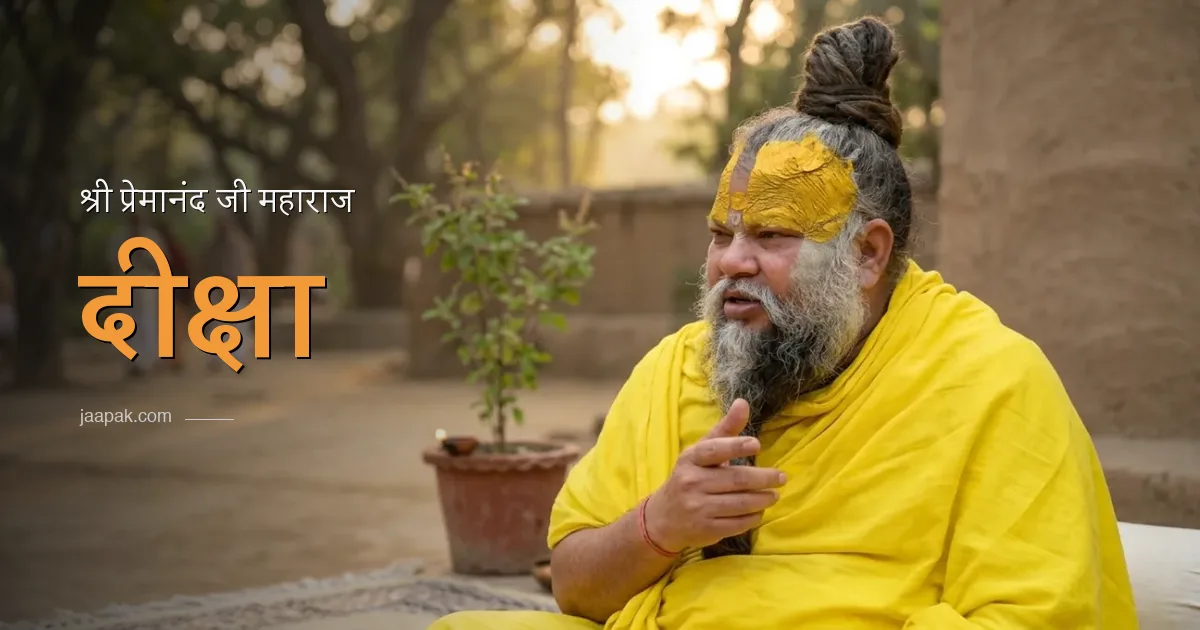
Maharaj Ji — Shri Premanand Ji Maharaj, a revered saint whose satsangs (spiritual discourses and gatherings) have transformed hundreds of thousands of lives across India and the diaspora — sees this very differently.
He teaches that addiction is not a failure of character. It is a manifestation of what he calls rakshasi buddhi — a corrupted or "demonic" intellect, a mind so overtaken by craving that it overrides every conscious decision. The person is not weak. They are operating from a distorted inner intelligence. And here is the crucial point: until that inner intelligence is transformed, no external remedy will hold.
Willpower operates at the surface. Rehabilitation treats symptoms. But Maharaj Ji says the only remedy for a corrupted mind is adhyatma — spiritual practice. The grace of Shri Ji (a devotional name for the Divine, particularly Radha — the supreme beloved of Lord Krishna in the sacred Braj tradition centered around Vrindavan, a town in northern India revered as Krishna's home) works at the root, quietly changing the sanskaras — the deep mental impressions and conditioning — that sustain the craving.
This is not abstract theology. A man named Jani Rana Ji from Meerut lived it.
He wrote to Maharaj Ji:
"दारू के बिना मैं रह नहीं सकता था।"
"I could not live without alcohol."
Not a figure of speech. His family was suffering. He had tried to stop. He could not.
Then he found satsang.
Does Listening to Satsang Actually Break Addiction?
Jani Rana Ji had exhausted every conventional path. His family pleaded with him. He set firm resolutions. He relied on willpower. Nothing lasted longer than a few days.
Then he began listening to Maharaj Ji's satsangs regularly — and something began to shift. Not through dramatic confrontation, not through medication, but through something quietly working on his sanskaras, those deep-seated impressions that shape behavior from within, below the level of conscious decision.
Week by week, the craving loosened its grip.
He wrote:
"कभी सोचा नहीं था कि ऐसा भी जीवन आएगा!"
"I never imagined that such a life was even possible for me."
The outward signs of transformation were striking: he gave up not just alcohol, but also garlic and onion — foods traditionally avoided in devotional practice for their stimulating effect on the mind. If you understand what that shift means, you understand everything. A life once organized around craving had become organized around clarity.
When Maharaj Ji heard his account, he responded warmly: "God's special grace is upon you — that you were able to turn your life around."
Why does simply listening to satsang produce this kind of change? Maharaj Ji explains: when the teacher's words are motivated purely by the welfare of others — when they carry the living weight of years of tapasya (spiritual discipline) and bhajan (devotional practice) — those words are not empty sound. They enter the listener's consciousness and work on the very roots of habit. The instruction reaches deeper than the conscious mind can reach on its own.
I used to think transformations like this only happened in old stories. Jani Rana Ji is not an old story.
How to Prevent Relapse After Quitting Addiction
Getting free from addiction is one thing. Staying free is another — and Maharaj Ji is unusually direct about this distinction.
He uses a precise image: when a bone breaks and heals, it becomes functional again — but that junction remains a point of structural weakness. One blow in the right place and it fractures there again first.
Recovery from addiction works similarly. The craving may have lifted, but the groove it carved in the mind does not disappear overnight. One evening with old friends, one moment of social pressure, and years of healing can unravel within hours.
Maharaj Ji's antidote is not more willpower — it is daily protection:
"शब्दों से ही शक्ति मिल जाएगी। शब्दों से ही आशीर्वाद मिल जाएगा।"
"From sacred words alone, you will receive strength. From sacred words alone, you will receive blessing."
Naam jap — chanting the divine name — and daily satsang listening are not optional spiritual supplements. They are armor. The 16th-century saint-poet Tulsidas Ji put the stakes plainly:
"Uma, te log abhagi jo Hari taj hoye vishay anuragi."
"Those who abandon the Lord and return to sense-pleasures are truly unfortunate."
The pull back toward old patterns is always present. Daily spiritual practice is the counterweight that prevents the drift from becoming a fall.
Maharaj Ji's instruction could not be simpler: do not miss even one satsang. Just as you eat every day without negotiation, listen to spiritual discourse every day without negotiation. This is the fortress that relapse cannot breach.
The Spiritual Cost of Causing Pain to Parents
There is one dimension of addiction that Maharaj Ji raises that almost no recovery framework addresses: what it does to the people at home.
The suffering of a mother whose child is trapped in addiction is not merely emotional pain. Maharaj Ji teaches that it carries a direct spiritual weight — it deepens the very rakshasi buddhi (corrupted intellect) driving the addiction and widens the distance from divine grace. When addiction escalates to a point where harsh words or worse are directed at parents in a moment of intoxication, the consequences extend far beyond that moment.
He teaches:
"जिसने अपने माता-पिता को पूज लिया उसको सुख पहुंचा दिया। वो जिंदगी में कभी दुखी नहीं रहेगा।"
"One who honors their parents as divine beings brings joy to themselves. Such a person will never know lasting sorrow."
This is not a separate teaching from addiction recovery — it is the same teaching. When the corrupted mind begins to heal through adhyatma, caring for parents stops being an obligation and becomes a natural expression of the restored self. It is not forced virtue; it is what a clear mind does instinctively.
And that service, Maharaj Ji teaches, actively opens the channel for divine grace to flow back. It completes a circuit that addiction had broken.
How to Distance Yourself from Bad Company
This is the piece that feels hardest in practice. We are talking about real friendships — people you have known for years, who share your history, who know your stories. Breaking that feels like losing a piece of yourself.
But Maharaj Ji is clear: a friend who consistently draws you toward your own destruction is not a friend. He is an enemy wearing the face of friendship.
The distance does not need to be dramatic or hostile. It can be done with genuine warmth and courtesy. But it must be done with absolute firmness, because one meeting in the wrong mood can undo months of work.
And when old company falls away, new environment matters enormously. Joining a satsang community — people who gather regularly to listen to spiritual discourse, chant the divine name together, and support one another's practice — is a practical solution, not merely a spiritual one. New environment creates new habits. New habits gradually replace old ones. The social scaffolding of recovery is rebuilt.
Jani Rana Ji's transformation held, Maharaj Ji suggests, because he did not simply quit alcohol — he built a new life. He wrote:
"आज दारू को देखकर मुझे नफरत होने लगी है। लहसुन-प्याज तक छोड़ दिया।"
"Today, the sight of alcohol fills me with revulsion. I have given up even garlic and onion."
That word — revulsion — is the truest marker of genuine transformation. What once felt like a need now registers as poison. That reversal does not come from discipline alone. It comes from consistent, sustained satsang. Maharaj Ji's instruction stands unchanged: don't skip even one.
Conclusion: Grace, Satsang, and Daily Vigilance
Four things work together, Maharaj Ji says.
First: the grace of Shri Ji, which descends through regular satsang listening. Second: complete separation from harmful company, which prevents relapse. Third: honoring and serving parents, which opens the channel of fortune. Fourth: daily naam jap — chanting the divine name — which sustains the other three.
Jani Rana Ji is not an exceptional case. He is one of thousands — people who gave up alcohol, meat, and destructive habits through the sustained practice of listening to Maharaj Ji's satsangs alone. What appeared impossible became possible. The transformation came. And it held.
Maharaj Ji's teaching distills to this:
"राक्षसी बुद्धि का निदान अध्यात्म से होता है।"
"The cure for a corrupted mind is spiritual practice."
That path is not somewhere distant. It begins today, with one satsang. Trust in Shri Ji's compassion — "jholi bhari dekhi" — "I have seen the bowl filled to overflowing."
Radhe Radhe.
Source: पहले बहुत शराब का नशा करता था पर आपको सुनकर सब छोड़ दिया अब डर लगता है फिर से दोबारा शुरू न कर दूं !
This article is compiled from the satsangs of Shri Premanand Ji Maharaj. The original video is available at the link above.
Frequently Asked Questions
Independent writer, jaapak.com
I built the Jaapak app. I write in simple Hindi on the Bhagavad Gita and the satsang tradition — so seekers don't struggle with the scripture.
Read all articlesAbout this article
The commentary is based on the general understanding of the Sanatan tradition and written in accessible language. No verbatim quotation of any modern commentator is used.