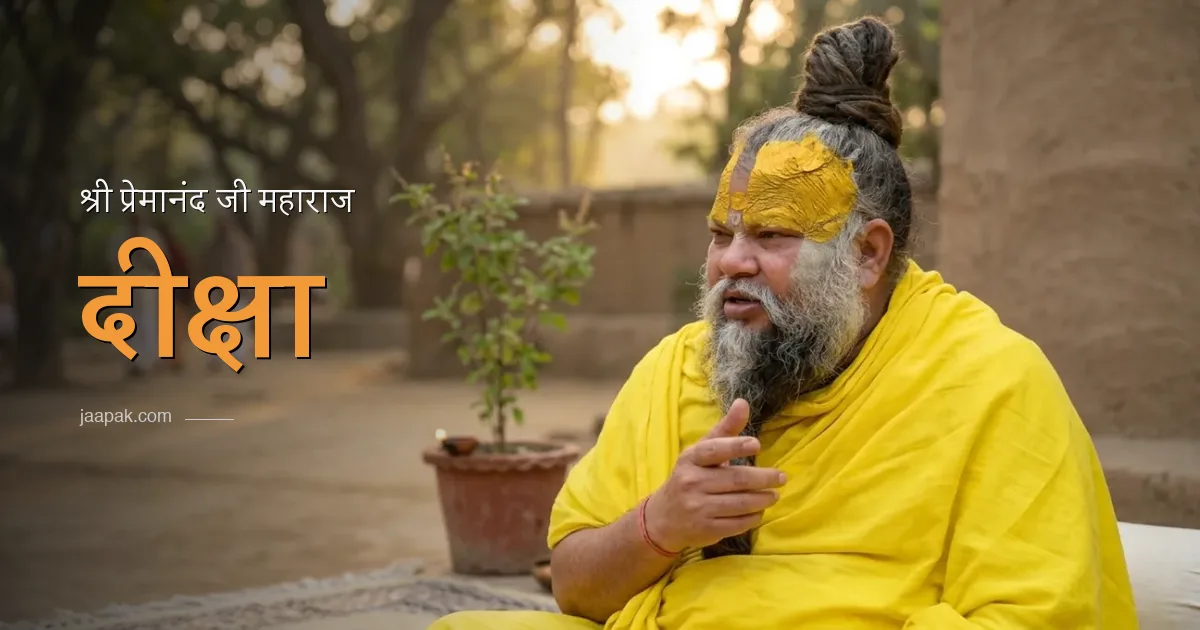
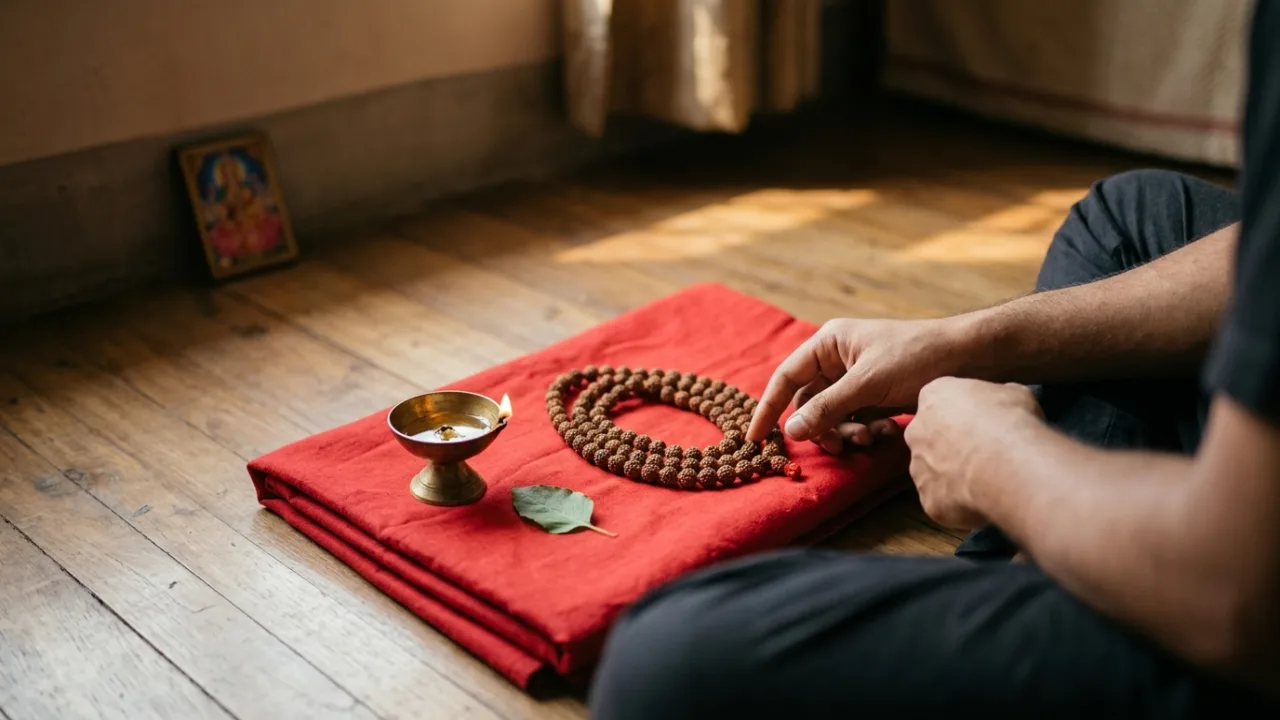
Naam Jap vs Puja: The Light That Illuminates the Cave of the Heart
Morning prayers done, evening puja complete — yet the mind stays restless. Shri Premanand Ji Maharaj explains why naam jap reaches where rituals cannot.
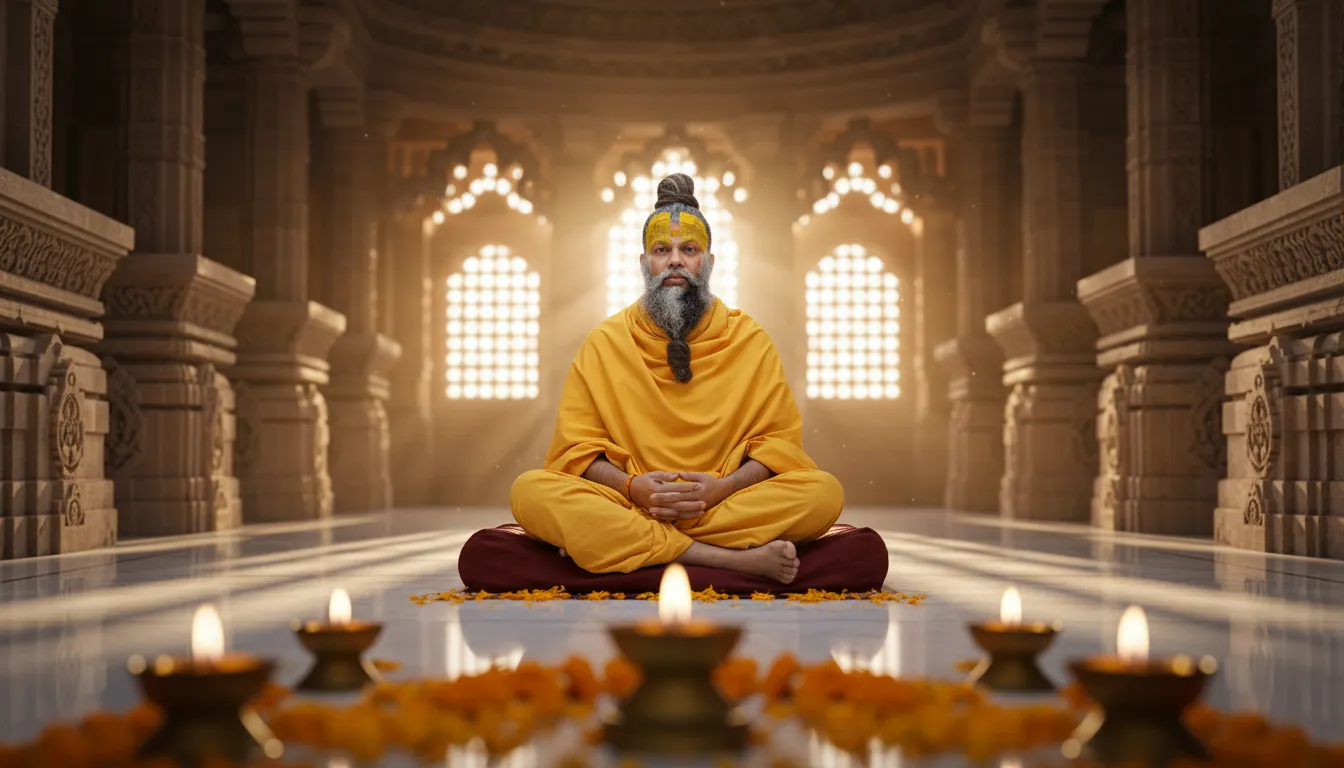
You light incense every morning. You perform the evening aarti without fail. The bell rings, the lamps glow, the offerings are placed — and yet, by the time the ritual ends, the mind has already drifted back into its familiar restlessness, its anxieties, its old grudges.
If this resonates, you are not alone. This is one of the most honest questions spiritual seekers ask: Is external worship enough? And what exactly is the difference between naam jap (chanting the divine name) and puja (ritual worship)?
Shri Premanand Ji Maharaj answers it with uncommon clarity — and the answer may change how you understand your entire spiritual practice.
What Is the Difference Between Naam Jap and Puja?
A sincere devotee named Saloniji once approached Maharaj ji and said with complete honesty: "My body cannot maintain these rituals consistently." It was a real question, not an excuse.
Maharaj ji's response drew a sharp and illuminating distinction.
Puja — the ritual worship involving folded hands, lamps, offerings, and chants — is beautiful. It is valuable. But it is an action of the body, performed in the outer world. Naam jap (chanting the divine name) is something else entirely.
"पूजा पाठ बाहरी शरीर की क्रिया है और नाम जब अंदर हृदय की गुफा के अंधकार को नष्ट करने वाला तेज है।"
"Ritual worship is an activity of the external body. But the divine name is the radiant light that destroys the darkness inside the cave of the heart."
Pause on that phrase: the cave of the heart. Within each of us there is a deep, hidden space where our oldest patterns of desire, anger, attachment, and greed reside. Ritual worship, however beautiful, does not reach that cave. Naam jap — the sustained, inward repetition of the divine name — is the light that enters it.
This is not a contradiction between the two practices. Maharaj ji's teaching is that outer and inner disciplines must walk together. But a seeker who stops only at external rituals misses the deeper transformation that naam jap alone can bring. Puja without naam is like a lamp without a wick.
So can outer worship alone bring mastery over the mind?
Why Puja Without Naam Jap Yields No Lasting Change
The mind is clever. (Many of us have lived this: you complete the morning aarti, feel briefly settled, and then — as soon as the ritual ends — the mind sprints back into the world's noise.)
Maharaj ji speaks plainly about this:
"यदि नाम जप नहीं चल रहा है तो बाहरी कुछ जो सेवा पूजा किए उतने से मन पर शासन नहीं हो सकता।"
"If naam jap is not running within you, then no matter how much external service or worship you perform — the mind cannot be mastered by that alone."
External rituals touch the surface of the mind. They do not reach the root. After the aarti ends, the same impatience returns. After the puja, the same jealousy and greed persist. The inner landscape hasn't shifted.
Bhagavan Kapil Dev Ji — the sage-incarnation of Vishnu who taught his mother Devahuti in the Bhagavata Purana — put it in stark terms: worship offered with beautiful materials, while attachment and aversion still burn inside, is like performing a fire ritual in ash. The effort is real. The time is spent. The result? Nothing.
The mind is governed only by a transformation of inner contemplation — and that transformation comes through naam jap.
The Living Testimony of Saints
Scriptural arguments reach the intellect. But when living examples speak, they reach the heart.
Goswami Tulsidas Ji: The great poet-saint who composed the Ramcharitmanas offered this verse:
"राम राम राम जीही जोलो तू न जपि है तोलो तू कह जाए तिहू ताप।"
"O tongue, for as long as you live — if you do not chant Ram, Ram, Ram — how will you ever be free from the three afflictions?"
He gives a vivid image: you are sitting on the banks of the Ganges (the sacred river in Hindu tradition, believed to purify all sins), but if you refuse to drink from it — what use is the proximity? Similarly, you have a human body, you have time, you have access to spiritual teachings — but without the divine name, life's rarest opportunity slips away unused.
Bhagavan Kapil Dev Ji: When inner life carries attachment and aversion, even the most elaborate external worship is ash-offerings. The outer tray may be beautiful, the inner state bitter with envy — that is not worship, it is self-deception.
Sant Ravidas Ji: The 15th-century mystic-saint was a cobbler by profession. His hands shaped leather all day. Yet within, the divine name moved without interruption — continuous, unbroken, effortless. Maharaj ji recounts how great yogis were astonished. Cobbling and the highest worship happening simultaneously? Yes — because the name was alive inside.
Bhagavan Sri Krishna: In the Bhagavad Gita — the sacred dialogue between Krishna (the divine, worshipped across Vrindavan and all of Braj, the sacred land of his childhood lila or divine play) and the warrior Arjuna — he says:
"अनन्य चेता सततम् यो माम् स्मरति नित्यशः, तस्य अहं सुलभः।"
"For one who remembers me with undivided attention, always and continuously — I am easily attained."
And then, crucially: "Remember me, and also fulfill your duty." Not withdrawal from the world, but the name carried through the world.
How Naam Jap Builds Spiritual Power
Maharaj ji offers one of the most intuitive analogies in spiritual teaching — the digit and the zero:
"नाम एक है और सब साधन शून्य है। एक लगा के शून्य रखो तो 10 गुना, एक जीरो का पावर बढ़ता चला जाएगा।"
"The name is the digit one. All other spiritual practices are zeros. Place the one, then add zeros behind it: 10, 100, 1000, 10,000 — the value multiplies. Remove the one? All the zeros remain worthless."
This is the architecture of a complete spiritual life. Puja, seva (service), fasting, pilgrimage — these are zeros. Powerful zeros, but zeros nonetheless. When naam jap — the one — stands at the front, every other practice multiplies in value. Without it, they remain at zero.
The logic of inner transformation follows naturally: the more you chant, the more spiritual energy accumulates. As that energy grows, desire, anger, greed, and attachment begin to loosen their grip. And as the heart clears, bhava deepens — the quality of feeling and longing in spiritual practice. In the devotional tradition, it is bhava (heartfelt love) that draws the divine: "Bhava vashya Bhagavan" — God is subdued by love, not by ritual perfection.
The Gita's instruction stands: continuous remembrance, sustained through action.
The Real Practice: Transform What Lives Inside
Do not abandon your puja. But make naam jap the center.
"जितना नाम जब करोगे, उतनी आपके अंदर आध्यात्मिक ऊर्जा, शक्ति बढ़ती चली जाएगी। जितनी आध्यात्मिक ऊर्जा, शक्ति बढ़ेगी, उतने विकार कम होते चले जाएंगे।"
"However much you chant the divine name, that much spiritual energy and power will keep growing within you. And as that power grows, the inner impurities will keep diminishing."
Like Sant Ravidas Ji — the name alongside every act. In the office, the name. In the kitchen, the name. On the commute, the name. This is the path that makes every life luminous.
Maharaj ji's message is clear: the divine name is the light that dispels the darkness of the heart's cave. And that light is already yours — in the form of the name your Guru gave you. Take one resolve today: a few rounds of naam jap every day. Let your outer worship continue. But let the name move inside.
Radhe Radhe.
Source: नाम जप और पूजा पाठ में कितना अंतर होता है ? क्या नाम जप से भगवत प्राप्ति हो जाएगी या पूजा पाठ से ?
This article is compiled from the satsangs (spiritual discourses) of Shri Premanand Ji Maharaj. The original video is available at the link above. All images in this article are digitally created.
Frequently Asked Questions
Independent writer, jaapak.com
I built the Jaapak app. I write in simple Hindi on the Bhagavad Gita and the satsang tradition — so seekers don't struggle with the scripture.
Read all articlesAbout this article
The commentary is based on the general understanding of the Sanatan tradition and written in accessible language. No verbatim quotation of any modern commentator is used.