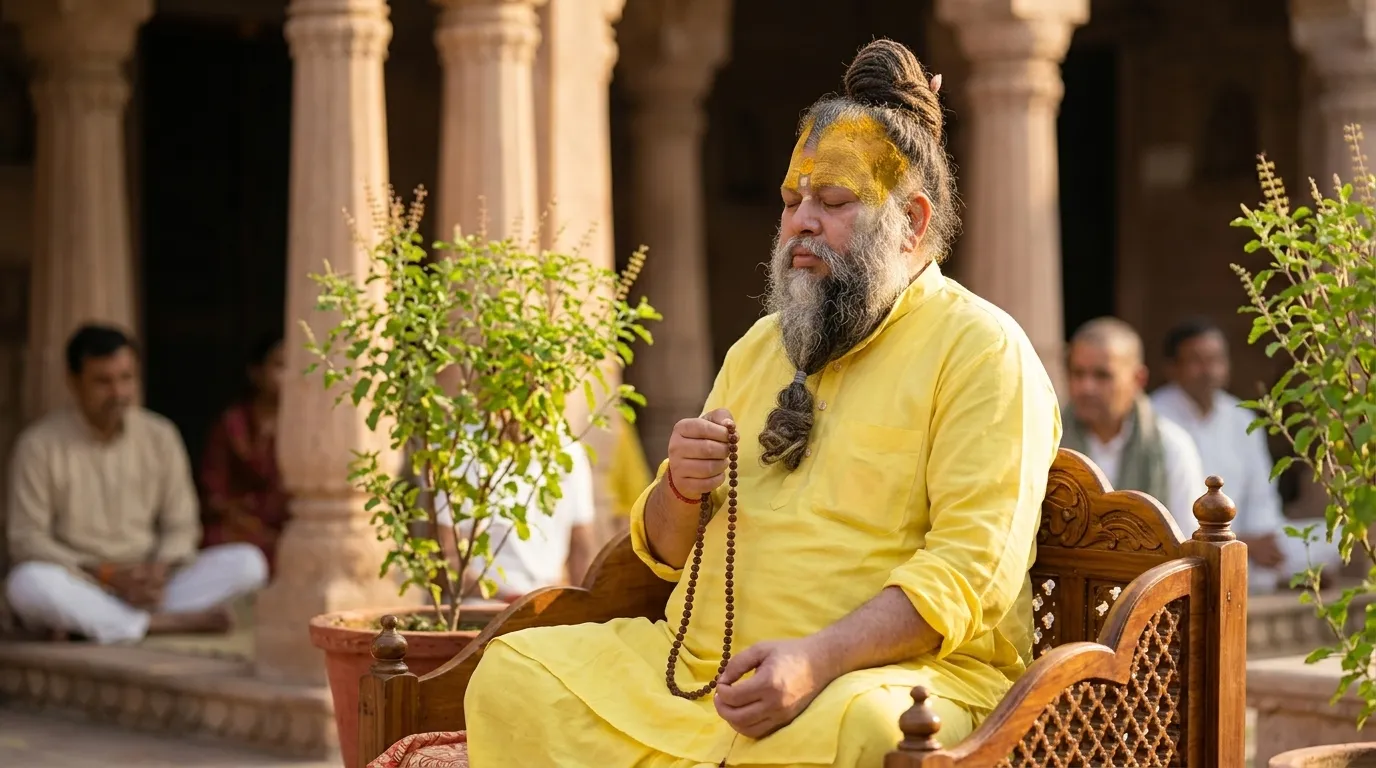
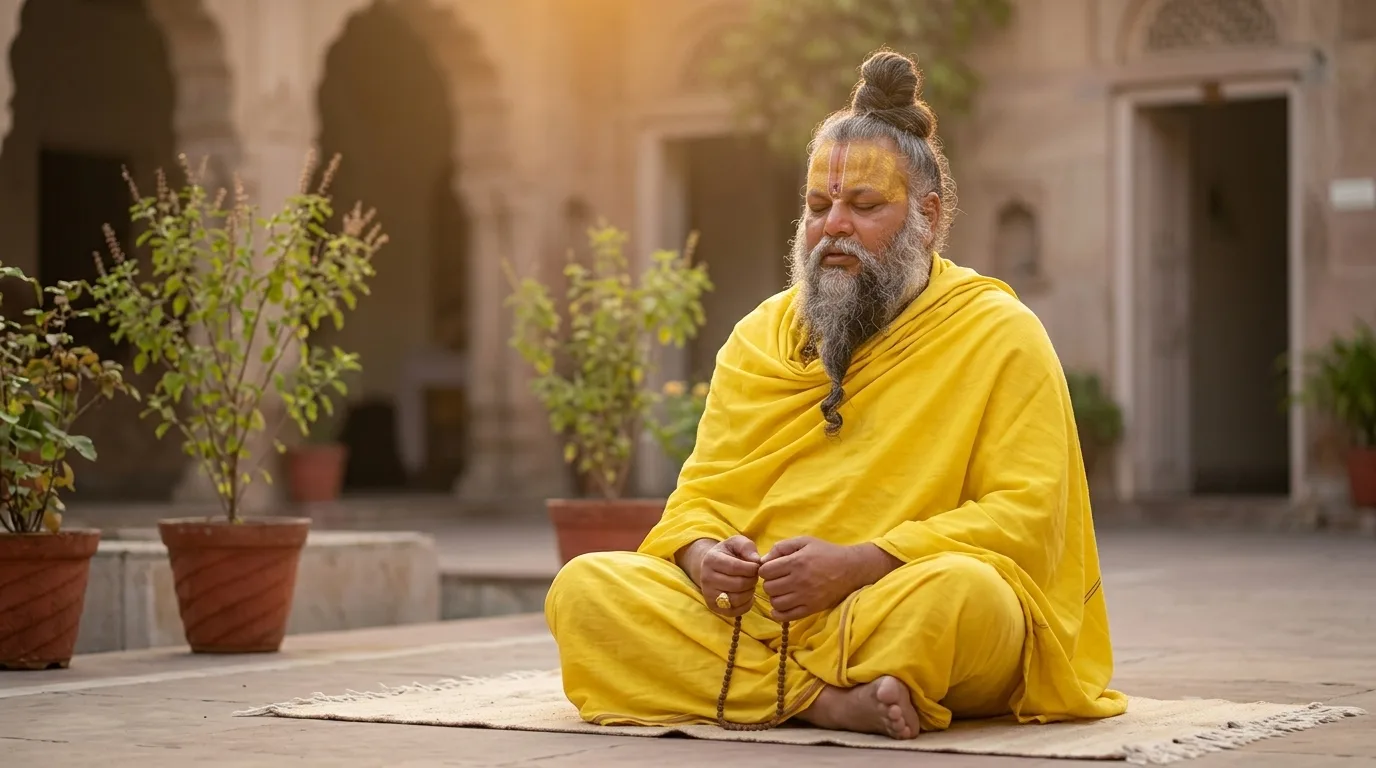
Apnapan — 5 Principles That Make God Truly Yours | Premanand Maharaj
Premanand Maharaj reveals 5 practices to cultivate apnapan — divine belonging — and why it's the only real key to feeling God's presence.
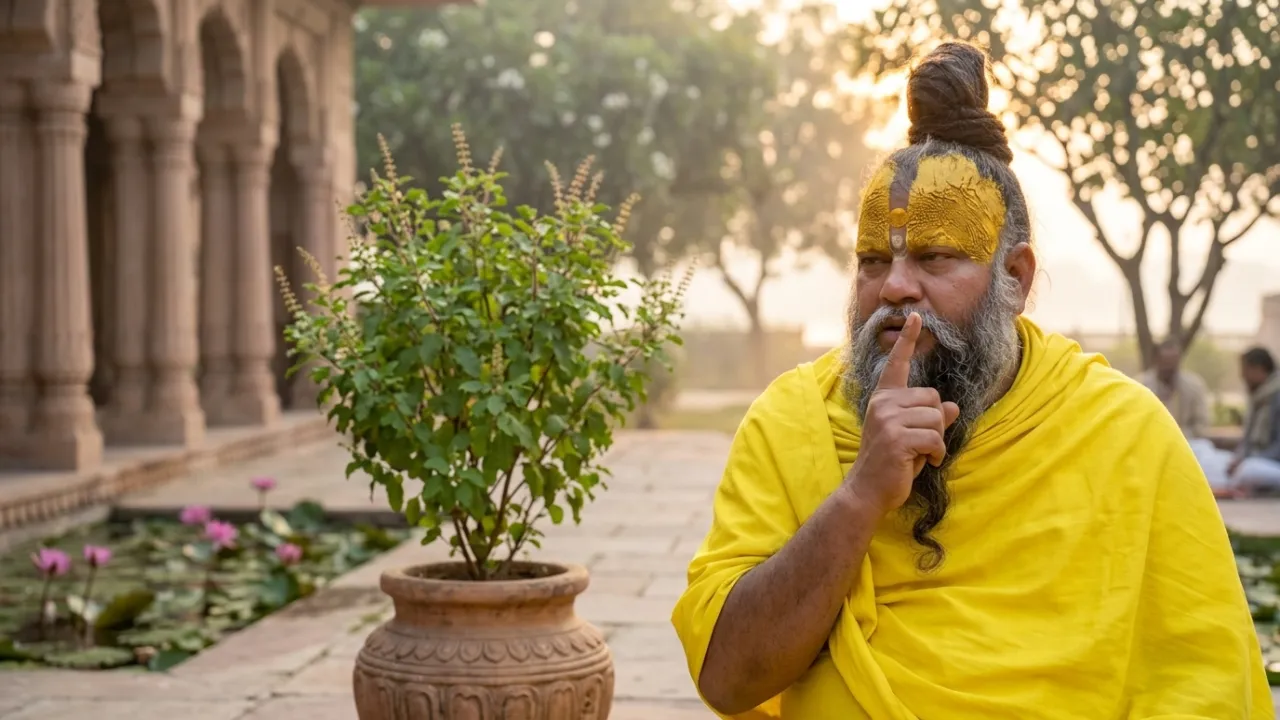
God Is Already Yours — There Is Just One Thing Standing Between You
You chant every morning. You visit the temple on weekends. You've read the texts and watched the discourses. And yet — something feels off. God still feels distant. Formal. Like a landlord you pay rent to rather than a parent who loves you.
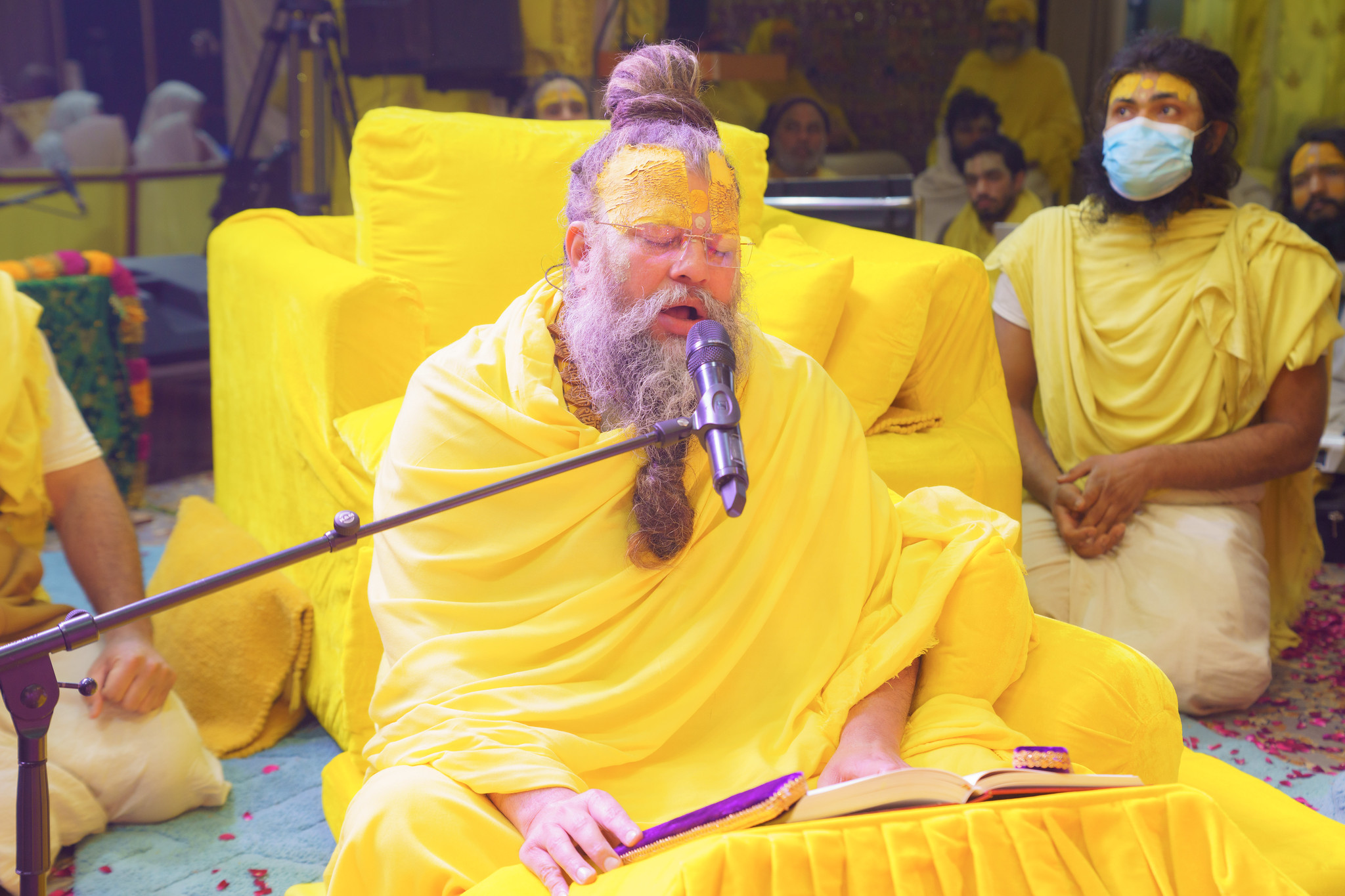
Shri Premanand Ji Maharaj — one of the most beloved living saints of the Braj region, the sacred land around Vrindavan where Lord Krishna spent his childhood — speaks directly to this gap. His words are a kind of relief:
"आप बिल्कुल घबराना मत। भगवत प्राप्ति का हम आपको सरल सूत्र बता रहे हैं।"
"Do not be afraid at all. I am giving you a simple key to attaining God."
That key is a single Hindi word — apnapan.
It translates loosely as "mine-ness" or "a sense of divine belonging" — the felt conviction that God is completely yours, and you are completely God's. Not an idea you intellectually assent to on Sunday morning. A living, intimate reality of the heart.
Maharaj Ji's core teaching is this: no matter how sincerely we practice — chanting (naam jap), meditation, pilgrimage, scripture — spiritual life only truly bears fruit when apnapan takes root in the heart. Why this is so, and how to cultivate it through 5 concrete daily practices, is what this article explores.
What Is Apnapan? — Premanand Maharaj's Definition
English offers us "divine intimacy," "spiritual belonging," "surrender," "oneness." None of these quite captures apnapan — and Maharaj Ji's definition is worth sitting with, because it is subtler than it first appears.
Apnapan means: claiming God fully as yours, and giving yourself fully to God. Not as a theological position, but as a felt, embodied state. Maharaj Ji explains that God does not look at our learning or our ritual credentials. God is hungry for bhav — our emotional reality, our genuine feeling.
He draws an important line. Thinking of God as yours is the mind's work. Feeling God as yours is the heart's work. The first is easy and can become a kind of spiritual vanity. The second is rare — and it is the second that Maharaj Ji is pointing toward.
"अपनापन आप अपनापन समेट श्री जी के चरणों में दीजिए।"
"Gather all your sense of belonging — every bit of it — and offer it at Shri Ji's feet."
— Shri Premanand Ji Maharaj
He also invokes the 16th-century Braj saint Shri Hit Harivansh Mahaprabhu Ji: "Avgun kare samudra sam, ganat na apno jaan apno" — "Even if one's faults are as vast as the ocean, She does not count them — for She sees only Her own." In the Braj devotional tradition centered on Shri Radha Rani (the divine feminine, beloved of Krishna, whose love is considered the highest form of devotion), true apnapan washes away not just past wrongs, but present and future ones too.
How is apnapan different from surrender?
Surrender (samarpan) is an act — "I offer myself to You." Apnapan is a state of being — "You are mine and I am Yours." In surrender, two parties still exist. In apnapan, there is only one. This is Maharaj Ji's subtle but transformative distinction.
Why Does Apnapan Lead to Divine Realization?
The question behind every sincere seeker's practice is: what actually draws God toward us? Maharaj Ji's answer is scriptural and unequivocal. He quotes:
"अहं भक्त-पराधीनोऽस्म्यहं"
"I am completely dependent on my devotee."
The Supreme Being — who by nature is absolutely free, bound by nothing — declares openly that He is bound by the devotee's love. Maharaj Ji asks with genuine wonder: can there be a greater honor than this? What kind of love offers itself as captive?
But this promise has a condition. It is spoken for those who place their trust in God alone — who do not divide themselves. And here is the honest diagnosis that makes this teaching uncomfortable: most of us do divide ourselves. Part of our trust rests in a relationship. Part in financial security. Part in things going a certain way. As long as this division exists, God cannot fully reveal Himself — not as punishment, but as physics. A heart that is everywhere cannot be fully anywhere.
Maharaj Ji states this plainly:
"जिस दिन और किसी का भरोसा नहीं रहेगा, उसी दिन प्रभु का साक्षात्कार हो जाएगा। तब तक विलम्ब है प्रभु की तरफ से।"
"The day you stop placing your trust anywhere else, that very day you will experience God directly. Until then, there is delay — but the delay is not on God's side."
This reframe is the heart of the teaching. The waiting is not God withholding. It is our own divided heart, not yet fully arrived. Seeing this clearly is itself a kind of grace.
How to Cultivate Apnapan — 5 Practical Principles
What follows are five principles drawn directly from Shri Premanand Ji Maharaj's satsangs (spiritual discourses). Each one is designed for ordinary life — for people with jobs, families, and full schedules who are not seeking renunciation but a genuinely felt connection with the divine.
1. Make daily offering a non-negotiable ritual.
Just as meals and sleep are not optional, Maharaj Ji teaches that a daily moment of conscious inner offering — however brief — builds apnapan over time. Satsang serves precisely this function: it pulls us a little closer each day, quietly dissolving the sense of separation. Make it as routine as brushing your teeth. The cumulative effect is what matters.
2. Rest your trust at Kishori Ji's feet.
"Kishori Ji" is a tender name for Shri Radha Rani — the embodiment of pure devotion in the Braj tradition, revered as the gateway to Krishna's grace. Maharaj Ji says: "Kishori Ji signals to the Lord — 'This one chants my name, relies on me — please look after them.'" Simply taking Her name with sincerity, and letting your trust settle there, is described as a decision that outranks all other decisions in a devotee's life.
3. Reclaim your scattered trust — gradually, piece by piece.
Maharaj Ji's diagnosis: "Our trust is caught in too many places at once." The remedy is not dramatic overnight renunciation. It is patient, persistent recollection — the way a stream gradually carves through stone. Through satsang, devotional singing (bhajan), and chanting (naam jap), we slowly recover the scattered fragments of our trust from all the places we have parked them, and return them — one by one — to the divine. This is not forced. It takes years. That is completely fine.
4. Chant the divine name (naam jap) every day.
This is the foundation beneath the other four. Maharaj Ji says:
"जिसकी जिव्हा के अग्र भाग पर हरिनाम विराजमान, स्वपच भी चांडाल भी परम श्रेष्ठ और वंदनीय हो जाता है।"
"Whoever holds the divine name at the tip of their tongue — even the lowest of the low becomes supremely worthy of reverence."
There is no required daily count. What matters is regularity. The name of God is not merely a technique; Maharaj Ji speaks of it as a living presence that, over time, softens the heart and makes apnapan possible.
5. Stop bargaining with God.
This is the principle most of us violate without noticing. We sing in the evening prayer (aarti): "Body, mind, wealth — all is Yours; nothing is mine." Then the next morning we make quiet internal deals: "If this situation works out, I'll really commit." Maharaj Ji calls this kapata — a subtle spiritual dishonesty. The teaching is disarmingly simple: act as if everything has already been given. The only thing left to add is apnapan itself — the sense of belonging that makes it real.
Where to begin? Start with Principle 4 — naam jap. Maharaj Ji says the other four naturally flower from this one root. Chanting is the ground in which everything else takes hold.
Mirabai's Apnapan — An Extraordinary Life as Evidence
Mirabai (c. 1498–1546) is one of India's most celebrated poet-saints — a Rajput princess who gave up royal comfort and defied social convention to devote herself entirely to Lord Krishna. Her devotional songs (bhajans) are still sung across the subcontinent today, five centuries later. Her life is the clearest available demonstration of what total apnapan looks like in a human being.
Her most famous verse says everything in one line:
"मेरे तो गिरधर गोपाल, दूसरो न कोई।"
"My only one is Giridhar Gopal (Krishna, who lifted the mountain); there is no other."
Shri Premanand Ji Maharaj reflects: God loves each one of us exactly as much as He loved Mirabai. The deficit is entirely on our side. We can reach the first half of her line — "my only one is Krishna" — without too much difficulty. But the second half, "there is no other," remains unfinished in most lives. We continue giving equal weight to many others: relationships, reputation, financial outcomes, other people's opinions of us.
This single gap is the difference between Mirabai and us. Her trust was undivided. And so Krishna claimed her — completely, publicly, permanently. Our trust is divided. And that is where the waiting lives. Not God's waiting. Ours.
The Fruit of Apnapan — What Divine Realization Actually Looks Like
People often imagine that divine realization (bhagwat prapti) arrives as a dramatic event — a vision, a blinding light, a moment where the universe snaps into focus. Maharaj Ji gently corrects this expectation:
"जब बिना किसी प्रयास के भगवान दिमाग में छाए, मन में छाए, दूसरी कोई स्फुरणा नहीं, तो कोई और भगवत प्राप्ति नहीं होनी — हो गया।"
"When without any effort, God pervades your mind — when no other thought arises — that is it. No further divine realization remains to be had. It has already happened."
It is not a spectacle. It is a quiet, uncontrived fullness. A line from Braj devotional poetry describes the state from the inside: "Pritam bas gayo mere man, man mein, tan mein, netron mein sama gaya" — "The Beloved has settled into my heart, my body, my eyes." Not arrived with fanfare. Settled in.
This is the natural fruit of apnapan — not a prize God awards to the worthy, but a state that emerges when the heart has genuinely, finally arrived.
Closing
Divine realization is not far away. What is far — and what can be closed — is apnapan. And even that distance shrinks with every sincere chanting of the Name, every moment of trust returned, every day of honest practice.
Shri Premanand Ji Maharaj returns to the same point again and again: "Tighten your resolve. The rest is Shri Ji's work."
Source: #08 Saar Ki Baat — 30-09-2023 — Bhajan Marg
This article is compiled from the satsangs (spiritual discourses) of Shri Premanand Ji Maharaj. The original video is linked above. For verification of any quotation, please refer to the source satsang directly.
Radhe Radhe 🙏
Frequently Asked Questions

Independent writer, jaapak.com
I built the Jaapak app. I write in simple Hindi on the Bhagavad Gita and the satsang tradition — so seekers don't struggle with the scripture.
Read all articlesAbout this article
The commentary is based on the general understanding of the Sanatan tradition and written in accessible language. No verbatim quotation of any modern commentator is used.