How Naam Jap Conquers Anger: Shri Premanand Ji Maharaj's Deep Teaching
Shri Premanand Ji Maharaj reveals the hidden root of anger in unfulfilled desire — and how continuous naam jap dissolves it from within. Practical, profound, life-changing.
Anger arrives without warning — and in those few seconds, it undoes what took years to build. Words you never meant to say fly out. A relationship you carefully tended takes a wound. And then the regret sets in, sometimes for hours.
Most of us deal with anger through willpower: count to ten, breathe, walk away. These help in the moment. But the anger comes back. Why?
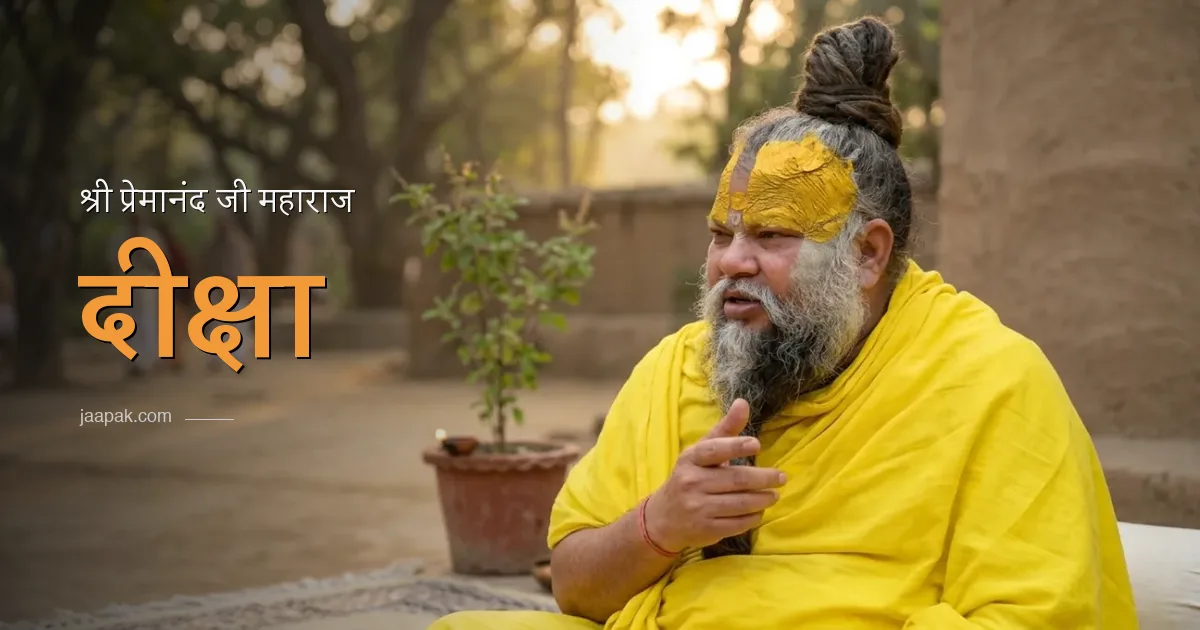
Shri Premanand Ji Maharaj — a revered contemporary spiritual teacher whose satsangs (spiritual discourses) draw millions across India — offers an answer that goes deeper than any anger-management technique. His teaching on krodh (anger) and naam jap (the continuous chanting of the divine name, particularly "Radha Radha" in the Vaishnava tradition) doesn't just calm the surface storm. It addresses the storm's source.
Anger and Naam Jap: The Real Root — Unfulfilled Desire
Anger doesn't arise on its own. It has a mother.
Maharaj ji's teaching is disarmingly direct:
"क्रोध क्यों आता है? कामना से क्रोध आता है। जैसे हम चाहते हैं यह हो जाए और वो नहीं होता तभी क्रोध आता है। क्रोध की स्वयं की सत्ता नहीं।"
"Why does anger arise? Anger arises from desire (kaamna). When we want something to happen and it doesn't — that's when anger comes. Anger has no independent existence of its own."
This is a shift in perspective that changes everything. Anger isn't a character flaw or a chemical imbalance — it's the byproduct of a blocked expectation. You expected your partner to be home on time. You expected your child to perform well in school. You expected your manager to acknowledge your work. When any of those expectations go unmet — anger.
The Bhagavad Gita (2.62–63), which Maharaj ji frequently references, mapped this chain millennia ago:
क्रोधाद्भवति सम्मोहः सम्मोहात्स्मृतिविभ्रमः।
स्मृतिभ्रंशाद् बुद्धिनाशो बुद्धिनाशात्प्रणश्यति॥
From anger comes delusion; from delusion, confused memory; from confused memory, destruction of the intellect; from a destroyed intellect, the person perishes.
Five links. One chain. It begins not with a great sin but with an ordinary, unfulfilled wish — what Patanjali, in his Yoga Sutra (2.3), calls raga (attachment): one of the five kleshas that obstruct every spiritual seeker.
This is why willpower alone fails — willpower addresses link three or four. Maharaj ji's approach goes to link one.
The Spiritual Damage of Anger — Why It Is Called an Asuric Tendency
In the Bhagavad Gita's sixteenth chapter, Krishna names kama (lust), krodha (anger), and lobha (greed) the "three gates of hell" (त्रिविधं नरकस्येदं द्वारं, Gita 16.21) — marks of beings who move away from the divine rather than toward it. Maharaj ji does not soften this:
"क्रोध जो है, ये आसुरी प्रवृत्ति है। ये नाश कर देती है।"
"Anger is an asuric (demonic) tendency. It destroys."
Once anger opens the door, a cascade follows: harsh words, broken trust, physical violence in extreme cases. The joy of spiritual practice — the lightness, the clarity, the growing devotion — all of it recedes.
But here is the calculation that Maharaj ji's teaching quietly forces on you: consider what happens after the anger. The ten minutes of rage are followed by hours of guilt, replaying the scene, managing the fallout. Every minute spent in that cycle is a minute that could have been spent in naam jap — chanting the divine name.
You didn't just lose your temper. You spent your spiritual capital on something that gave you nothing in return.
When you frame anger as that kind of transaction, the motivation to manage it transforms. It's no longer "anger is bad, I should be better." It becomes: "I refuse this deal."
Remedy 1 — Naam Jap: Erasing Negative Tendencies at the Root
A practitioner once told Maharaj ji: "When I chant the divine name, my anger decreases — but the moment I stop chanting, it comes right back."
Maharaj ji praised him: "You are a great observer!" And then explained something remarkable:
"नाम जप करते हुए जब तुम्हारे अंदर गलत वृत्ति आती है ना तो अंदर जो मन में गलत वृत्ति होती है, वो डिलीट होती है। वो नष्ट होती है।"
"When you are doing naam jap and a negative impulse arises within you — that negative impulse in the mind gets deleted. It gets destroyed."
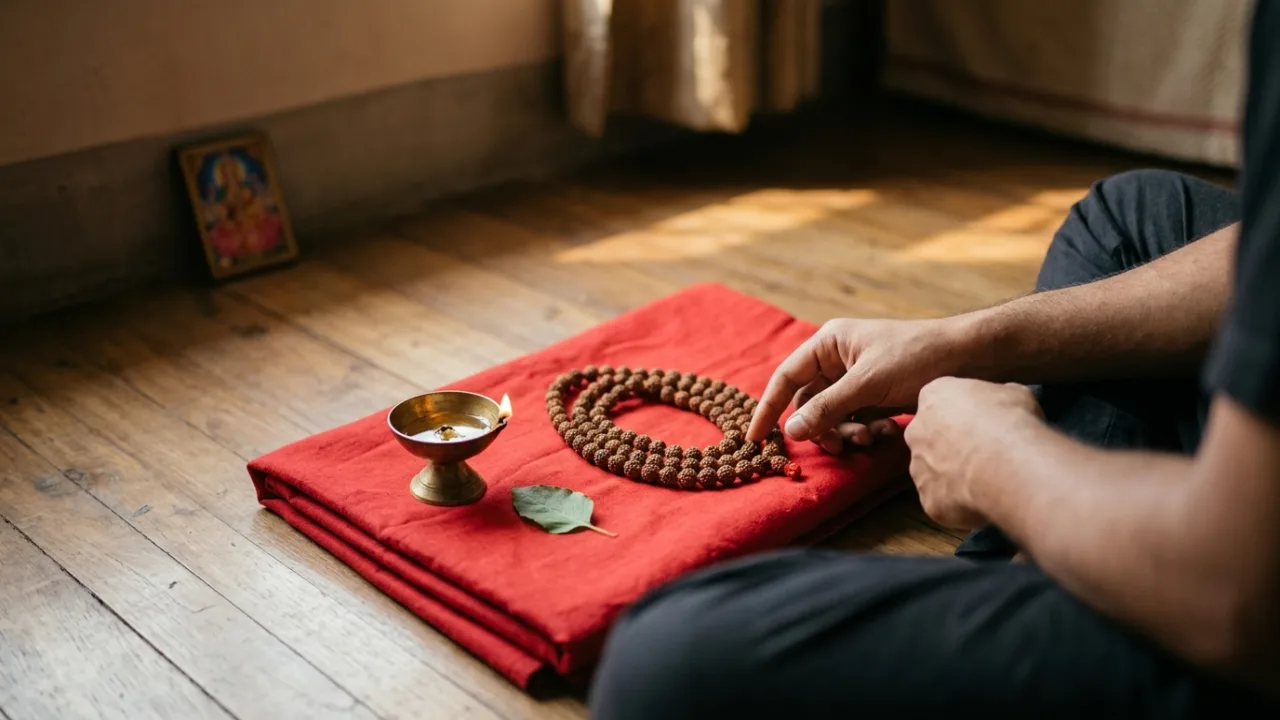
Naam jap refers to the continuous, mindful repetition of a divine name — in the Vaishnava tradition centered on Radha and Krishna, the names most often chanted are "Radha Radha" or "Hare Krishna." Vrindavan, the sacred forest city in northern India, is the heartland of this devotional tradition; Radha-Krishna are its presiding deities, revered as the eternal union of the divine.
This teaching reframes naam jap entirely. It isn't a painkiller — something you take when the headache arrives and forget afterward. It's a deeper process. Each session of sincere chanting doesn't just calm the surface; it gradually erodes the underlying mental grooves (vrittis) that generate anger in the first place.
The implication is clear: if chanting stops, the cleaned space refills. The solution isn't to chant more intensely for one hour — it's to leave no empty space.
That sounds demanding. But Maharaj ji means something practical by it: you don't stop working, stop talking, stop living. You let "Radha Radha" run as a quiet undercurrent while life continues on top. The activity and the chanting coexist — that's the key distinction.
Practical application: The moment anger begins to stir, start chanting internally — "Radha Radha" or whichever divine name forms part of your practice. If you're alone, chant aloud. In a crowd, chant silently. Whatever the circumstances, keep the thread of chanting intact.
Alongside naam jap, Maharaj ji offers two immediate, situational tools for the moments when anger is already at the door.
Remedy 2 — Silence and Leaving the Scene: Starving Anger of Oxygen
Maharaj ji's instruction is precise:
"जिस समय क्रोध आवे जोर-जोर से राधा राधा बोलने लगो। क्रोध शांत हो जाएगा।"
"The moment anger comes, start chanting 'Radha Radha' loudly. The anger will calm down."
And when even that feels insufficient, he prescribes two additional steps:
- Silence: Speaking escalates anger. Every exchange — attack, counter-attack — adds fuel. Clench your jaw if you must, but keep the words in. The argument cannot grow if one party refuses to feed it.
- Leave the scene: Walk away from the situation triggering the anger, immediately. Maharaj ji says: "Turn around completely, right now — move, step back, and leave."
Three steps: chant, go silent, remove yourself.
Anger is a fire. These three steps cut off its oxygen supply. Stop speaking, change locations, begin chanting — the flame goes out.
There's also a practical body-anchor worth remembering: your breath. In the middle of rage, when everything else is forgotten, the breath is still there. A few conscious breaths are the most accessible brake any human body has.
And a final piece of householder wisdom: say what needs to be said, then leave. Lingering in a charged environment after you've made your point isn't dignity — it's invitation.
The Householder's Wisdom: Acting Angry vs. Being Angry
A sincere question came from one devotee: "Maharaj ji, you yourself sometimes scold your students — I feel so jealous! How is that okay?"
Maharaj ji's answer was both practical and quietly profound:
"क्रोध का नाटक करना और क्रोध होना, ये थोड़ा अंतर है।"
"Performing anger and being angry — these are slightly different things."
Parents, teachers, and caregivers sometimes need to project firmness. A child who never encounters any consequence may not learn boundaries. A student who never faces correction may not grow. The performance of displeasure — when it comes from love and duty, not from inner bitterness — is not the same thing as anger.
Maharaj ji draws the line with precision. Four situations make the distinction clear:
- A parent scolding a child to correct behavior — performance, not sin
- Scolding while nursing internal resentment — this is real anger, and this is where harm lies
- A teacher being stern to guide a student — duty, not hypocrisy
- Harsh words erupting from uncontrolled emotion within the family — this is where discipline has broken down
The test is a single question: is there peace in the heart even while the expression is firm? If yes — that's naatak (acting). The moment anger enters the heart, spiritual erosion begins.
This distinction matters especially in modern family life, where there is often pressure to either suppress all negative emotion entirely or express everything freely. Maharaj ji's middle path is neither suppression nor indulgence — it's conscious performance from a place of inner stillness.
Conclusion: Spiritual Practice, Not Willpower, Is the Way Out
Anger cannot be conquered through resolve alone. Good intentions aren't enough. It yields only to practice — sustained, continuous, life-woven spiritual practice.
Maharaj ji ties the entire teaching together in a single sentence:
"बिना अध्यात्म से जुड़े किसी का जीवन मंगलमय नहीं हो सकता।"
"Without connecting to the spiritual, no one's life can become truly auspicious."
As desire decreases, anger decreases alongside it — not through force, but through the gentle, persistent work of naam jap. Each session of sincere chanting deletes a little more of what fuels the anger. Over months and years, the flare-ups become shorter, the return to equanimity faster, and eventually, the deep grooves that once made anger so automatic begin to fill in.
One small commitment to start: the next time anger rises, chant "Radha Radha" in that very moment. Go quiet. Leave the room. That's enough for today.
Radhe Radhe.
Source: Shri Premanand Ji Maharaj — What to Do When Anger Overwhelms You (Bhajan Marg)
This article is compiled from the satsangs of Shri Premanand Ji Maharaj. The original video (in Hindi) is available at the link above. All images in this article are digitally created.
Frequently Asked Questions

Independent writer, jaapak.com
I built the Jaapak app. I write in simple Hindi on the Bhagavad Gita and the satsang tradition — so seekers don't struggle with the scripture.
Read all articlesAbout this article
The commentary is based on the general understanding of the Sanatan tradition and written in accessible language. No verbatim quotation of any modern commentator is used.