25 Questions Every New Chanter Asks
New to naam jap? 25 questions every beginner asks — which name, how many rounds, mala, mind wandering, and when results come.
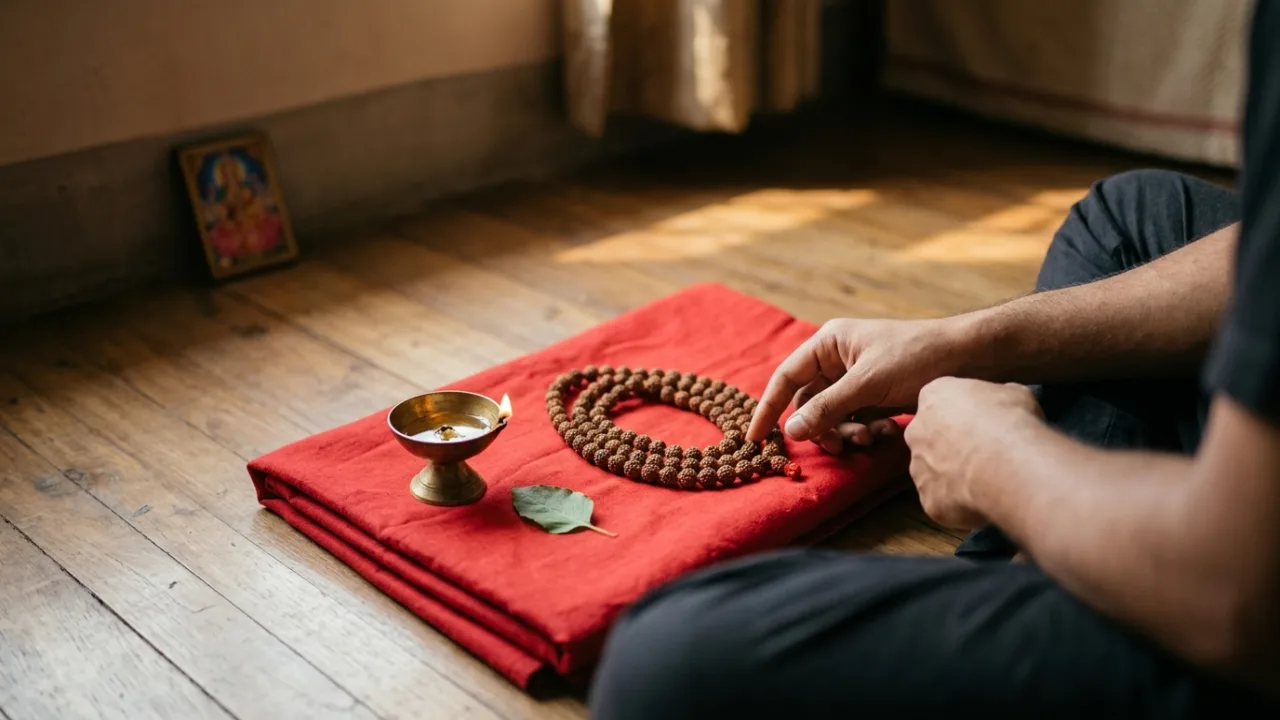
Two years ago, I picked up a mala (rosary) for the very first time.
Whatever questions you're carrying right now, I was carrying too.
"Do I need a mala or can I just chant mentally?" "Which name should I choose, Om Namah Shivaya, Radha's name, Ram's name?" "Is using a clicker counter somehow wrong?" "How many rounds should I do daily, 1, 5, or 11?" "Why does my mind bolt the moment I sit down?" "What if someone at home sees me and thinks I've gone strange?"
For a full month, I was stuck in these questions. I combed through YouTube, sat in satsangs (spiritual discourses), asked elders. Slowly, painfully, I tested things, made mistakes, and found what actually worked.
This article is everything I learned, in one place. So that the person standing where I stood two years ago doesn't have to wander the way I did.
Before We Begin: Naam Jap vs Mantra Jap
This was my first confusion, and I see it in nearly every beginner. "Am I doing naam jap or mantra jap? Are they even different things?"
They are.
Mantra jap is a classical, scriptural practice. A mantra is a specific sequence of syllables containing seed sounds (bija aksharas) like OM, AIM, HREEM, KLEEM. The Gayatri Mantra, Maha Mrityunjaya, Navarna, Sri Sukta. These are mantras.
Mantra jap has strict requirements:
- Most effective when received through a guru's formal initiation (diksha)
- Precise pronunciation is essential; understanding the meaning helps
- Specific rules for posture, facing direction, and timing
- Not performed in states of ritual impurity (without bathing, during menstruation, etc.)
- Incorrect pronunciation or improper method can have unintended effects
Naam jap is different. It's the path of bhakti, devotion. Simply repeating a divine name: Radhe, Ram, Krishna, Shiva, Hari, Hanuman. No seed syllables, no elaborate procedure.
Naam jap has no rigid restrictions:
- Anywhere, anytime, in any condition
- No penalty for mispronunciation
- No initiation required
- Chant aloud, in a whisper, or silently. All valid, every breath.
Which is better for where you are right now?
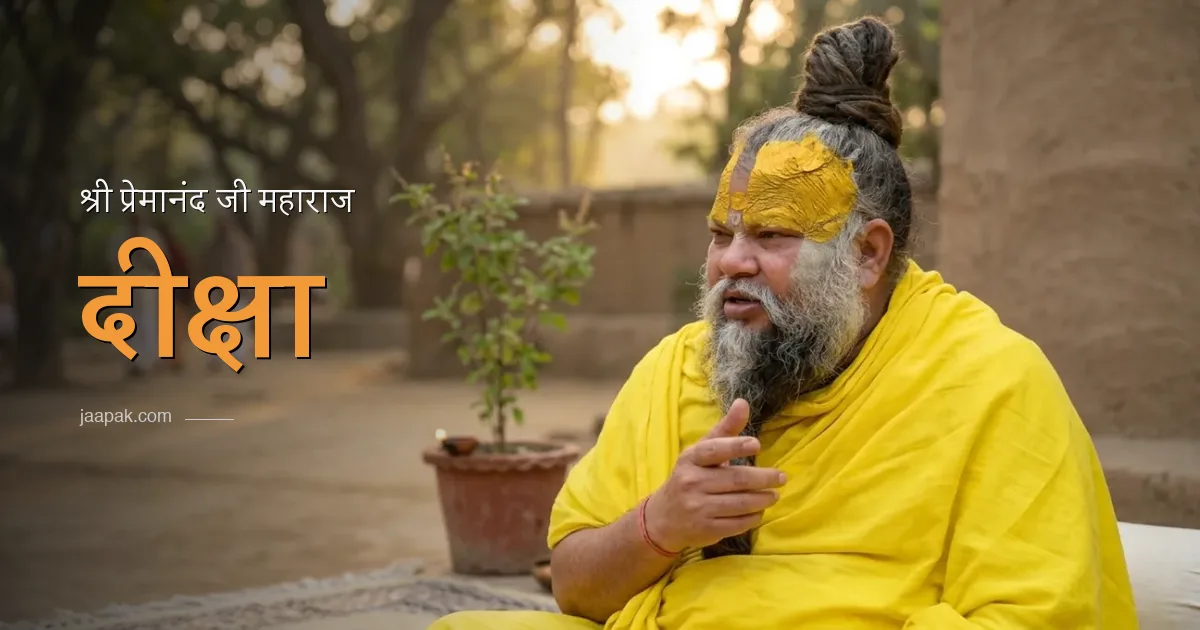
Shri Premanand Ji Maharaj, a contemporary Vaishnava saint from Vrindavan whose teachings form the basis of this article, repeatedly clarifies:
"कलियुग में नाम ही एकमात्र साधन है।"
"In this age (Kali Yuga), the divine name is the only true practice."
"नानक नाम जहाज है, चढ़े सो उतरे पार।"
"The name is a ship, those who board it, cross over." (a verse from Guru Nanak, often cited by Maharaj ji.)
Why is naam given priority over mantra? The reason is honest and straightforward.
Most of us today don't have the training to pronounce Sanskrit correctly. We don't have access to a genuine initiation lineage. We don't have time to learn elaborate ritual procedures. But the divine name can flow in every breath. While eating, while commuting, even when unwell. During your period. Without a morning bath. The name doesn't check your condition before responding. That's what makes it work.
Maharaj ji's words that stayed with me:
"हमारे जीवन में बस एक ही बात रह गई — नाम, नाम, नाम, नाम। हर प्रश्न का उत्तर आपको नाम में मिलेगा।"
"Only one thing remains in our life — name, name, name, name. Every question you have will find its answer in the name."
A word on Om Namah Shivaya. I used to think this was a Shiva name I could simply start chanting. But Maharaj ji is very direct on this point:
"पंचाक्षरी मंत्र है — किसी गुरु से मंत्र लो और फिर उच्चारण मत करो।"
"This is the Panchakshari mantra — receive it from a guru, and then do not even pronounce it aloud."
Om Namah Shivaya is a mantra, not a name. It belongs to a different category and shouldn't be chanted without guru initiation. Even after initiation, it's repeated silently, not aloud.
So what does a Shiva devotee do until finding a guru? Maharaj ji's direct guidance:
"साम सदा शिव जपो, और किसी शिव उपासक को गुरु रूप में वरण करो। फिर उनसे पंचाक्षरी मंत्र लो, फिर जपो।"
"Chant 'Saam Sadashiv' silently, seek a Shiva devotee as your guru. Then receive the Panchakshari mantra from them, then chant it."
My direct advice for new chanters: start with a divine name. Radhe Radhe, Shri Ram, Hare Krishna. These are names, not mantras. Open to everyone, no initiation needed. Shiva devotees: chant Saam Sadashiv silently while seeking a guru. Once you find one, receive your mantra through proper initiation.
First 3–6 months: just the name. One name. Let the mind settle. When you taste genuine inner stillness and a guru has come into your life, then move to initiated mantra jap.
Now the 25 questions.
The Three Questions Everyone Asks First
1. Which name should I start with?
This is where most beginners get stuck. They open a book, spot the Navarna mantra (OM AIM HREEM KLEEM Chamundaye Vicche), and assume a more complex formula will give faster results. Next day: headache, and a scattered, restless feeling that wasn't there before.
I made this exact mistake.
The principle above applies here: mantras require initiation, names are open. Don't begin Om Namah Shivaya, Gayatri, Maha Mrityunjaya, or Navarna without a guru. But any divine name? You can start today.
Here's a practical guide based on your chosen deity:
| Your Deity | Start with (no initiation needed) |
|---|---|
| Shiva | Saam Sadashiv (silently only), Har Har Mahadev |
| Hanuman | Jai Shri Ram, Jai Hanuman |
| Ram | Shri Ram Jai Ram Jai Jai Ram |
| Krishna | Hare Krishna Hare Krishna, Radhe Radhe |
| Radha Rani | Radhe Radhe, Jai Shri Radhe |
| Vishnu | Jai Narayan, Jai Shri Hari |
| Durga / Devi | Jai Mata Di, Jai Maa |
| Ganesh | Jai Ganesh, Ganpati Bappa |
| Not sure yet | Radhe Radhe or Hare Krishna (most accessible) |
A few things worth remembering:
- Shiva devotees without a guru: Maharaj ji's instruction is to chant Saam Sadashiv silently, not aloud. At the same time, seek a Shiva devotee as your guru, then receive the Panchakshari from them.
- Krishna and Radha devotees: Maharaj ji says it over and over. "Radhe Radhe" is the answer to every question. Let it run through the whole day.
- Hanuman devotees: Jai Shri Ram daily, plus the Hanuman Chalisa on Tuesdays and Saturdays.
One rule above all: one deity, one name. Switching daily (Shiva today, Vishnu tomorrow, Devi the day after) scatters your energy and your practice never deepens. Commit to your choice for the first 3–6 months. Other deities come naturally later, with affection rather than confusion.
2. Mala (rosary beads): necessary or not?
This question haunted me for months. One video said chanting without a mala is incomplete. Another said mental jap is supreme.
The truth sits between those two.
In the beginning, keep a mala. A new mind needs something to anchor it. The beads give your hand, your eyes, and your wandering attention a single thread to follow. You're sitting, you have one task, and you won't get up until the mala is complete. That discipline is what the mala provides.
But Maharaj ji points toward the deeper practice:
"जप कभी बोलकर नहीं होता। मन में चलता है हमेशा। होंठ भी नहीं हिलने चाहिए।"
"Jap never truly happens with the voice. It always moves in the mind. Even the lips should not move."
This is the advanced stage, not where you begin. For now: mala in hand, lips still, name moving in the mind.
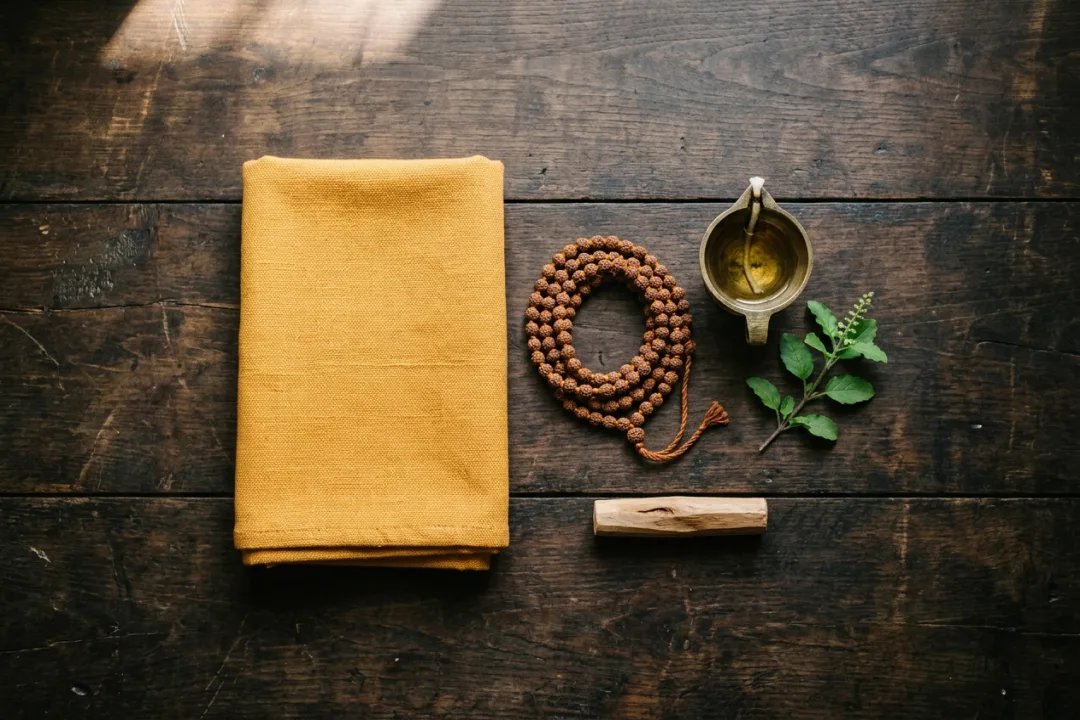
When the name begins flowing with every breath on its own, the mala naturally becomes less essential. As Maharaj ji describes:
"जब प्रत्येक श्वास में निरंतर नाम अभ्यास होने लगे, तब वो अव्यावहारिक दशा हो जाती है — जैसे पलक झपकना, जैसे दिल का धड़कना।"
"When the name runs continuously with every breath, it becomes an involuntary state — like blinking, like the heartbeat."
It takes years to reach there. Until then, the mala is your companion.
3. Clicker counter: okay or not?
You've seen them: a small device worn on the thumb, click-click-click. People chanting while commuting, walking to work, waiting in queues. The count climbs all day.
I'll be honest.
The benefit of a counter: it lets you practice anywhere, discreetly, without taking out a mala. If it gets you from zero to consistent daily practice, it has done its job.
The honest limitation: a counter measures clicks, not presence. You can log 3,000 clicks while your mind is somewhere else, replaying yesterday's argument or planning tonight's dinner. With a mala, at least the tactile movement of each bead creates a small moment of physical return. A counter can quietly become a number-game that feels like practice but produces none of its effects.
My recommendation: use a mala for your dedicated seated practice. Use a counter for throughout-the-day chanting when a mala isn't practical. Never let counter numbers become the goal.
How to Practice: Setting Up Your Routine
4. How many rounds per day: 1, 5, or 11?
Start with one mala (108 repetitions) per day. That's all. Don't begin with ambitious targets that collapse by week two.
One mala, same time every day, for 40 days straight. After 40 days, add a second mala if it feels natural. The goal in the early months is continuity, not quantity. One mala daily for a year beats eleven malas for three days and then nothing.
5. What time is best?
Brahma muhurta, roughly 4:00–6:00 AM, is considered the most powerful time. The atmosphere is still, the mind is fresh, the world hasn't yet made its demands. If that's not possible, any fixed time works. The key word is fixed.
Consistency trains the mind. When you sit at the same time daily, the mind learns: this is jap time. It begins settling faster on its own. After a few months, many practitioners find themselves waking naturally before the alarm.
If mornings are impossible, before sleep works well too. Falling asleep with the name on the lips means the name often continues through the night.
6. Can I chant lying down?
For dedicated, seated practice, sit upright. The body's posture tells the mind what mode it's in. Lying down invites sleep.
For throughout-the-day naam jap, yes, anywhere. Lying in bed before sleep, resting on a long train journey, recovering from illness. The name isn't restricted to any position.
7. Do I need a special mat or cushion?
A clean, dedicated mat is helpful. Not for magical reasons. It creates a psychological boundary: when I'm on this mat, I'm chanting. That's enough.
Traditional materials: cotton, wool, or kusha grass. Any clean surface works. You don't need an expensive setup to begin.
8. Eyes open or closed?
For new practitioners, closed eyes generally make internalization easier. But if closed eyes lead reliably to drowsiness, keep them slightly open with a soft downward gaze.
Some practitioners focus on a lamp flame or an image of their deity. Do whatever keeps the mind present without forcing.
9. Aloud, whispered, or silent?
The tradition describes three modes:
- Aloud (vachik): Most grounding. Hearing your own voice helps when the mind is very scattered.
- Whispered (upanshu): More refined. A good mode for daily seated practice.
- Silent (mansik): The deepest, and the eventual goal.
For beginners, start aloud or whispered. Pure mental jap requires a disciplined mind to sustain. If you try it too early, you'll sit believing you're chanting while your mind is planning the grocery list. Build toward silent jap over months, not days.
10. Can I chant while commuting or doing housework?
Absolutely. This is one of naam jap's greatest distinctions from formal ritual: it travels with you. Krishna tells Arjuna in the Bhagavad Gita to remember him at all times, not only when seated in formal worship.
Red lights, queues, washing dishes, folding laundry, all become opportunities. The idea is simple: you have a dedicated seated practice, and you carry the name through the day. The throughout-the-day practice doesn't replace the seated one. They feed each other.
The Hardest Part: Dealing with a Wandering Mind
11. Why does my mind wander the moment I sit down?
Because it's never been asked to stay before. For decades, the mind has been fed constant stimulation: screens, news, conversations, worries, plans. Sitting in stillness and asking it to rest on one name is new territory.
The wandering is not a failure. Noticing the wandering and returning to the name, that is the practice. Every return is one repetition of a deeper kind. The mind will wander ten thousand times before it learns to stay. Don't fight it. Just return.
12. I feel nothing. Am I doing it wrong?
No. Dryness is normal, especially in the first weeks and months. The practice is building something deep, below the surface of feeling, and the early stages often feel mechanical and hollow.
Maharaj ji compares it to planting a seed. You don't dig it up every day to check whether it's growing. You water it and wait. The sweetness (what the tradition calls rasa) comes later, sometimes much later. It isn't manufactured by technique or willpower. It arrives.
Do the practice. Let the rasa come on its own schedule.
13. Some days feel alive, others feel completely dead. Why?
The mind has moods. The body has rhythms. Life has pressures. Variation is normal. The real test of practice is simple: do you show up on the dead days too?
Over months, the dead days become less frequent and less oppressive. They don't disappear. Even experienced practitioners have dry spells. The difference is, they've learned through experience that the dry spell always passes. They no longer abandon the practice during it.
14. I fell asleep while chanting. Is that okay?
It happens, especially in evening and pre-sleep practice. Don't shame yourself.
If it happens every session, adjust: sit upright rather than reclining, chant slightly aloud, shorten the session but stay more alert in it. Presence matters more than minutes.
15. I missed a day. Did I ruin everything?
No. Begin again today.
This isn't a gym streak that "resets." If you miss a day, you start again. There's no penalty, no going back to zero, no karma deducted. What matters is the direction of return, always back to the name, as many times as needed.
Rules, Restrictions, and Real Life
16. Can women chant during menstruation?
Yes, naam jap continues without restriction. This is one of the important distinctions Maharaj ji makes. There are traditional restrictions on touching deity idols, entering certain temple spaces, or performing puja rituals during menstruation. Naam jap has no such restriction. The name flows in the mind regardless of the body's state.
This is why naam jap is accessible where formal ritual cannot be.
17. Can I chant without bathing first?
For a dedicated seated session, cleanliness and bathing are ideal. For throughout-the-day naam jap, always yes. You don't need a shower before the name will respond to you.
18. Should I fast on certain days?
Fasting on your deity's traditional day (Ekadashi for Vishnu/Krishna devotees, Mondays for Shiva, Tuesdays and Saturdays for Hanuman) is traditional and beneficial. It creates a container of intention around the day. But fasting isn't a prerequisite for chanting. Don't make it a barrier to beginning.
19. What if my family sees me and thinks I've changed?
This comes up constantly, particularly among younger practitioners and diaspora in households where daily spiritual practice isn't the norm.
Practical answer first: chant mentally. No one knows. You can do naam jap in a meeting, on a train, in a crowded room. The practice lives in the interior and is invisible.
For seated practice, find a corner of your room, 10 minutes when you have them. You don't need an elaborate altar visible to the whole family. A small image, a mat, a lamp: helpful, not required.
Here's what I've seen: most family members who initially seem uncomfortable become quietly supportive once they notice the change in you. Calmer, less reactive, more present. Live the change. The explanations take care of themselves.
20. Can I chant while eating?
Silent mental jap during a meal, yes. Chanting aloud while eating is generally avoided. Both the food (considered prasad, a gift) and the name deserve full attention. But the name can flow in the mind throughout the meal without interruption.
The Bigger Picture: Results, Patience, and Going Deeper
21. When will I see results?
That's the wrong question. The better question: what would I notice if the practice is working?
You'll notice: a slightly larger space between a trigger and your reaction. A softer quality in how you speak to people under stress. A stability that wasn't there before, quiet, unannounced, not dramatic. Moments of contentment without any external cause.
These signs are not spectacular. They're subtle. And they arrive without fanfare, which is why many practitioners don't connect them to their practice.
As a rough timeline: expect nothing for 40 days. Something subtle by 3 months. Something real by 6. Something you cannot fully explain in a year. These are approximations, individual, not guaranteed.
22. I'm chanting, but my problems aren't going away. Why?
Because naam jap doesn't remove problems. It changes your relationship with them. The external circumstances may not shift. What shifts is your interior terrain while living through them.
This is not a satisfying answer. But it is the honest one.
Over time, some practitioners do notice that external situations resolve more smoothly. But this is a side effect, not the mechanism. The practice is for the inner life. If you're treating naam jap as a wish-fulfillment machine, it will disappoint. If you're treating it as a method for inner stabilization, it delivers.
23. Do I need a guru?
For naam jap, not immediately. You can begin today without one.
For deeper mantra initiation (Gayatri, Maha Mrityunjaya, Panchakshari) a guru is not just helpful but structurally necessary. The mantra received through initiation carries something that self-taught pronunciation cannot replicate.
The search for a guru is itself a practice. Maharaj ji says the sincere seeker is drawn to the right teacher when the time is right. Keep practicing. Keep attending satsangs, visiting temples, associating with serious practitioners. The meeting happens when it is meant to.
24. Should I set a large target: 1 lakh names, 11 lakh, 1 crore?
Large sankalpa (vows of repetition) have their place. They create commitment and a sense of sacred direction. But they can also become anxiety-producing if you fall behind, turning a devotional act into a performance metric.
For the first year: daily consistency is the only target. One mala per day, every day. After a year of that foundation, discuss larger targets with your teacher if you have one.
Maharaj ji's emphasis is always on the quality of attention, not the quantity of clicks.
25. What if I just... stop?
I want to answer this one honestly, because it matters.
Almost everyone stops at some point. Weeks pass, then months, sometimes years. Life accelerates, the practice begins to feel pointless, something difficult happens and the mat gathers dust in the corner.
And then something else happens. A hard moment, a chance conversation, a satsang attended almost by accident. You pick up the mala again.
The practice does not abandon you because you abandoned it. There is no penalty. There is only the invitation to return, which is always available, always fresh, always exactly now.
Maharaj ji's words for this moment:
"हमारे जीवन में बस एक ही बात रह गई — नाम, नाम, नाम, नाम। हर प्रश्न का उत्तर आपको नाम में मिलेगा।"
"Only one thing remains in our life — name, name, name, name. Every question you have will find its answer in the name."
If you've stopped, come back. That's all.
Start with one name. One mala. One fixed time. Forty days.
Everything else (the mala becoming breath, the breath becoming name, the name becoming the quietest and most reliable companion) unfolds on its own, in its own time, with a grace you cannot engineer and do not need to.
This article is compiled from the satsangs of Shri Premanand Ji Maharaj and from personal experience in sadhana. It is not formal religious instruction but one practitioner's attempt to share what was learned. All images in this article are digitally created.
Independent writer, jaapak.com
I built the Jaapak app. I write in simple Hindi on the Bhagavad Gita and the satsang tradition — so seekers don't struggle with the scripture.
Read all articlesAbout this article
The commentary is based on the general understanding of the Sanatan tradition and written in accessible language. No verbatim quotation of any modern commentator is used.