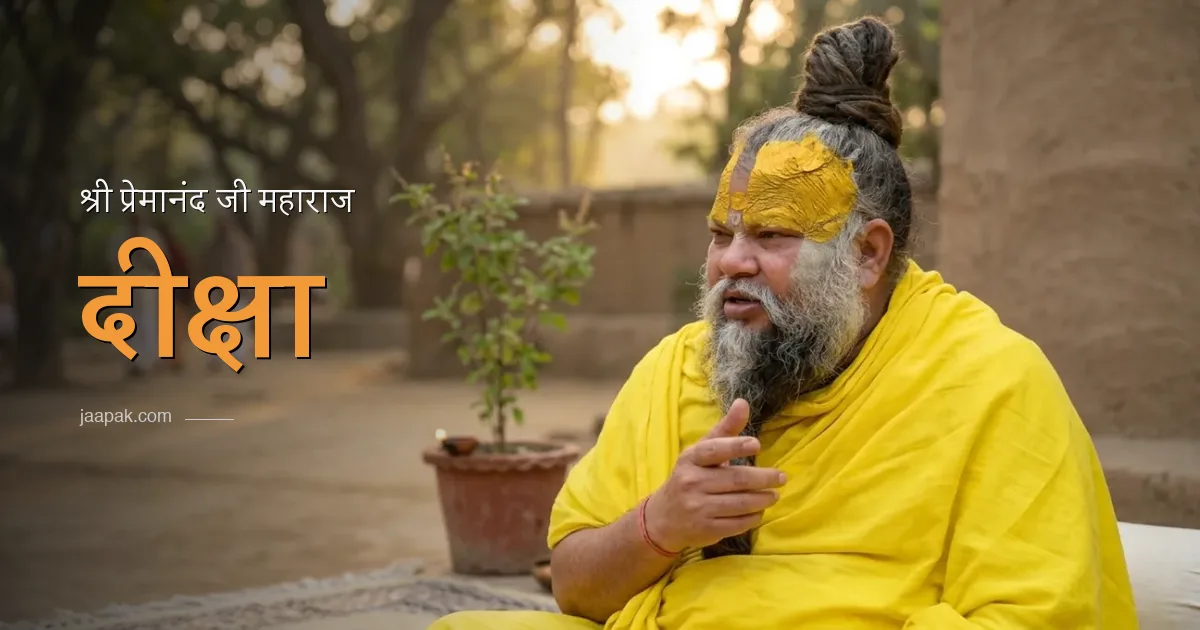
Anger and Naam Jap: Premanand Maharaj's Deep Truth
Anger and naam jap: Premanand Maharaj reveals desire as the real root of anger and shares three practical steps to dissolve it.

Anger arrives, and in seconds everything you built lies in ruins. Words you never meant surface on your tongue. A relationship you nurtured for years takes a wound it may never fully heal from.
On the subject of anger and naam jap (chanting the divine name), Shri Premanand Ji Maharaj — a revered saint of Vrindavan, the sacred town in north India where Lord Krishna spent his childhood — speaks with a clarity that touches the soul and works in daily life right away.
The Real Root of Anger: Desire
Brother, anger doesn't arrive on its own. It has a mother. Her name is desire.
Maharaj ji puts it plainly:
"क्रोध क्यों आता है? कामना से क्रोध आता है। जैसे हम चाहते हैं यह हो जाए और वो नहीं होता तभी क्रोध आता है। क्रोध की स्वयं की सत्ता नहीं।"
"Why does anger come? Anger comes from desire. We want something to happen, and when it doesn't, anger arises. Anger has no existence of its own."
0:53
Anger is not an independent force. Wherever a wish gets stuck, anger is born. At home, you expect dinner on time. From your child, top marks. At work, a word of praise from your boss. When any expectation falls short, anger flares.
That is why the Bhagavad Gita (2.62–63) lays this chain out in plain words:
क्रोधाद्भवति सम्मोहः सम्मोहात्स्मृतिविभ्रमः।
स्मृतिभ्रंशाद् बुद्धिनाशो बुद्धिनाशात्प्रणश्यति॥
"From anger comes delusion, from delusion comes loss of memory, from loss of memory comes destruction of intellect, and from destruction of intellect, the person perishes."
Desire to anger, anger to delusion, delusion to forgetting, forgetting to ruin of intellect, ruin of intellect to total destruction. A five-link chain. It begins with an ordinary little wish — what Patanjali, in his Yoga Sutras (2.3), names raga (attachment) among the five afflictions.
This chain does not start with some great sin. It starts when one small wish is denied. So conquering anger is really about understanding desire, not about dramatically renouncing it.
Once the root cause is clear, we have to look at how much harm this anger does to the soul.
The Spiritual Damage of Anger: Why It Is a Demonic Tendency
Maharaj ji does not call anger a "weakness." He calls it a demonic quality. The sixteenth chapter of the Bhagavad Gita names lust, anger, and greed as the "three gates to hell" (त्रिविधं नरकस्येदं द्वारं नाशनमात्मनः, Gita 16.21). Maharaj ji says it directly:
"क्रोध जो है, ये आसुरी प्रवृत्ति है। ये नाश कर देती है।"
"Anger is a demonic tendency. It destroys."
2:07
Once the door of anger opens, what follows is a sequence: harsh words, abuse, violence. In anger, devotion thins out. Joy thins out.
What shakes me most is this: the energy that goes into hours of regret after an outburst is energy that could have gone into japa. We don't "do" anger. We spend our japa hours on it. (And nobody puts it that way.)
If someone asks: in those ten minutes of anger, what did you actually gain?
The day you understand this math, your motivation to stop anger shifts. The question is no longer "is anger bad?" The question becomes: "why am I making such an expensive trade?"

Remedy 1: Naam Jap — The Science of Pulling Wrong Tendencies Up by the Root
A seeker once asked Maharaj ji: "When I do naam jap, anger reduces. The moment I stop chanting, it rises again." Maharaj ji praised him: "You are a great teacher!" Then he explained something deep:
"नाम जप करते हुए जब तुम्हारे अंदर गलत वृत्ति आती है ना तो अंदर जो मन में गलत वृत्ति होती है, वो डिलीट होती है। वो नष्ट होती है।"
"While you are chanting the divine name, the wrong tendency that rises inside you gets deleted. It is destroyed."
0:38
Naam jap is not a painkiller whose effect wears off. It is a process. Slowly, this process destroys at the root those wrong tendencies of the mind that give birth to anger.
I think we treat naam jap as a separate "session": chanted in the morning, done for the day. But Maharaj ji is saying something different. Practise so that empty time itself does not exist.
That sounds hard. But "no empty time" does not mean stop working. It means: even while working, let "Radha Radha" — the name of Krishna's beloved consort, central to Vrindavan devotion — keep running in the mind. That is the distinction.
How to chant? The instant anger rises, start "Radha Radha" silently in the mind. If alone, chant aloud. If in a crowd, chant within. Whatever the situation, the thread of japa must not break.
Beyond naam jap, two supporting practices give immediate relief in the moment of anger.
Remedy 2: Silence and Walking Away — Don't Let Anger Catch Fire
Maharaj ji's instruction is crystal clear:
"जिस समय क्रोध आवे जोर-जोर से राधा राधा बोलने लगो। क्रोध शांत हो जाएगा।"
"The moment anger comes, start chanting 'Radha Radha' loudly. The anger will subside."
2:17
If japa alone isn't holding the situation, two more steps:
- Silence: Speaking feeds anger. Reply-and-counter-reply feeds it more. Just stop. Grit your teeth if you must, but keep your tongue still.
- Change of place: Quit the situation where anger is flaring. Maharaj ji says: "Turn around at once, step back, walk away."
Three steps. That's it.
Remember the breath. When everything else is forgotten, the breath remains. It is the body's most accessible brake.
Wherever there is back-and-forth, anger will come — that's certain. So speak your piece and leave. Staying is not winning.
These three remedies do one thing in different ways: they cut off oxygen to anger. Stop speaking, change place, start chanting — the flame goes out.
In family life, a subtle question arises: what if I have to show anger to my children? Is that a sin?
A Householder's Discernment: The Difference Between Acted Anger and Real Anger
A devotee said: "Maharaj ji even scolds his own children. I burn with envy at how I can't!" Maharaj ji's reply is wonderfully practical:
"क्रोध का नाटक करना और क्रोध होना, ये थोड़ा अंतर है।"
"Acting out anger and actually being angry — there is a small difference between the two."
4:08
In family life, sometimes you must act angry to keep children on the right path. (I used to think being firm meant carrying bitterness inside. This distinction is worth learning.) Maharaj ji says: if children feel no fear at all, they won't walk the path of righteousness. But not so much fear that they pull away from you.
Four situations make this distinction obvious:
- A parent scolding for discipline — performance, no sin
- Scolding while harbouring resentment — that is real anger, the damage starts here
- A guru being strict to correct a disciple — duty, not deception
- Bitter words flying in a family argument — that is a break in self-restraint
The test is one: anger may show on the outside, but peace must hold in the heart. The day anger enters the heart, that is when the erosion of practice begins.
Related Teachings
- How to Start Naam Jap: 25 Questions Every Beginner Has
- How Naam Jap Erases Sin: Maharaj Ji's Direct Truth
- Naam Jap vs Puja: The Heart-Cave Truth
Conclusion: Connecting with the Spiritual Is the Path Out of Anger
Anger is not conquered by willpower. Not even by resolve. It is conquered by sadhana — sustained spiritual practice.
Maharaj ji's words tie this whole teaching into one thread:
"बिना अध्यात्म से जुड़े किसी का जीवन मंगलमय नहीं हो सकता।"
"Without connection to the spiritual, no one's life can become auspicious."
6:35
As desire decreases, anger naturally fades. And desire decreases. Only through naam jap.
A small resolve, starting today: whenever anger rises, that very moment, chant "Radha Radha." Grit your teeth. Walk away. That much is enough for a beginning.
Radhe Radhe.
Source: कुछ भी काम गलत हो जाता है तो बहुत क्रोध आता है, मैं क्या करूँ ? Bhajan Marg
This article is compiled from the satsangs of Shri Premanand Ji Maharaj. The original video is available at the link above. All images in this article are digitally created.
Frequently Asked Questions

Independent writer, jaapak.com
I built the Jaapak app. I write in simple Hindi on the Bhagavad Gita and the satsang tradition — so seekers don't struggle with the scripture.
Read all articlesAbout this article
The commentary is based on the general understanding of the Sanatan tradition and written in accessible language. No verbatim quotation of any modern commentator is used.