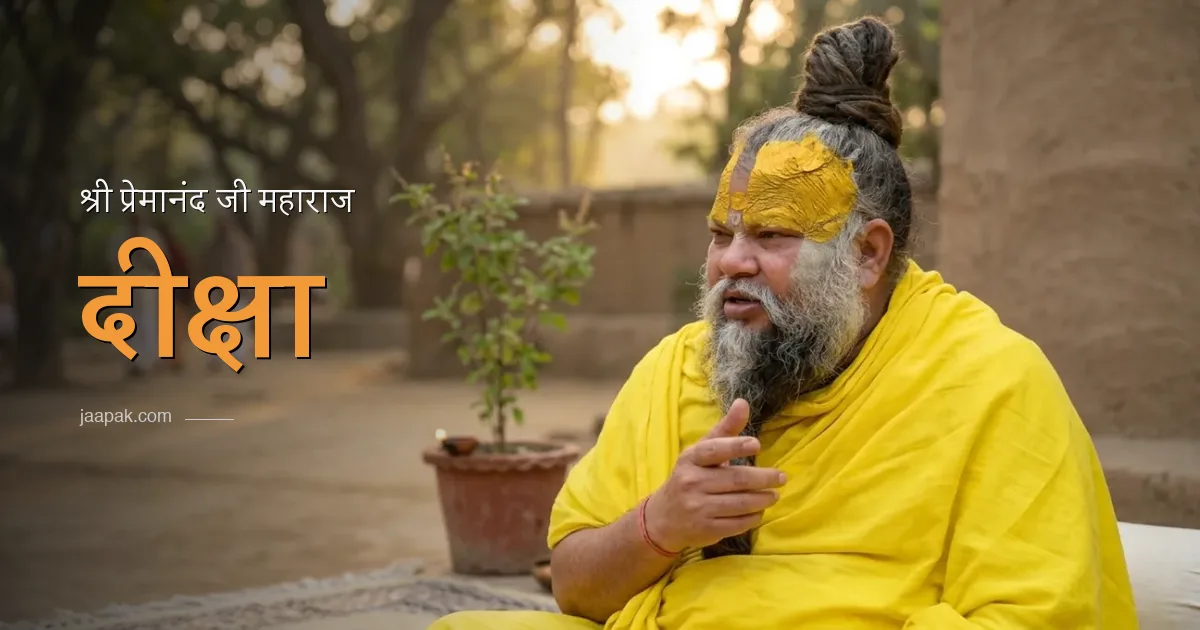
Kaliyug's Gift: 24 Hours of Naam Jap = 10,000 Years Tapasya
Premanand Maharaj reveals: 24 hours of naam jap in Kaliyug equals 10,000 years of Satyug tapasya. Method, obstacles, and Kaliyug's hidden grace.

What if the spiritual reward that once demanded 10,000 years of relentless austerity could now be earned in a single day? In this satsang, Shri Premanand Ji Maharaj, a revered saint of Vrindavan (the sacred land of Radha and Krishna in north India), unveils a quiet truth that lifts the heart of every seeker. The age we live in, often called dark, hides a grace most of us never notice.
Kaliyug's Hidden Boon
Hindu scriptures describe four cosmic ages: Satyug, Treta, Dwapar, and Kaliyug — the present era. In Satyug, sages performed austerities (tapasya) for thousands of years. Their minds were so disciplined that chanting, meditation, and celibacy came to them without struggle. Answering a devotee named Akhilesh from Kanpur, Maharaj ji shares a verse that reframes how we should see our times:
"सतयुग में 10,000 वर्ष ब्रह्मचर्य से रहकर दाहिने पैर के बल अंगूठे पर खड़े होकर दोनों हाथ उठाकर मंत्र जप करने से जो फल मिलता था, वही कलयुग में केवल 24 घंटे नाम कीर्तन से उसी फल की प्राप्ति होती है।"
"In Satyug, the fruit one earned by living 10,000 years in celibacy, standing on the toe of the right foot with both hands raised, reciting mantras — that very same fruit is obtained in Kaliyug through just 24 hours of naam kirtan (chanting the divine name)."
0:11
This is the great glory of Kaliyug. The Satyug practice — balancing on a single toe for ten thousand years — is beyond what any modern human can imagine. Yet in this age, the Lord has made the same fruit reachable in 24 hours. That is the singular grace of our time.
The 24-Hour Naam Jap Method
Maharaj ji explains the practice in simple terms. There is no elaborate ritual here, but it does demand quiet resolve.
"अगर एक दिन के लिए आप ऐसा नियम ले ले कि प्रातः कालीन चार से लेकर प्रातः कालीन चार अगले दिन तक बिना कुछ खाए हुए वो 10,000 वर्ष तपस्या कर तुम 24 घंटे कर लो नाम जप या नाम कीर्तन तो जो 10,000 वर्ष का वो फल मिलेगा।"
"If for one day you take this vow — from 4 AM until 4 AM the next morning, without eating anything, performing naam jap or naam kirtan continuously for 24 hours — you will receive the fruit of 10,000 years of tapasya."
0:37
Here is the method, distilled:
- Begin at 4 AM — the brahmamuhurta hour, considered most spiritually charged
- Continue for 24 hours, until 4 AM the next morning, without breaking
- Abstain from food and water — only sip a little water during washroom breaks, then return purified
- Chant a mantra or sing the divine name — with focused mind, without pause
Maharaj ji reassures the worried seeker:
"जल नहीं पिएगा तो कोई मरेगा नहीं। 24 घंटे आज प्रातः कालीन 4:00 बजे से कल प्रातः कालीन 4:00 बजे तक मंत्र अनुष्ठान... जप करके देखो।"
"No one will die from skipping water for a day. From 4 AM today to 4 AM tomorrow — perform this mantra anushthan. Just try it once."
3:36
A single day. One experiment that can shift something deep within a seeker.
The Real Obstacle — A Restless Mind
But Maharaj ji is honest. This practice is not easy in our times, and the reason has nothing to do with the body. It has everything to do with the mind.
"कलयुग में मन नहीं लगता है। सबसे बड़ी समस्या यह है कि सतयुग आदि में मन बड़ा... इतना मन को साधे हुए लोग थे कि कहीं भी मन से भी कोई पाप ना हो जाए।"
"In Kaliyug, the mind does not stay focused. The greatest problem is that in Satyug and earlier ages, people had refined their minds so completely that they were careful not to commit even mental sins."
0:51
The Satyug seekers had minds so polished that even mental wrongdoing was rare for them. Compare that with our own situation. Maharaj ji puts it bluntly:
"अपना तो अगर मन छोड़ दो तो पाप ही करता रहता है।"
"If we let our mind run loose, it just keeps committing sin after sin."
1:00
That is why anchoring the mind to one divine name for 24 unbroken hours is so demanding. Maharaj ji describes the mind's mischievous nature with affection:
"आतंक मचा देगा। मन बड़ा बदमाश है, बड़ा बदमाश है। एक क्षण में नजारे कहां से कहां ले जाता है।"
"It will create havoc. The mind is a great rascal, a great rascal. In one moment, it carries you from one scene to another."
3:54
Mother Renuka's Story — A Mental Sin
To show how strict earlier ages were about even mental transgressions, Maharaj ji recounts the story of Lord Parshuram's mother, Renuka.
Mata Renuka had gone to the Ganga to fetch water for her evening worship. There she saw a Gandharva (a celestial musician) enjoying intimate moments with an Apsara (a heavenly nymph). Watching that scene, the time for her sandhya prayers slipped away. When she returned, the great sage Jamadagni asked the reason for her delay. Renuka spoke the truth.
The sage's verdict came swiftly. For a chaste wife to take any pleasure in watching another man's intimate play was an offence, and it would be punished. He ordered his sons to behead their mother. None had the courage. Then came Lord Parshuram. Without a single question, on his father's command, he beheaded his mother and his brothers. The father was pleased. Parshuram then asked for a boon — that his mother and brothers be brought back to life, and that they retain no memory of what had happened.
Maharaj ji captures the heart of this story in one sharp line:
"सोचो तो — केवल गंधर्व और अप्सरा की केली को देखने का दंड दिया कि गला कटवा दिया।"
"Think about it — for merely watching the play of a Gandharva and Apsara, the punishment was beheading."
3:07
In other ages, mental sin carried the same weight as physical action. The internal life of a seeker was held to a standard most of us today cannot fathom.
Kaliyug's Twin Mercy
In our age, that severity has softened. Maharaj ji quotes a famous line by the saint Tulsidas ji:
"कलि कर एक पुनीत प्रताप। मानस पुण्य होए नहीं पापा।"
"Kaliyug has one sacred glory: mental virtue earns merit, but mental sin does not bring punishment."
1:10
In other words: in Kaliyug, merely thinking of a sin does not stain the soul; only the act does. Yet thinking of God brings full merit. This is the twin mercy of our age — the burden of sin is lighter, and the fruit of naam jap is extraordinary. A seeker who once would have feared every wandering thought now has space to grow without that crushing weight.
Maharaj Ji's Practical Closing Message
Maharaj ji never preaches the impossible. He understands that householders cannot do this every day. So he softens the bar:
"24 घंटे ना सही 10 घंटे तो लगेगा। आप लगा के देखो।"
"If not 24 hours, then sit for 10. Just try and see what happens."
3:28
The effort itself is the foundation of sadhana. His final message is held in three simple instructions:
"नाम जप करो। अपने कर्तव्य का पालन करो। आप उचित धर्म पूर्वक विषयों का सेवन करो।"
"Chant the divine name. Fulfill your duties. Engage with the world righteously, within dharma."
4:27
A Day That Can Change a Life
To be born in Kaliyug is itself a blessing. That sentence sounds odd at first, but Maharaj ji's satsang opens the door to its truth. The mind's restlessness is a real obstacle. And yet, 24 hours of naam jap in this age carries the weight of 10,000 years of austerity.
Most of us are ordinary householders. Years of forest tapasya are not in our future. Long retreats are not realistic. But one day? One single day of devoted chanting? That is within our reach.
Take the opportunity Kaliyug offers. Chant the divine name. Live with dharma. Carry your duties.
Radhe Radhe.
Source: What is the way to receive the fruit of 10,000 years of tapasya in 24 hours? Bhajan Marg
This article is compiled from the satsangs of Shri Premanand Ji Maharaj. The original video is available at the link above. All images in this article are digitally created.
Related Teachings
- How to Start Naam Jap: 25 Questions Every Beginner Has
- Premanand Maharaj Diksha: The Real Path to God-Vision
- Naam Jap vs Puja: The Heart-Cave Truth

Independent writer, jaapak.com
I built the Jaapak app. I write in simple Hindi on the Bhagavad Gita and the satsang tradition — so seekers don't struggle with the scripture.
Read all articlesAbout this article
The commentary is based on the general understanding of the Sanatan tradition and written in accessible language. No verbatim quotation of any modern commentator is used.