Why Divine Name Chanting Feels Empty: a Saint's Answer
Why does divine name chanting feel empty? Shri Premanand Ji Maharaj reveals the one key: disciplined conduct that unlocks naam japa's true power.
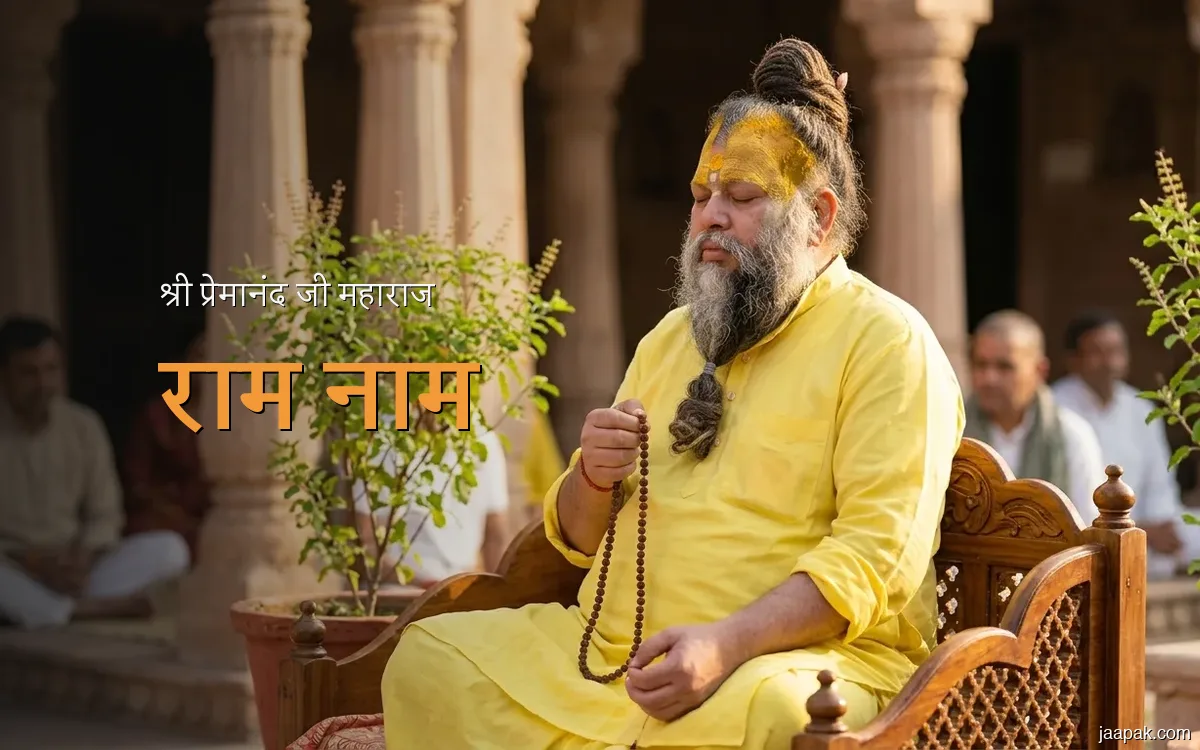
The Power of Divine Name Chanting, Why Don't We Feel It?
We all chant. We rotate our prayer beads. Ram-Ram, Radhe-Radhe, lips move while the mind wanders somewhere else entirely. And somewhere beneath the surface, a quiet ache persists: why do the saints experience something so alive, while we feel nothing?
The scriptures speak with one voice: divine name chanting (naam jap) carries limitless power. This isn't poetic metaphor: it is verified across India's oldest spiritual traditions. In the Bhajan Marg lineage, Shri Premanand Ji Maharaj returns to this teaching again and again. But an honest question follows. If the Name is so powerful, why doesn't the ordinary seeker experience what great saints do?
The answer is not that the Name is lacking.
The answer is this: the Name is the same for everyone. What differs is the seeker's inner disposition and conduct. That difference changes everything. This article unpacks that gap, drawing directly on Maharaj Ji's teachings.
To understand it, Maharaj Ji begins with Hanuman Ji.
Hanuman's Chanting vs Ours, What's the Real Difference?
A seeker named Sandeep Ji from Canada put a deep question before Maharaj Ji. During the construction of the Ram Setu (the bridge built by Ram's army to cross to Lanka), stones with Ram's name written on them reportedly floated on water. We chant that same Name. So why doesn't our life show the same effect?
Maharaj Ji paused, then said:
"जो नाम का भाव है जैसे कोई संत महात्मा जपते हैं तो उसका एक अलग प्रभाव होता है और जो एक नॉर्मल इंसान जपता है उसका एक अलग होता है।"
"The inner feeling with which a great saint chants the Name produces one kind of effect. When an ordinary person chants, the effect is different."
0:15
Did the stones float purely because of the letters "R-A-M" written on them? No. Hanuman Ji carried singular devotion to Ram, unbroken self-discipline, and complete purity of conduct. That was the true source of power. The Name was identical for everyone. The inner feeling and the level of conduct were not.
Then Maharaj Ji asked directly:
"नाम का प्रकाश उनके हृदय में जैसा होता है ऐसा दूसरों के हृदय में क्यों नहीं होता?"
"The light of the Name shines in their hearts in a certain way — why does it not shine the same way in others' hearts?"
1:27
This becomes the core question: why doesn't that light enter our chanting? Maharaj Ji's answer is direct.
Why Naam Japa Stays Ineffective, The Role of Disciplined Conduct
Maharaj Ji's answer was neither long nor complex:
"कारण दूसरे संयम का बर्ताव नहीं करते मनमानी आचरण कर बैठते हैं।"
"The reason is that others do not practice self-restraint — they fall into willful, undisciplined behavior."
1:33
Just that. Willful behavior (manmani aacharan) and the absence of restraint (sanyam) form the wall that prevents the Name's power from taking root within.
Shastra-sammata aacharan, conduct aligned with scripture, means giving up what the scriptures forbid and embracing what they recommend: discipline over the senses, truth in speech, humility in the mind. (I used to think rotating the beads was enough. Most seekers do, at some point.)
When a person abandons discipline, spins a few rounds of the mala, then spends the rest of the day doing as they please, the Name's power cannot break through. And Maharaj Ji's word is:
"अगर मनमानी आचरण ना करें और शास्त्र सम्मत आचरण करें तो वही उनमें प्रकाशित हो जाएगा।"
"If they give up willful behavior and follow scripture-aligned conduct, that very light will shine within them."
1:41
"That very light", the same light that shines in the saints. Across many satsangs, Maharaj Ji has repeated this same principle consistently: let go of corrupt conduct, cultivate good behavior, chant the Name. These three together form the path. Conduct and chanting must walk side by side; one without the other remains incomplete.
This discipline lives most fully in the saints. Which naturally raises the question: who is a true saint?
How to Recognize a True Saint, Robes or Inner Qualities?
We carry a common confusion. Saffron robes, a kamandal (water pot), long prayer beads: we treat these as the defining marks of a saint. And someone wearing ordinary clothes who lives in deep devotion often doesn't get taken seriously.
Maharaj Ji cuts through this directly:
"भेष नहीं और लक्षण है तो संत है।"
"No robes, but inner qualities are present: that person is a saint."
1:08
And the reverse applies equally: robes present, inner qualities absent, is not a saint. Sainthood is not a title or a uniform. Maharaj Ji says: "Sant-vritti (the state of being a saint) is an inner condition, a state of being." The acharya tradition passes down the external form as an outward marker. But the inner qualities arise from within: humility, selflessness, absorption in the Name.
When both are present?
"भेष और लक्षण दोनों है तो क्या कहना महापुरुष है।"
"When both robes and inner qualities are present — that person is a Mahapurush, a great soul. What more needs to be said?"
1:15
This teaching opens a door. Robes are not the obstacle. Their absence is not the obstacle either. The only real obstacle is willful, undisciplined conduct.
The most beautiful proof of this lives in the lives of great souls who remained householders.
Householders as Great Souls, Bhai Ji and Goyandka Ji Maharaj
Maharaj Ji offered two examples, and history is filled with more like them.
The first: Bhai Ji Hanuman Prasad Poddar Ji. A householder, a man of business, carrying all the responsibilities of family life. Yet within him lived the qualities of a Mahapurush: deep absorption in the Name, genuine humility, and the spirit of service. Those inner qualities made him great, not any external renunciation.
The second: Pujya Shri Jaydayal Goyandka Ji Maharaj. He too remained within the householder role. Yet his conduct was scripture-aligned, and his life was, in every true sense, a saint's life.
Maharaj Ji says: "How many householders have there been who, remaining in family life, stood as great souls established in the highest state. History is full of Mahapurushas who lived as householders." Then he asks plainly: "Now, if you practice willful behavior and just spin a few beads, then what?" That question belongs to every one of us.
Robes don't block you. Household life doesn't block you. Only willful, undisciplined conduct stands in the way. A householder who adopts scripture-aligned living and chants sincerely can experience the full power of divine name chanting. History stands witness.
When we bring all of this together, one truth emerges.
The Essence of Ram Naam, Disciplined Sadhana Is True Devotion
The Name carries power. There is no doubt in this. If any doubt arises, let it be directed at our own conduct, not at the Name itself.
The power manifests when the seeker's inner ground is pure and outer conduct is restrained. When inside and outside align: the mala moving, the mind present, the conduct clean. And Maharaj Ji's word stands:
"अगर मनमानी आचरण ना करें और शास्त्र सम्मत आचरण करें तो वही उनमें प्रकाशित हो जाएगा।"
"If they give up willful behavior and follow scripture-aligned conduct, that very light will shine within them."
1:41
"That very light." From within. By itself.
Take one resolve today: alongside chanting, add restraint. Add service. Add humility. Let go of willful behavior, embrace scripture's guidance. The light of Ram's Name will rise within, on its own.
Radhe Radhe.
Frequently Asked Questions

Independent writer, jaapak.com
I built the Jaapak app. I write in simple Hindi on the Bhagavad Gita and the satsang tradition, so seekers don't struggle with the scripture.
Read all articlesAbout this article
The commentary is based on the general understanding of the Sanatan tradition and written in accessible language. No verbatim quotation of any modern commentator is used.
Related Articles

Kaliyug's Gift: 24 Hours of Naam Jap = 10,000 Years Tapasya
The Power of Naam Jap: Beyond Ritual to True Sadhana
Premanand Maharaj Diksha: The Real Path to God-Vision

How to Escape Maya: The Real Path of Naam Jap
How to Focus the Mind in Naam Jap: Premanand Maharaj
How to Start Naam Jap: 25 Questions Every Beginner Has